

By: Chioma Madonna Ndukwu
Africa’s Talking Drum: When the Monkeys Took the Baobab
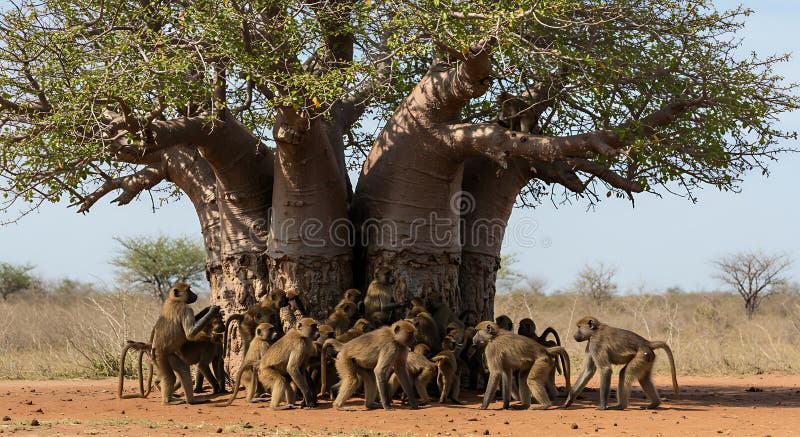
In the heart of the great Kambara forest stood the oldest baobab tree anyone had ever known.
Its branches stretched like giant arms across the sky, sheltering travelers, birds, and weary animals escaping the afternoon heat. Beneath the tree, disputes were settled, festivals were held, and elders shared wisdom passed down through generations.
The animals called it The People’s Tree because it belonged to everyone. But one season, a troop of clever Monkeys arrived from the eastern forest. At first, they entertained everyone. They danced across the branches. They performed tricks for the young.
They spoke endlessly about “modernizing” the baobab. “This tree is too old-fashioned,” their leader declared one afternoon. “Under our management, it will become the greatest tree in all the forests.”
The animals clapped excitedly. Soon, the Monkeys took control of the baobab. At first, the changes seemed impressive.
Bright banners hung from the branches. Loud music echoed through the forest every evening. Visitors from distant lands came to admire the excitement around the famous tree. The Monkeys constantly boasted: “Look how alive the baobab has become!”
But quietly, things began to change. The elders were told they needed permission to gather beneath the tree. Birds that built nests there were pushed away. Small animals were charged fruits before they could rest in its shade.
Worst of all, the Monkeys started cutting strong branches from the baobab to build luxurious treehouses for themselves high above the forest floor.
The tree slowly weakened. Its leaves became thinner. Its fruits grew fewer. Its once-mighty branches began cracking during storms. Still, the Monkeys ignored every warning. “We are developing the tree,” they insisted proudly
.
One windy evening, after a heavy storm split one of the largest branches, an old Woodpecker landed quietly on the damaged trunk. “You cannot keep feeding on the tree while pretending to protect it,” he said. The forest fell silent.
For the first time, the animals understood what had happened. The Monkeys had treated a shared treasure as though it existed only for their comfort and applause.
By the next season, the animals gathered together and removed the Monkeys from control of the baobab. Then they spent many moons repairing what could still be saved. And though the great tree survived, the scars remained visible for generations.
Moral: When leaders treat public resources like personal property, even the strongest institutions begin to weaken.
Why do some leaders protect what belongs to everyone less carefully than what belongs to themselves?
About The Author


















Leave a comment