


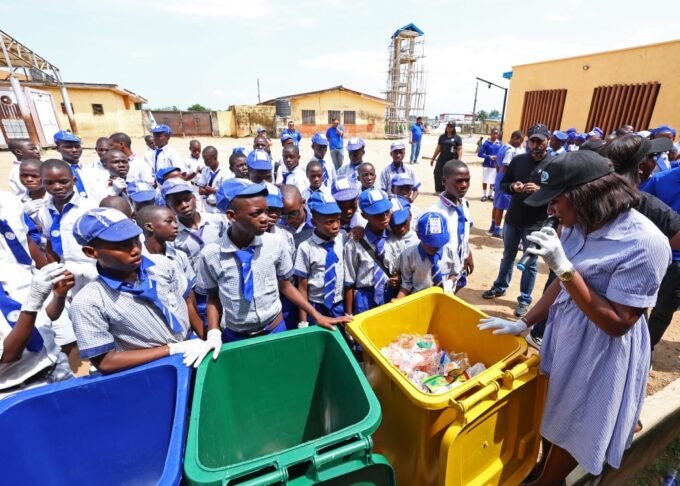
French embassy unveils plastic waste management project in Nigerian varsities. The French Embassy, through the Cooperation and Cultural Department, has launched a plastic waste management project under its French Embassy Fund.The project, worth €753,000 involves 13 Nigerian universities and is focusing on developing innovative and adaptive ideas for reducing plastic waste and enhancing campus sustainable practices.The participating universities include the Alex Ekwueme Federal University; Bayero University, Kano; Nile University of Nigeria; Covenant University; Babcock University; University of Jos; Obafemi Awolowo University;University of Ibadan; University of Lagos; Yaba Technology; University of Calabar; University of Nsukka; and the University of Delta.Speaking on Thursday at the inaugural steering committee meeting in Abuja with the participating universities and stakeholders from the National Universities Commission, the Tertiary Education Trust Fund, the Petroleum Technology Development Fund, civil societies, and the Ministry of Environment, the Acting French Ambassador to Nigeria, Jean-Francois Hasperue said universities are at the forefront of shaping the future and the project is a significant step towards a more sustainable world.Hasperue said the project was launched to empower Nigerian students to make tangible impacts on waste plastic reduction and address environmental and climate change issues.“There are projects on the ground that are very important, but we have to ensure the follow-up of the Paris Agreement and make sure that the engagements taken at that location are fulfilled and followed up. And in that endeavour, we are partnering with many countries.We chose African countries because we believe fighting climate change deserves solidarity between the most economically advanced countries and the less economically advanced countries.We have put in place, through the Paris Pact for People and Planets, a system where we have engaged in funding up to $1bn, and the French contribution will be $6bn, more or less, so more than what was expected from France, to fund projects on the ground to combat poverty and at the same time fight climate change, the effects of pollution, and biodiversity erosion,” he highlighted.The embassy noted that the components of the project for deployment within the next 18 months include delivering two micro plants co-designed by and for two universities, research initiatives in innovative solutions for sustainable development, circular economy, qualitative value chain, gender inclusivity, and entrepreneurship to support the research projects, and an exchange programme between Nigerian and French researchers.The Science and Higher Education Attache, Mr Sebastien Bede, said, “Plastic waste is a pressing global issue. Through this project, we aim to not only reduce the plastic footprint on Nigerian campuses but also to inspire a new generation of environmental stewards who can champion the cause for a plastic-free world starting with their immediate communities.”Bede stated that the ultimate objective of the project is to build cooperation between French and Nigerian universities.I also see the opportunity that we organise a study tour in Nigerian universities, French universities, business schools, and engineering schools, to discuss cooperation, whether it’s for plastic recycling or any other areas of cooperation. We are willing to open the cooperation to more universities in Nigeria.“A key component of this project is sustainability and that’s why I was mentioning that we have also co-designed a business model for these microplants. The total amount for this project is €753,000,” he said.The Vice-Chancellor of UNILAG, Prof Folasade Ogunsola, said the project is not just about money but about value.Ogunsola said, “What drives you might not drive a young person, so how do we make waste collection and the environment fashionable? I think it’s with the young we can find that and we have to ask them, we have to test whatever hypothesis we have, and that you can only do on the campus in the university, so it’s a lot of work.“We’ve already started it at the University of Lagos, we do know that students will do it, but not every student is doing it. Right now, with what we already do, we make about a million from waste but it’s ploughed back, and we still have a lot of waste to get rid of.We’re looking forward to the micro plans because it’s going to make what we do more efficient, we already have things to help with sorting but it’s not enough. So working with the French government and the other French universities, we will be able to up our game, improve the technology, and we’re looking at technology that’s robust that we can use in any way.”On his part, the Dean of the Faculty of Environmental Science at the Nile University of Nigeria, Prof Abdulhameed Mambo, noted that about 70 per cent of the component of waste generated in Nigeria is food
French embassy unveils plastic waste management project in Nigerian varsities. The French Embassy, through the Cooperation and Cultural Department, has launched a plastic waste management project under its French Embassy Fund.
The project, worth €753,000 involves 13 Nigerian universities and is focusing on developing innovative and adaptive ideas for reducing plastic waste and enhancing campus sustainable practices.
The participating universities include the Alex Ekwueme Federal University; Bayero University, Kano; Nile University of Nigeria; Covenant University; Babcock University; University of Jos; Obafemi Awolowo University;University of Ibadan; University of Lagos; Yaba Technology; University of Calabar; University of Nsukka; and the University of Delta.
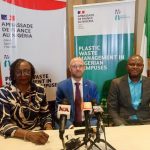
Speaking on Thursday at the inaugural steering committee meeting in Abuja with the participating universities and stakeholders from the National Universities Commission, the Tertiary Education Trust Fund, the Petroleum Technology Development Fund, civil societies, and the Ministry of Environment, the Acting French Ambassador to Nigeria, Jean-Francois Hasperue said universities are at the forefront of shaping the future and the project is a significant step towards a more sustainable world.Hasperue said the project was launched to empower Nigerian students to make tangible impacts on waste plastic reduction and address environmental and climate change issues.
“There are projects on the ground that are very important, but we have to ensure the follow-up of the Paris Agreement and make sure that the engagements taken at that location are fulfilled and followed up. And in that endeavour, we are partnering with many countries.We chose African countries because we believe fighting climate change deserves solidarity between the most economically advanced countries and the less economically advanced countries.
We have put in place, through the Paris Pact for People and Planets, a system where we have engaged in funding up to $1bn, and the French contribution will be $6bn, more or less, so more than what was expected from France, to fund projects on the ground to combat poverty and at the same time fight climate change, the effects of pollution, and biodiversity erosion,” he highlighted.
The embassy noted that the components of the project for deployment within the next 18 months include delivering two micro plants co-designed by and for two universities, research initiatives in innovative solutions for sustainable development, circular economy, qualitative value chain, gender inclusivity, and entrepreneurship to support the research projects, and an exchange programme between Nigerian and French researchers.
The Science and Higher Education Attache, Mr Sebastien Bede, said, “Plastic waste is a pressing global issue. Through this project, we aim to not only reduce the plastic footprint on Nigerian campuses but also to inspire a new generation of environmental stewards who can champion the cause for a plastic-free world starting with their immediate communities.”
Bede stated that the ultimate objective of the project is to build cooperation between French and Nigerian universities.
I also see the opportunity that we organise a study tour in Nigerian universities, French universities, business schools, and engineering schools, to discuss cooperation, whether it’s for plastic recycling or any other areas of cooperation. We are willing to open the cooperation to more universities in Nigeria.
“A key component of this project is sustainability and that’s why I was mentioning that we have also co-designed a business model for these microplants. The total amount for this project is €753,000,” he said.
The Vice-Chancellor of UNILAG, Prof Folasade Ogunsola, said the project is not just about money but about value.
Ogunsola said, “What drives you might not drive a young person, so how do we make waste collection and the environment fashionable? I think it’s with the young we can find that and we have to ask them, we have to test whatever hypothesis we have, and that you can only do on the campus in the university, so it’s a lot of work.
“We’ve already started it at the University of Lagos, we do know that students will do it, but not every student is doing it. Right now, with what we already do, we make about a million from waste but it’s ploughed back, and we still have a lot of waste to get rid of.
We’re looking forward to the micro plans because it’s going to make what we do more efficient, we already have things to help with sorting but it’s not enough. So working with the French government and the other French universities, we will be able to up our game, improve the technology, and we’re looking at technology that’s robust that we can use in any way.”
On his part, the Dean of the Faculty of Environmental Science at the Nile University of Nigeria, Prof Abdulhameed Mambo, noted that about 70 per cent of the component of waste generated in Nigeria is food or recyclable organic waste.Prof Mambo, who represented the Vice Chancellor of the University, Prof Dilli Dogo, said recyclable waste comprises vapour, metals, as well as plastic which is about 30 per cent.“If you look at that 30 per cent again, around 10 per cent is made of plastic, and this is what you see outside campuses. But studies carried out in Nigeria found close to 60 per cent of the waste component on campus, while the food component and the other components are quite low,” he explained.The FEF-funded project is an initiative of the French government as part of the global dynamic to fight against plastic pollution. The project will be fully implemented by December 2025.
About The Author














Leave a comment