

By: Chioma Madonna Ndukwu
Africa’s Talking Drum: Nobody Mocked the Woman at Nkwo Orji Again
Market days at Nkwo Orji had a rhythm of their own. Before the first cock crowed, women balanced baskets of vegetables on their heads, men pushed wheelbarrows loaded with yam tubers, and the aroma of roasted corn drifted through the morning air.

Buyers haggled without quarrelling, traders laughed as though every sale had already been blessed, and old men sat beneath the udala tree discussing everything from the price of palm oil to the stubbornness of the younger generation.
Among the first faces to appear every Nkwo day was Mma Oji. She sold smoked fish, fresh scent leaves and neatly tied bundles of uziza.
Her smile was as constant as the sunrise, yet people remembered her less for her kindness than for the one thing she did not have: A child.
The years had rolled by like water beneath the Otamiri Bridge, but her womb remained silent.
Some women pitied her, while others mocked her.
“There goes the woman whose wrapper has never carried a baby,” one would whisper.
Another would chuckle.
“What advice can she give about raising children?”
Mma Oji heard every word. She answered none.
Her late mother had often told her, “The tree laden with fruit does not throw stones at children.”
So she carried her silence the way other women carried baskets; carefully, without letting it fall.
One Nkwo morning, little Chisom wandered away from his mother while chasing a brightly coloured butterfly. Before anyone noticed, the boy had disappeared among rows of traders.
Fear spread through the market.
“My son!” his mother cried. “Has anyone seen my son?”
People abandoned their stalls and searched every corner. It was Mma Oji who found the frightened boy sitting behind an old palm-oil stall, his cheeks wet with tears.
She lifted him onto her back, bought him roasted groundnuts to calm his fears and returned him safely to his mother.
The woman grabbed her son, hugged him tightly and hurried away. In her relief, she forgot to thank the woman who had found him.
Mma Oji simply smiled and returned to her stall. Weeks later, the rains came without warning. The red earth became slippery, and traders rushed to gather their goods.
Near the edge of the market, a pregnant woman lost her footing while crossing a narrow wooden bridge above a flooded gutter.
She fell. Her basket tumbled into the rushing water. So did the little girl holding her hand. The market erupted in screams.
Some people ran towards the bridge. Others froze where they stood.
Before anyone could decide what to do, Mma Oji dropped her basket, tied her wrapper firmly around her waist and plunged into the muddy water.
The current fought against her.
She held onto a bamboo root with one hand and reached for the little girl with the other.
Moments later, she emerged from the water, soaked from head to toe, the frightened child clinging tightly to her neck. Silence settled over Nkwo Orji.
The pregnant woman fell to her knees.
“My sister…”
Her voice shook.
“I listened when people mocked you.”
Tears streamed down her face.
“I never defended you.”
She held her daughter close.
“Today, my child is alive because of you.”
From beneath the old udala tree, Mazi Anozie slowly rose to his feet.
Leaning on his walking stick, he looked around the silent market.
“Our fathers taught us,” he began, “a woman is not measured only by the child she bears, but by the lives she keeps alive.”
He paused. His eyes rested on Mma Oji. Then he spoke again.
“If motherhood lived only inside the womb, compassion would have no family.”
Not a single voice interrupted him. Even the rain seemed to soften.
One after another, the women who had mocked Mma Oji stepped forward.
Some lowered their heads. Some held her hands. Others could only whisper,
“Forgive us.”
Mma Oji looked at them with the same gentle smile she had worn for years.
“My heart became too busy loving children to count the ones I never had.”
Many people wept openly. From that Nkwo day onward, children no longer greeted her as the lonely woman who sold smoked fish.
They ran towards her shouting,
“Nne anyi!”
“Our mother!”
The name stayed.
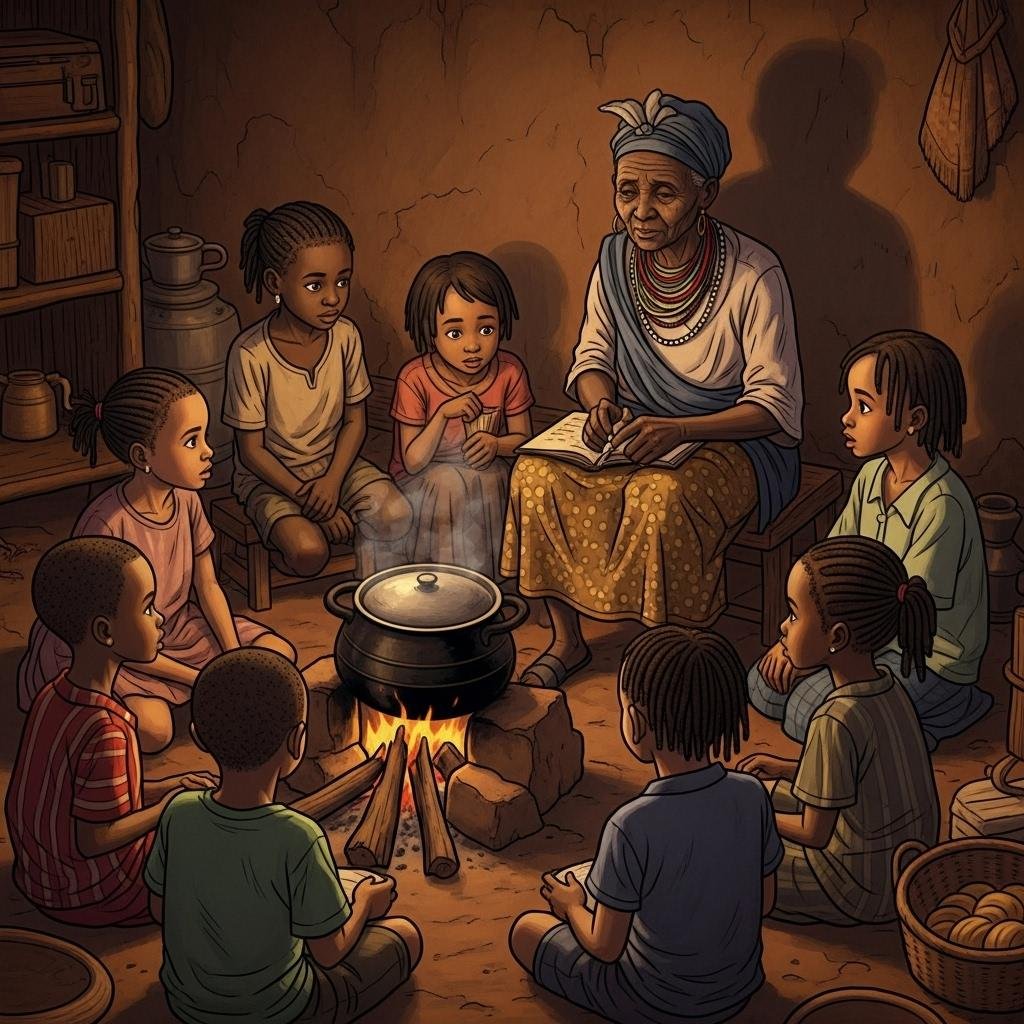
Years later, mothers still told their daughters about the woman who taught an entire market that love can grow where sorrow once lived.
And whenever someone laughed at another woman’s empty womb, an elder needed only to say,
“Remember Mma Oji.”
The laughter always died where it began.
Moral: Motherhood begins with birth for some women, but for others, it begins wherever compassion refuses to walk away.
Comment Hook : Every child remembers the arms that protected them. Sometimes, those arms belong to a woman the world never called a mother.
About The Author
















Leave a comment