

By Chinasaokwu Helen Okoro
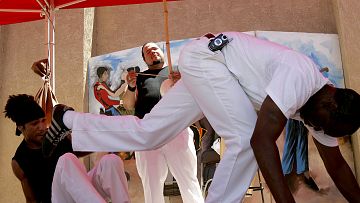
The rhythmic beat of the atabaque drum pulses through the streets of Kibera, joined by the twang of the berimbau, setting the soundtrack for a dynamic and graceful dance. In one of Africa’s largest informal settlements, on the outskirts of Nairobi, the Afro-Brazilian martial art of capoeira is taking root. This expressive art form—blending dance, music, acrobatics, and combat—is finding new life in Kenya.
Inside the roda, or circle, two bodies move in a fluid exchange of dodges, kicks, and leaps, embodying both power and grace. At the heart of this gathering, the mestre leads the rhythm with songs, echoed by others in vibrant chants and melodies.
“Capoeira’s roots lie in Angola and Congo,” says Salim Rollins, founder of the Capoeira Angola Centre in Kibera. “It was created by enslaved Africans brought to Brazil from that region, and became a form of resistance—using African martial techniques to resist slavery and oppression.” Known by his students as Mestre Salim, Rollins established the centre to teach local children and adults, passing on capoeira’s legacy of resilience and cultural pride.
For 25-year-old capoeirista Nasri Babu, who began training in 2019, capoeira offers a powerful form of relief. “Coming from a community with so many challenges, capoeira has always been like therapy for me,” he shares.
Once outlawed in Brazil during the late 19th and early 20th centuries—due to its associations with street gangs and vagrancy—capoeira was eventually formalized in the 1930s through the development of Capoeira Regional. This system emphasized self-defense and introduced new techniques, helping the art gain legitimacy as a respected martial discipline.
“It’s taught me self-awareness, discipline, and how to protect myself,” says 18-year-old Beckham Otieno. “If someone tries to attack me, I can use my capoeira skills. It’s helped me survive in the streets.”
In 2014, UNESCO recognized the Capoeira Circle as an Intangible Cultural Heritage of Humanity, honoring its role as a powerful expression of identity, resistance, and community.
“There’s also a deep ritual aspect to capoeira,” adds Rollins. “The circle, the call-and-response singing—they’re all about creating shared energy and supporting the two players in the center.” Through movement, music, and tradition, a new generation in Kenya is embracing capoeira as a tool for empowerment and transformation.
About The Author

















Leave a comment