

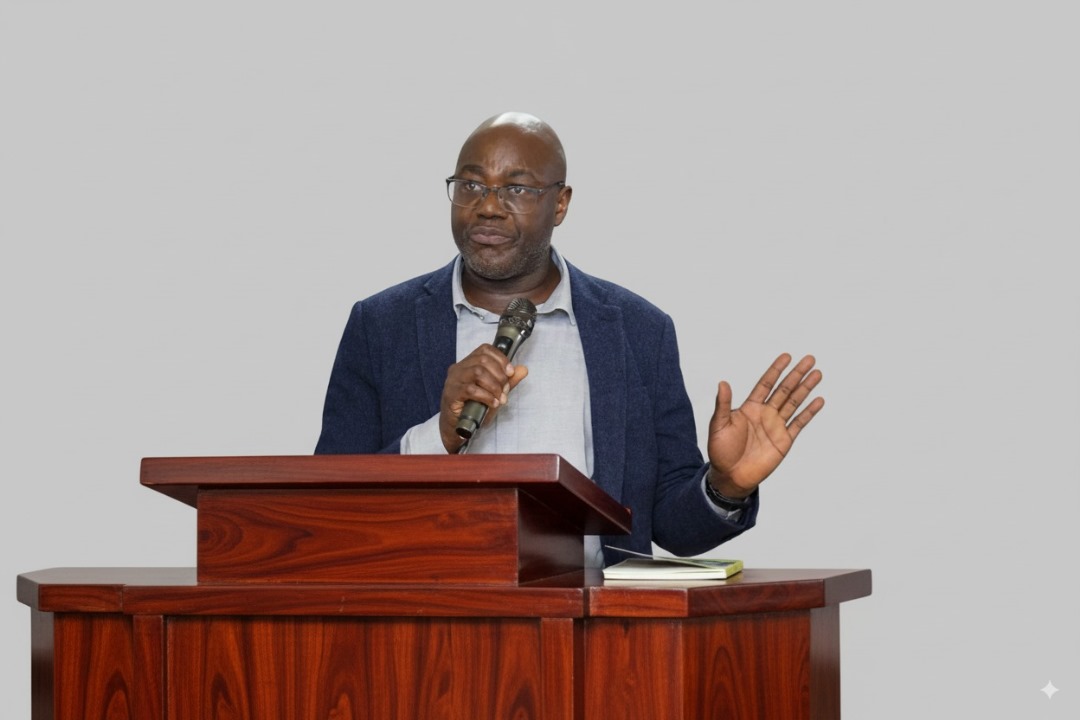
By Prof. Chukwumerije Okereke
As we gather for the 2nd Africa Climate Week/Summit in Addis Ababa, Ethiopia, we must confront the stark realities of our continent’s challenges with clarity and resolve to survive and thrive in an era of escalating climate crises and shifting geopolitics.
At the heart of this determination should be two interlinked priorities: building capacity across the continent and deepening African solidarity. In an era when multilateralism is collapsing, the need for self-reliance has never been stronger.
Earlier this year, during the African Union Summit, I warned of the dangers of Africa’s over-reliance on Western aid. Recent events have only amplified these concerns.
The resurgence of nationalist governments and policies in the West threatens to leave Africa vulnerable, as global powers increasingly prioritize their own interests.
This warning might sound alarmist, but recent events point to the dawn of this gloom future if action is not taken to correct course.
Too many African countries remain vulnerable because critical services and long-term programmes depend on a narrow set of aid dangled on strings.
On US President Trump’s resumption of office January this year, for example, changes in U.S. foreign-aid policy pulled the rug on the United State Agency for International Development (USAID), terminating large portions of contracts and put the President’s Emergency Plan for AIDS Relief (PEPFAR) and other U.S. global-health funding under review, forcing clinics and HIV/health programmes in multiple African countries to scale down or close.
Similarly, President Trump have signed executive orders that directly and indirectly target U.S. foreign-aid flows and policies that fund climate-related programs and partner organisations.
Coincidentally, the United Kingdom’s drastic cuts to aid budgets have led to the cancellation of vital projects tackling neglected tropical diseases and other health challenges in Africa.
Major spending shifts and reprioritisations by other donors have produced similar shocks, exposing the fragility of depending on external goodwill—a goodwill that is rapidly eroding.
Climate change poses an existential threat, especially in Africa, yet our response has been alarmingly inadequate.
Some have argued that Africans have no concept of the future, and therefore cannot plan for it, and our actions and inactions risks proving them right.
African governments and institutions have treated development as something to be hoped for from abroad rather than built at home.
Corruption, complacency and a lack of urgency among leaders have hindered the development of infrastructure, research capacity, resilient institutions and other relevant systems necessary to address our collective challenges.
Sadly, whether we can conceptualize it or not, the future is not a distant horizon—it is here, demanding action now.
That said, the call for self-reliance is not an argument to abandon the demand for climate justice. The principle of climate justice is undeniable: Countries and corporations that historically emitted the most have a moral and legal responsibility to fund restoration (loss, damage and ambitious mitigation). Africa will, and should continue to press for this.
However, given that climate change impacts all no matter who caused it, justice and agency can be complementary.
We can, and must, pursue both: press for fairer global commitments, while accelerating the continent’s ability to plan, fund and implement sustainable solutions.
If there is one lesson from recent geopolitical shifts and funding shocks, it is that survival cannot be left to the goodwill of outsiders. Africa’s future must be built by Africans, with partners who act in good faith and on fair terms.
The path forward lies in building our own capacity and fostering solidarity across the continent. African governments must set ambitious Nationally Determined Contributions (NDCs) and commit to their implementation, rather than treating these commitments as a five-year ritual of box-ticking.
Projections consistently show a very large financing gap between what Africa needs to implement its climate plans and current contributions, while current flow of climate finance is inadequate. African governments must increase domestic funding for climate projects.
We must prioritise renewable energy, sustainable agriculture and climate-adaptive infrastructure to safeguard communities and stimulate green jobs across the continent.
Africa needs approximately USD 200 billion annually to achieve sustainable development, but money alone is not enough.
Governments must root out corruption and ensure resources are channelled into education, innovation and technology that empower the next generation of African problem-solvers.
Regional and subregional cooperation through frameworks such as the African Union, ECOWAS, SADC, and other bodies must be strengthened so countries can pool risk, coordinate procurement and mobilise rapid, predictable finance in crises.
Also, subnational governments, women and youth must be at the centre of planning and implementation as they are the ones who will translate policy into on the ground action.
The time for complacency is over. Africa’s survival depends on our ability to unite, plan, and act decisively. At the Africa Climate Week/Summit, let us commit to a future where we are not victims of circumstances but architects of our own resilience.
The choices we make at this summit will determine our fate in the near future. The world may falter in its promises, but we must not falter in our resolve.
—Prof. Chukwumerije Okereke is a professor of Global Governance and Public Policy at University of Bristol, visiting professor at the London School of Economics, UK.
Okereke is also the co-chair of Ukama Platform, a group of thought-leaders that aim to strengthen Africa-Europe relationship to achieve just sustainability transformation
About The Author
















Leave a comment