

By : Chinasaokwu Helen Okoro
Ouattara Clinches Fourth Term With 90% in Ivory Coast Election Marked by Apathy and Power Concerns
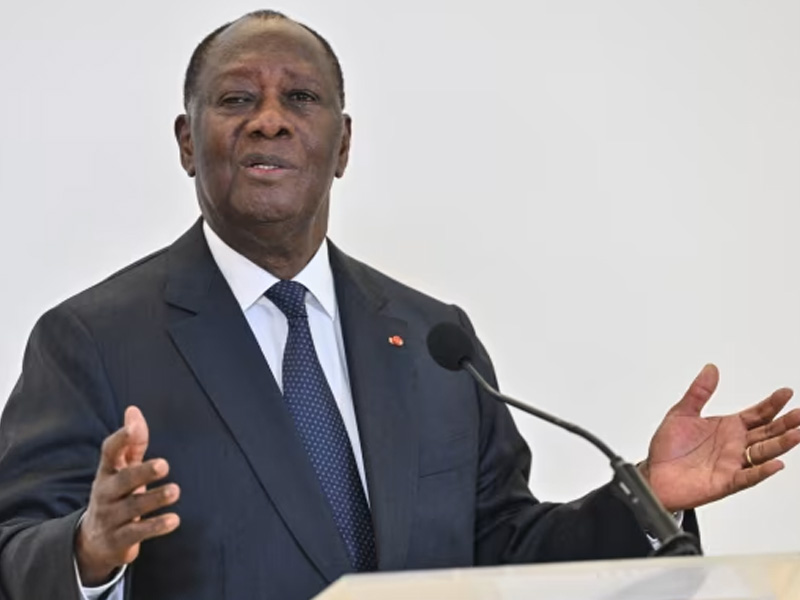
Ivory Coast’s President Alassane Ouattara has secured a fourth term in office with a commanding 89.77% of the vote, according to provisional results announced on Monday, in an election marred by low voter turnout and the absence of strong opposition contenders.
The 83-year-old leader’s overwhelming victory came as little surprise in a race widely seen as predetermined. His nearest rivals — former Commerce Minister Jean-Louis Billon and ex-First Lady Simone Gbagbo — trailed far behind with 3% and 2.4% of the vote, respectively. Both candidates swiftly conceded, congratulating Ouattara within hours of the results being released, a gesture aimed at avoiding the post-election violence that has haunted the country’s political past.
“I wish President Ouattara success for the good of our nation,” Billon wrote on social media, while Simone Gbagbo urged Ivorians to “move forward in peace.”
Despite the calm atmosphere, the polls exposed deep political fatigue and waning public confidence in the electoral process. Voter turnout hovered around 50%, a stark contrast to previous elections that drew massive participation. Many Ivorians stayed away from polling stations, citing disillusionment and a belief that the outcome had been decided long before election day.
“There was no reason to vote. Everything was arranged for Ouattara to win,” said a voter in Abidjan, echoing the prevailing sentiment of apathy.
The low participation reflected a wider regional pattern of democratic backsliding, analysts say, as leaders in several West African nations have extended their rule through constitutional revisions or judicial manoeuvres.
“Ouattara’s victory underscores a growing trend in West Africa — where incumbents entrench themselves through constitutional engineering and weakened opposition,” said political analyst Kodjo Amou. “It’s a worrying signal for democratic renewal in the region.”
Ouattara, a former International Monetary Fund (IMF) economist who has led Ivory Coast since 2011, first rose to power after a bloody post-election conflict that claimed more than 3,000 lives. His tenure has been credited with stabilising the once-turbulent nation and transforming it into one of Africa’s fastest-growing economies, buoyed by infrastructure investments and cocoa exports.
Yet critics say his administration has stifled dissent, consolidated elite power, and eroded democratic norms. His controversial decision to seek a fourth term — after amending the constitution in 2020 to reset term limits — drew condemnation from civil society groups and opposition figures, who argued it undermined the spirit of democratic transition.
While Ouattara maintains that his re-election ensures “continuity and stability,” his advanced age and the lack of a clear successor have reignited debates about leadership renewal within his ruling Rally of Houphouëtists for Democracy and Peace (RHDP).
“Ouattara’s biggest challenge now is succession,” said an Abidjan-based political commentator. “He has promised to groom new leaders, but divisions within his party make that promise difficult to fulfil. The question is — who comes after him?”
The provisional results, which must still be validated by the Constitutional Council, have so far been met with muted international reaction. The African Union and ECOWAS observers described the election as “generally peaceful” but urged the government to “strengthen inclusivity and political dialogue” to restore confidence in democratic institutions.
For many Ivorians, however, the latest election feels less like a renewal of hope and more like a continuation of the status quo.
“People are tired,” said a university student in Bouaké. “We need change, but change never comes.”
As Ouattara embarks on what could be his final term, attention now shifts to whether he will prioritise political reforms and prepare the country for a democratic transition — or tighten his grip on power in a nation where peace remains fragile and democracy increasingly hollow.
About The Author








Leave a comment