

By : Chinasaokwu Helen Okoro
U.S. Airstrikes Rock ISIS Camps in Northwest Nigeria Amid Heightened Counter-Terrorism Cooperation
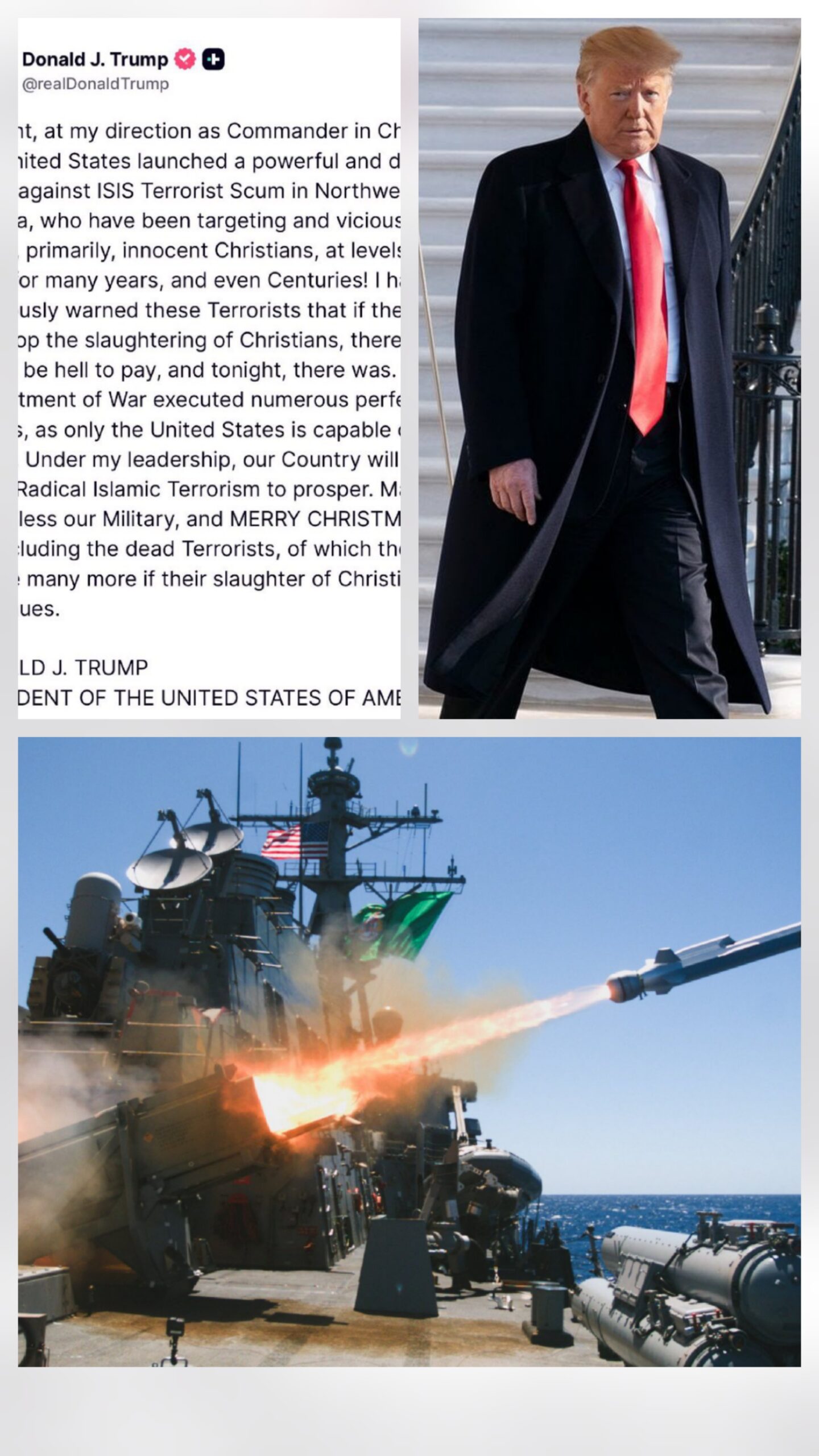
On Christmas night, in an extraordinary and controversial military move, the United States launched a series of airstrikes against Islamic State (ISIS) militant camps in northwest Nigeria’s Sokoto State, marking a significant escalation in international efforts against violent extremism in West Africa.
The strikes, both lauded and condemned, have thrust the long-standing battle against insurgency in Nigeria into the global spotlight, underscoring the complexity of terrorism, sovereignty, and international cooperation in the region.
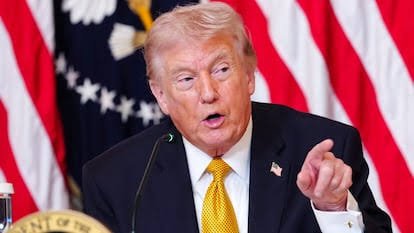
Under orders from President Donald Trump, the U.S. Africa Command (AFRICOM) executed “powerful and deadly” precision strikes against identified ISIS positions on December 25, 2025, according to official announcements. Trump framed the operation as a decisive blow against militants he accused of targeting and “viciously killing, primarily, innocent Christians” — a claim he has repeatedly highlighted in recent months to justify heightened U.S. engagement in the region.
According to AFRICOM statements, the action was carried out in close coordination with Nigerian authorities, with U.S. military assets, including naval launch platforms, reportedly used to fire missiles at ISIS camps. U.S. Africa Command indicated that multiple ISIS fighters were killed in the attack, though precise figures and full operational details remain undisclosed.
AFRICOM
The Nigerian government confirmed that the strikes were the result of structured security cooperation — a formal partnership involving intelligence sharing and strategic planning to combat the persistent threat of terrorism and violent extremism. The Ministry of Foreign Affairs emphasized that this cooperation aligns with international law, respect for Nigeria’s sovereignty, and mutual goals for regional peace. �
Anadolu Ajansı +1
In an official statement, the Defence Headquarters (DHQ) also confirmed that the joint operation received the approval of appropriate Federal Government authorities, underlining that it was based on credible intelligence and designed to degrade the operational capabilities of identified ISIS elements while minimizing the risk to civilians. �
Blueprint
While Nigerian military officials hailed the operation as a successful precision strike against foreign-linked militants that threaten both national and regional security, reactions among the Nigerian public and political figures have been mixed. Supporters argue that such international cooperation is necessary to dismantle entrenched terrorist networks that have long plagued the northern parts of the country. �
PM News Nigeria
Critics, however, have expressed deep concern about the implications of foreign military strikes on Nigerian soil. Prominent activist Omoyele Sowore denounced the U.S. action as “reckless, imperialist, and extremely dangerous,” warning that direct military intervention by external powers undermines national sovereignty and could have unpredictable repercussions for Nigeria’s political landscape and regional stability.
Sahara Reporters
The context for the strikes is rooted in years of violent insurgency in northern Nigeria, where groups like Boko Haram and ISIS-affiliated factions have conducted attacks on both Muslim and Christian communities, fuelled by a complex mix of ideological, economic, and social grievances. In the days leading up to the airstrikes, a separate suicide attack at a mosque in Maiduguri — which killed several worshippers and injured dozens — underscored the ongoing instability and multifaceted nature of violence perpetrated by extremist elements in the country.
AP News +1
The timing of the U.S. intervention — on a day of global significance and domestic celebration — has only amplified the controversy. For many, the Christmas Day strikes represent a symbolic message from Washington about its willingness to take direct action against terrorism; for others, they raise difficult questions about foreign involvement in Nigeria’s internal security affairs.
As diplomatic and security circles digest the implications, both nations have reiterated commitments to continue collaboration against shared threats. Nigeria’s government states that it will persist in working with international partners to weaken terrorist networks, disrupt financing, and enhance its own security institutions, while also safeguarding the rights and dignity of all citizens irrespective of religion or ethnicity.
Linda Ikeji’s Blog
In the coming weeks, analysts expect careful scrutiny of both the tactical outcomes of the strikes and their broader effects on U.S.–Nigeria relations, regional stability, and the global fight against extremist violence.
About The Author














Leave a comment