


Elon Musk’s SpaceX Rocket on Collision Course With the Moon as Rare Impact Nears
A piece of a SpaceX rocket launched during a mission to the Moon is expected to crash into the lunar surface on Wednesday, ending a journey that has taken more than a year through space.

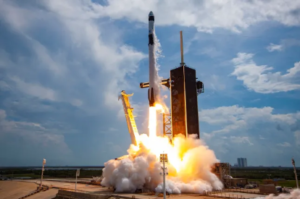
The rocket section, which lifted off in January 2025 aboard a Falcon 9 mission carrying two lunar landers and scientific equipment, completed its assignment before being left to drift in space.
Over time, the Moon’s gravity pulled the discarded booster into its orbit, setting up an unusual collision.
Scientists predict the 4,900-kilogram object will strike the Moon at about 7:35 a.m., travelling at nearly 5,400 miles per hour.
While the figures sound alarming, researchers insist there is no threat to Earth or its inhabitants.
Space analyst Bill Gray, who tracks objects moving through the Solar System, said the impact is expected to produce energy similar to the explosion of about three tonnes of TNT and leave a crater measuring roughly 17 metres wide.
He noted that the event serves as another reminder of the growing amount of abandoned equipment left behind by space missions.
The impact is expected to occur on the side of the Moon illuminated by sunlight and visible from Earth. SpaceX has not issued a public statement on the incident.
Should anyone be worried?
Scientists say the answer is no.
The Moon’s surface has survived billions of years of strikes from asteroids and other celestial objects, leaving behind countless craters that remain largely unchanged because the Moon has no atmosphere, rain or geological activity.
Dr. Ed Bloomer of the Royal Observatory Greenwich said the incoming rocket is tiny when compared with the Moon and will not cause any significant damage.
He added that scientists already know where and when the collision will occur, making it an event that can be carefully monitored rather than feared.
Will the impact be visible?
Experts say spotting the exact collision will not be easy.
Because the crash is expected to happen close to the Moon’s outer edge, even advanced telescopes may struggle to capture the moment of impact.
However, astronomers believe a faint flash of light and a cloud of dust could briefly become visible. The dust plume may remain suspended long enough for observers using powerful telescopes to detect it.
The best viewing opportunities are expected in eastern parts of the United States, Canada and much of South America.
NASA’s Lunar Reconnaissance Orbiter is also expected to pass over the impact site in the days following the collision, allowing scientists to examine the newly formed crater in greater detail.
A growing challenge beyond Earth. The discarded rocket stage is part of the increasing amount of space debris orbiting Earth and other celestial bodies.
Often referred to as space junk, these abandoned objects include old satellites, spent rocket stages and fragments from previous missions.
With more countries and private companies expanding their activities in space, experts say preventing and managing orbital debris has become one of the industry’s most pressing long-term challenges.
About The Author




















Leave a comment