

By: Chioma Madonna Ndukwu
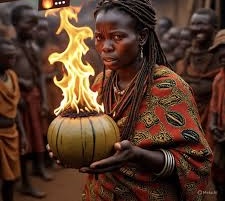
Africa’s Talking Drum: The Woman Who Kept Fire In A Calabash
When Mama Nkem first arrived in Umudike village as a young bride, people said she laughed like somebody who trusted life too much.
Her hut sat near the stream where women gathered at dawn to wash clothes and exchange gossip. She was generous with salt, patient with children, and the kind of woman who remembered if your mother was sick.
But kindness, like fresh soup, attracts many spoons. Each week, neighbours knocked at her door. “Mama Nkem, please, only a cup of garri. My husband has not sold anything.”
“Sister, lend me firewood. I will return it tomorrow.” “Auntie, keep my child small. I want to rush to market.” And she never said no.
Her husband, Okeke, watched quietly. “One day,” he warned while sharpening his cutlass outside, “people will mistake your heart for a public road. Mama Nkem laughed. “If God put yam in your barn, must rats cry outside?”
Years passed. The helping never stopped. What changed was the returning. Borrowed things returned broken. Favour became expectation. Gratitude disappeared like smoke after rain.
One dry season, sickness entered their house. Okeke could not farm. Their youngest child developed fever that sat stubbornly on his body.
For the first time, Mama Nkem walked from compound to compound asking for help. At the first house, the woman sighed. “Ahh, things are hard.”
At the second, somebody pretended not to hear her knock. At the third, a neighbour whispered through the window, “Tell her I travelled.”
Mama Nkem returned home before sunset with empty hands and swollen eyes. That night, she sat beside cold ashes where fire once danced.
Old Mama Obianuju, their neighbour, came carrying a small clay pot of soup. She placed it down gently.
“You kept fire for everyone,” the old woman said softly. “But my daughter, even fire dies when nobody feeds it.”
Mama Nkem said nothing. Outside, the village moved as usual. Children chased tyres. Men argued beneath the udara tree.
But inside her chest, something rearranged itself. From then on, she still helped people. Only now, she learned the difference between kindness and self-erasure. Some doors she opened. Some she simply greeted from afar.
And the village learned that even the kindest hands grow tired when everybody remembers to take but forgets to return.
MORAL:
Kindness should feed others, not starve you. Helping people without boundaries can slowly turn generosity into suffering. Even the warmest fire turns to ash when no one adds wood.
ENGAGEMENT HOOK:
Have you ever helped people until you realised nobody was showing up for you when you needed help? What changed after that?
About The Author

















Leave a comment