

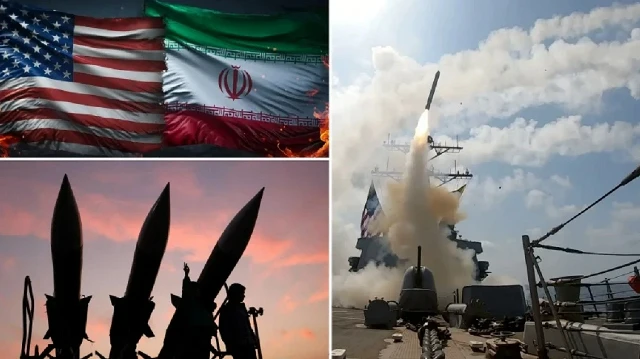
Iran Faces Fresh US Attacks as Seventh Night of Fighting Grips Region
The United States has launched another round of attacks on Iran, extending its military campaign into a seventh consecutive night as the conflict threatens to spread further across the Middle East.
US Central Command said the latest strikes began on Friday evening and were aimed at continuing to weaken Iran’s military capabilities.
Iranian media reported explosions in several parts of the country, including Sirik, Ahvaz and Yazd.
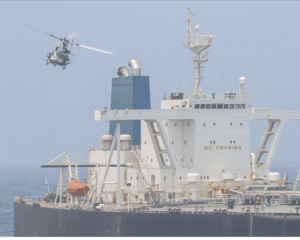
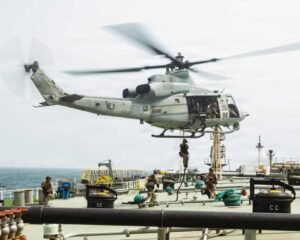
The escalation has been closely linked to the Strait of Hormuz, where tensions have intensified as the US and Iran battle for control over the movement of commercial vessels.
Iran’s Islamic Revolutionary Guard Corps claimed that two oil tankers had struck mines and exploded in the strategic waterway. The US military rejected the claim.
Iranian state media later reported that the IRGC had launched attacks against several sites connected to US military operations in the region.
These reportedly included a location at Bahrain’s Sheikh Isa air base and an intelligence facility.
Other reported targets included a US naval fuel-support facility at al-Ahmadi port and a communications centre in Kuwait.
Authorities in Kuwait temporarily suspended operations at the country’s international airport after Iranian missile and drone attacks.
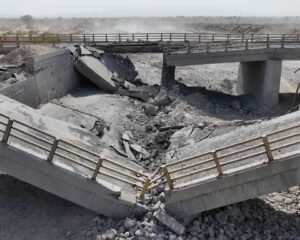
Inside Iran, the latest US offensive has reportedly caused further destruction. Iranian state television said American airstrikes hit bridges in Hormozgan province, killing at least seven people.
The bridges provide an important route to Bandar Abbas, a major Iranian port.
The US military also said it had targeted a tower at Chabahar port, alleging that the facility had been used by Iran’s Revolutionary Guard to support attacks on ships travelling through the Strait of Hormuz.
Iran’s health ministry said the renewed US attacks had killed at least 38 people and injured more than 400 others by Friday morning.
The conflict has also affected basic services. Iran’s energy ministry appealed to residents to reduce electricity consumption and limit the use of air conditioning as extreme heat combined with damage to energy infrastructure put additional pressure on the country’s power supply.
Human rights experts have warned that attacks on civilian infrastructure that has no military function could potentially amount to violations of international humanitarian law.
The latest offensive comes amid reports that US President Donald Trump is seeking to expand military pressure on Iran, including attacks on key infrastructure and energy facilities.
The strategy is reportedly intended to force Tehran to reopen the Strait of Hormuz.
The waterway has become a major source of concern for the global economy. Before the conflict, it carried about one-fifth of the world’s oil and gas supplies.
Shipping activity has dropped considerably as the violence has intensified. Some vessels have reportedly switched off tracking equipment for security reasons, while others have chosen to remain in port rather than risk travelling through the contested waterway.
Iran’s Revolutionary Guard has also warned countries hosting US military bases that they could face retaliation if American attacks on Iranian infrastructure continue.
The warning came as Iranian forces reportedly launched attacks affecting Bahrain, Kuwait, Jordan, Oman and Qatar.
Qatari authorities said a child was injured by falling debris after missiles were intercepted by air defence systems.
In Kuwait, Iranian strikes reportedly damaged a power and desalination facility, raising fresh concerns about water supplies in a country that relies heavily on desalination for drinking water.
The crisis could have even wider consequences if fighting spreads to other major shipping routes.
Iran has reportedly asked its allies in Yemen to be prepared to target the Red Sea shipping corridor if the US attacks Iranian energy infrastructure.
Such a development could severely disrupt global trade and energy supplies, adding pressure to an already fragile international economy.
Diplomatic efforts to bring the US and Iran back to the negotiating table have continued, with Pakistan among those attempting to facilitate dialogue.
However, the growing number of military attacks has made a diplomatic breakthrough increasingly difficult.
Despite the mounting tensions, President Trump has continued to insist that the US campaign is progressing successfully.
As the conflict enters another critical stage, fears are growing that continued attacks could turn the Strait of Hormuz into the centre of a much wider regional crisis, with consequences extending far beyond Iran and the Middle East.
About The Author












Leave a comment