

By Chinasaokwu Helen Okoro
Rosemary Nenini watched helplessly as her husband’s cattle perished daily during a drought that lasted from 2020 to 2022. Raised in a pastoralist family and married into one, Nenini has a deep love for cattle. “I come from a pastoralist family. My father used to have a lot of cattle, and I also married into a pastoralist family. I love cattle very much,” she says.
Drought, combined with a lack of grazing land caused by urbanization and private land ownership, along with disease and banditry, have gradually led Nenini to consider other means to make ends meet. “During drought, most of them die and also during heavy rains, they contract diseases, they lack enough feed. They are not safe because of bandits who steal them,” she says.
According to Kenya’s National Drought Management Authority, 2.6 million livestock died between 2021 and 2023, including cattle, goats, sheep, and camels, across the Arid and Semi-Arid Lands (ASAL) region. These challenges have led women in pastoral communities to seek alternative sources of income. When cricket farming was introduced, many were initially sceptical, they struggled to understand how cricket farming could provide them with a sustainable income. “When they came to teach us, the Maasai, about crickets, we were shocked. What is this cricket? At first, we did not agree with the teachings. Why are we being taught about crickets? How will crickets help us?” says Tonou Masaine, a 66-year-old cricket farmer.
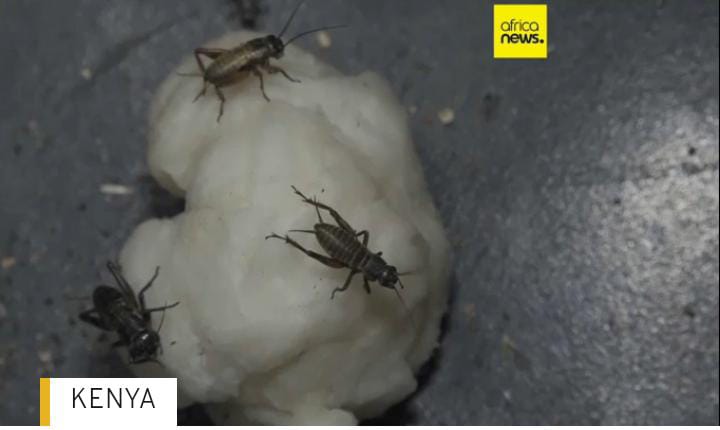
The pastoralist community in Laikipiabelieved crickets posed a threat to their livestock, with some fearing the insects could cause death. As a result, whenever crickets were spotted near homesteads, they were often killed. “We believed crickets were a bad thing. We used to say that if crickets come to our homes, they will kill our cattle. Anytime we saw a cricket near our homes, we would kill it. But later on, we were educated that it is of value, and we informed everyone at home that cricket is not dangerous,” adds cricket farmer Jennifer Sintaloi.
But with intensive training from Cordaid, Indigenous Movement for Peace Advancement and Conflict Transformation (IMPACT) and International Centre of Insect Physiology and Ecology (ICIPE), the women agreed to take up cricket farming. They no longer kill crickets, instead, they now hunt for them under rocks and place wet towels outside their homes at night to capture them. “When we agreed to be trained, we understood its value and we know it will help us in the future,” says Masaine. So far, 34 groups have been trained across pastoral communities. They have also been given rearing kits and help in setting up cricket farming facilities.
Crickets are a nutrient-rich food source, packed with protein, vitamins and minerals, making them an excellent addition to family diets. Beyond human consumption, crickets can also be used in producing animal feed. Unlike cattle, which need large expanses of land for grazing and significant amounts of water for drinking, crickets require very little space and water to thrive. “Cricket rearing does not require a lot of land, you are not required to move from one place to another, it does not take long because you do not need to go into the forest to look for feed. All you need is to build a shelter and feed them,” explains Nenini.
Crickets are typically fed vegetables, maize flour and chicken feed. They get water from cotton wool soaked in water, where they also lay their eggs. “In Kenya, one of the challenges that we may think of is drought. Now, in drought situations this will affect first the livestock producers especially in the pastoral communities and now then the cricket now provides a safety net,” says Shaphan Chia, a research scientist at International Centre of Insect Physiology and Ecology (ICIPE).
Cricket farming still faces challenges, such as cultural acceptance, where people are hesitant to eat insects. There’s also a lack of awareness about the nutritional and environmental benefits of cricket-based products.
About The Author


















Leave a comment