

Zambia President Wins Second Term, Promises Millions of Jobs
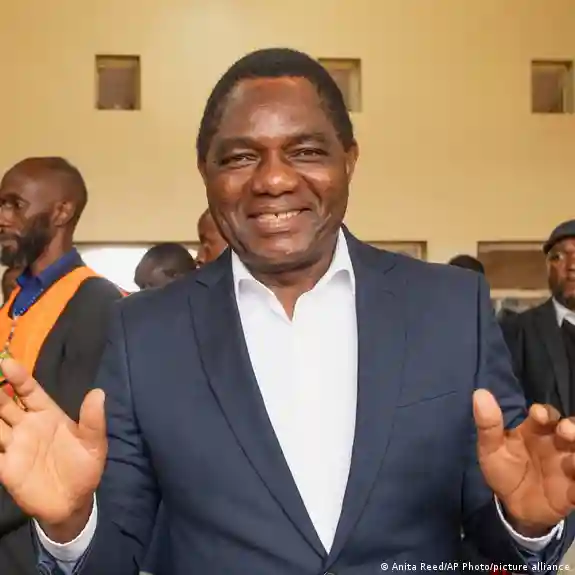
Zambia’s President Hakainde Hichilema has secured a second five-year term after winning 60 per cent of the vote, according to the country’s electoral commission.
Hichilema, 64, defeated his closest challenger, Brian Mundubile, who received 38 per cent, while 12 other candidates recorded significantly lower results.
The victory gives Hichilema another five years to pursue his economic plans, with job creation, investment and economic growth expected to remain at the centre of his administration.
During the campaign, the president promised to create millions of jobs, particularly for young Zambians, while attracting investment and expanding key sectors of the economy.
Mining, especially copper production, remains a major part of his economic strategy.
Zambia is one of Africa’s leading copper producers, and Hichilema has backed plans to increase production and bring more investment into the industry.
His government has also identified manufacturing, electricity generation and technical and vocational education as areas that could provide more employment opportunities for young people.
Hichilema’s re-election follows a first term marked by economic reforms, debt restructuring and efforts to attract foreign investors.
Despite those efforts, his second term comes with considerable pressure.
Many Zambians continue to struggle with high living costs, unemployment and poverty, and voters will expect his economic promises to produce noticeable improvements in their daily lives.
In his victory speech, Hichilema thanked voters for renewing their confidence in his administration.
“We are truly humbled by the trust you have placed in our hands,” he said.
He also praised Zambia’s democratic tradition and assured citizens who supported his opponents that his government would continue to work for them.
“To those citizens who preferred the ideas presented by our opponents, we hear you, and we will continue to work for you,” he added.
His supporters, many dressed in the red colours of his United Party for National Development, celebrated across Lusaka following the announcement of the results.
Mundubile, however, questioned the outcome and alleged irregularities in the voting process.
He claimed there were discrepancies between results recorded at polling stations and figures announced during the official tally, although he did not provide evidence to substantiate the allegations.
He also criticised a police raid on his Lusaka residence shortly before the results were announced.
Authorities had accused opposition figures of plotting an insurrection, allegations Mundubile rejected.
The electoral commission had briefly suspended the counting and announcement of results following reports of violence against polling officials and the theft of marked ballot papers in some areas. The process later resumed.
Election observers described voting day as largely peaceful but raised concerns about restrictions on opposition parties, media freedom and changes to electoral rules introduced late in the process.
The European Union’s observer mission said restrictions placed on opposition groups during the campaign may have contributed to an “uneven contest”.
The Southern African Development Community observer mission also reported allegations of intimidation, assault, abduction and property damage in several provinces, although it said it could not independently verify the claims.
It remains uncertain whether the opposition will formally challenge the result.
Zambia has a long history of peaceful transfers of power, with presidential changes taking place through elections since the country returned to multiparty democracy in 1991.
With another five years ahead, attention will now turn to whether Hichilema can deliver on his promises of millions of jobs, increased investment and stronger economic growth while improving living conditions for ordinary Zambians.
About The Author












Leave a comment