

By Ollus Ndomu
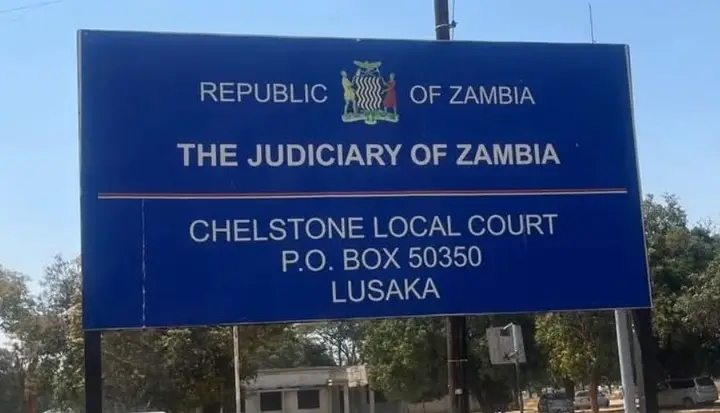
This week in Zambia’s courts, the conversation around justice has collided with politics again. The acquittal of Hibeene Mwiinga, the reopening of the Honey Bee corruption case, the conviction of Kingsley Chanda, and the bail granted to Maria Zaloumesi, popularly known as Zedfarmer, have all stirred sharp public reactions. Within hours of these rulings, Patriotic Front sympathisers claimed that the justice system targets Northerners and Easterners while protecting Tongas and Lozis.
Acquitted, But Questioned
The Lusaka Magistrate Court on Friday acquitted Hibeene Mwiinga, a former economic adviser to the late President Edgar Lungu, along with his wife Mercy Munsanje and son Hakaantu, of all corruption-related charges. The State had accused them of possessing proceeds of crime worth more than K41 million and over US$200,000, but the court ruled that prosecutors failed to prove the allegations.
Mwiinga, who comes from Southern Province, had long faced political scrutiny because of his ties to the former president. His acquittal reignited debate over whether justice is blind or influenced by invisible political balances.
Honey Bee Case Reopened
In a separate ruling, the Director of Public Prosecutions (DPP) secured leave from the Economic and Financial Crimes Court to appeal out of time against the 2021 acquittal of former Health Minister Dr. Chitalu Chilufya and Honey Bee Pharmacy Limited.
The case involves the controversial US$17 million health kit contract that became a national scandal. The court found that the original acquittal was irregular and made without proper jurisdiction, giving the DPP the right to reopen prosecution. The move signals renewed energy to revisit corruption cases that were closed under questionable circumstances.
ZRA Conviction and the “Car Scandal”
Former Zambia Revenue Authority (ZRA) Commissioner-General Kingsley Chanda was sentenced to six years in prison for abuse of authority. The court heard that he illegally donated government vehicles, including some confiscated from criminal operations, to PF officials and several clergymen. Among the beneficiaries was Archbishop Alick Banda, then a known PF ally.
The conviction has raised new debate about how far political patronage extended under the PF government and how blurred the line between state resources and party power became.
Zedfarmer Granted Bail
In another development, Maria Zaloumesi, popularly known as Zedfarmer, was granted bail after the court reduced her charge from murder to manslaughter in the Frank Simfukwe case. According to sources, the new findings showed the incident lacked premeditation. Zaloumesi, a Lozi, has been a social media personality and agricultural entrepreneur.
Her case has been widely covered, especially by those framing it as an example of regional bias in prosecution.
The Narrative of Tribal Justice
PF supporters have seized on these recent cases to argue that law enforcement agencies are sparing Tongas and Lozis while targeting Northerners and Easterners. But the logic does not stand up to scrutiny.
The truth is that most current prosecutions involve individuals who held senior government positions during the PF years. Their arrests are linked to access, not ancestry. When you controlled ministries, parastatals, and procurement, you inevitably became part of the accountability chain.
The claim of selective justice is a political shield, not an evidential argument. The same justice system that convicted a Bemba has also acquitted a Tonga. The same judiciary that jailed a Northerner has also freed a Lozi. What matters is not which region the accused comes from, but what evidence exists.
Justice Without Tribe
What Zambians should demand is consistency. The fight against corruption and abuse of office must be guided by evidence, not ethnicity. When your tribesman is jailed, do not look at the tribe; look at the proof. When another is acquitted, do not assume favour; ask for the record.
Justice, if it is to restore confidence, must remain unshaken by regional loyalties. The moment citizens begin to see handcuffs through tribal lenses, justice itself becomes tribal.
The reality is simple. Many former officials from Northern and Eastern provinces are now facing the law because they occupied the levers of power for a decade which is under scrutiny. That is not persecution. It is the return of accountability.
As one senior lawyer put it outside the Lusaka High Court yesterday, “The problem is not who is being prosecuted. The problem is that we still see tribe before truth.”
If Zambia is to move forward, that must change.
About The Author

















Leave a comment