

The Hidden Bone Loss Behind Osteoporosis
“My mother never complained about her bones,” a middle-aged woman once recalled after watching her active mother break a hip from what seemed like an ordinary slip. “We thought it was just old age.”
That quiet moment captures a truth many people never see coming. Long before osteoporosis makes headlines through painful fractures, another condition may already be weakening the body’s framework.
As British bone specialist Dr. Charles E. Dent famously said, “Osteoporosis is a pediatric disease with geriatric consequences,” reminding us that strong bones are built, and lost, over a lifetime.
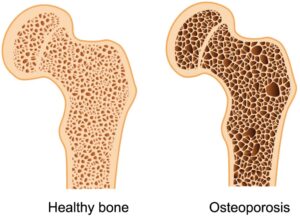
Osteopenia, a condition marked by reduced bone density, affects an estimated 40% of adults worldwide and often develops without pain or obvious warning signs.
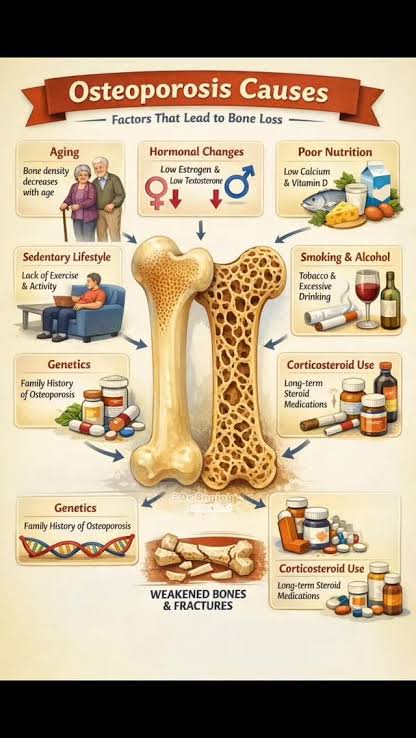
As people age, especially after menopause, bones gradually lose more tissue than they replace, while smoking, excessive alcohol use, poor nutrition, inactivity and certain long-term medications can speed up the process.
Like rust slowly eating through steel beneath fresh paint, the damage often remains hidden until a minor fall causes a major fracture.
The International Osteoporosis Foundation warns that low bone density is a major precursor to osteoporosis, while the World Health Organization recognises osteoporosis as one of the leading causes of disability and reduced quality of life among older adults.
The encouraging news is that silent bone loss is not a life sentence. Regular weight-bearing exercises such as walking, dancing and resistance training help stimulate bone formation, while calcium-rich foods and adequate vitamin D support stronger bones.
Doctors also recommend avoiding smoking, limiting alcohol and maintaining a healthy body weight.
The American Academy of Orthopaedic Surgeons says healthy lifestyle choices remain one of the most effective ways to protect bone strength, while Dr. Walter Willett, Professor of Epidemiology and Nutrition at Harvard T.H.
Chan School of Public Health, has consistently emphasised that nutrition and physical activity play a powerful role in preserving lifelong health.
Osteoporosis rarely arrives without leaving footprints. The challenge is that those footprints are often invisible until it is too late.
A simple bone density scan can detect osteopenia early, giving people a chance to slow, stop or even partially reverse bone loss before osteoporosis takes hold.
Our bones carry us through every chapter of life. Looking after them today may be the difference between walking with confidence tomorrow and living with a fracture that could have been prevented.
About The Author













Leave a comment