

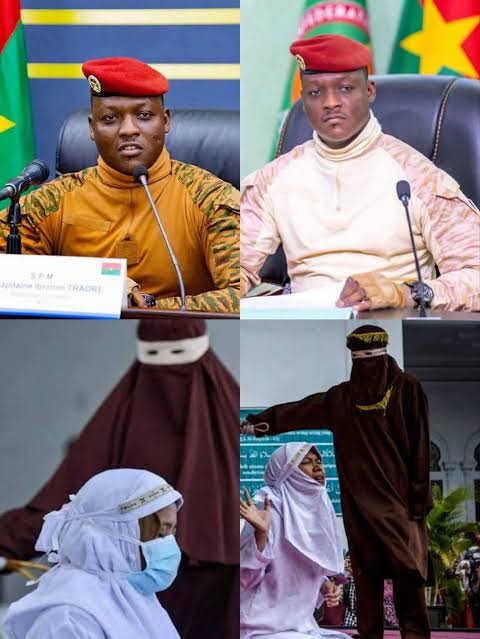
Burkina Faso Leader Makes Position on Sharia Law Clear
Burkina Faso’s transitional President, Ibrahim Traoré, has reaffirmed that his administration will not introduce Sharia law, insisting that the country will continue to uphold its secular system of governance.
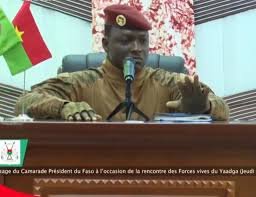
Speaking during a nationwide broadcast, Traoré said every Burkinabè is free to practise the religion of their choice, but stressed that the nation’s legal system would remain independent of religious law.
The President also expressed concern over citizens travelling abroad, particularly to Saudi Arabia, to study Sharia law.
He argued that Burkina Faso’s immediate priority is to build a workforce equipped with technical and scientific knowledge capable of driving national development.
According to Traoré, students should be investing their time in fields such as technology, engineering and innovation rather than religious legal studies, which he said do little to address the country’s economic and security challenges.
He warned that Burkinabè studying Sharia law overseas should not expect to return under his administration, maintaining that the country needs expertise that will contribute directly to its future.
“I am a Muslim, but everyone in Burkina Faso has the right to practise their religion. There will never be Sharia law in this country,” Traoré said during the broadcast.
He added that those studying Sharia law in Saudi Arabia should remain there, arguing that they had chosen a path that does not align with the country’s current development priorities.
Burkina Faso is a secular republic where Muslims, Christians and followers of traditional African religions coexist. Although Islam is the majority religion, the country’s judicial system is based on civil law rather than religious codes.
Since taking power in 2022, Traoré has repeatedly emphasised national sovereignty, institutional reform, economic self-reliance and the fight against insurgency as the central goals of his administration.
His latest comments are expected to generate discussion both within Burkina Faso and across West Africa, where debates over the relationship between religion and state governance continue to attract public attention.
About The Author








Leave a comment