

By : Chinasaokwu Helen Okoro
CFA Leash on Democracy.Africa’s hard-won democratic gains are eroding under the weight of neoliberal economics, colonial-era currencies, and leaders clinging to power, according to a new report that casts doubt on the future of political freedom across the continent.
The Open Society Foundations’ latest publication, Democracy Without Choice: How Neoliberalism Hollowed Out Africa’s Political Transitions, written by Senegalese economist Ndongo Samba Sylla, warns that multiparty systems are increasingly turning into “choiceless democracies.” While ballots multiply, meaningful sovereignty, social justice, and economic independence remain elusive.“You may have ten candidates on the ballot,” Sylla explains, “but whoever wins is bound by the same austerity, the same privatisation dogma, and the same liberalisation agenda.
The economic policy is predetermined.”Structural Adjustment and the Hollowing of DemocracyThe report traces the roots of Africa’s democratic malaise back to the structural adjustment programmes imposed in the 1980s and 1990s by the IMF and World Bank. These programmes, presented as economic stabilisation tools, demanded sweeping cuts in public spending, privatisation of state enterprises, and trade liberalisation.
At the same time, political liberalisation was encouraged, with many one-party states transitioning to multiparty systems. But according to Sylla, the marriage of austerity and political reform created a toxic contradiction.
“The promise associated with political liberalisation was hijacked by parallel economic liberalisation and its socially regressive outcomes,” the report argues.
Citizens won the right to vote but lost the ability to shape their nations’ economic destinies.The result has been a widening gulf between elections and policy outcomes.
Governments come and go, but macroeconomic orthodoxy—dictated from Washington, Brussels, and Paris—remains unchanged.“Africans got the vote, but not the power,” political analyst Emman Etuk observes. “Ballot papers replaced bullets, but the economic instructions still came from abroad.”
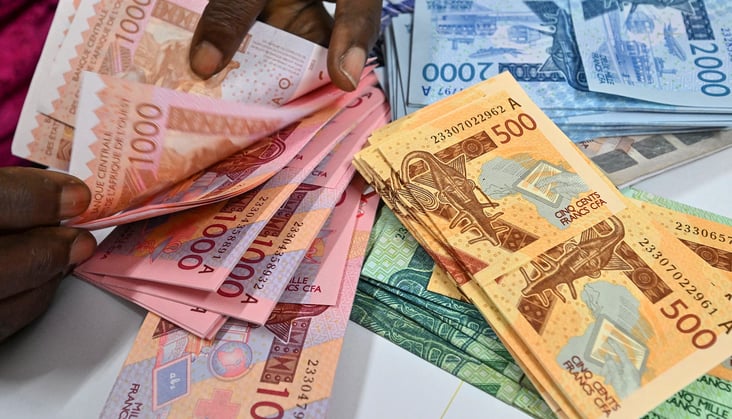
The CFA Franc: A Colonial LeashA large portion of the report focuses on the CFA franc, the euro-pegged currency used by 14 West and Central African states. Created under French colonial rule, its fundamentals have barely shifted in over six decades.
Under current arrangements, the French Treasury retains ultimate authority, limiting the monetary autonomy of member states. Sylla calls the CFA a “colonial currency” that continues to undermine sovereignty.
“When Mali’s junta took power in 2021 and sanctions froze its reserves, Malians discovered how little control their state truly had,” the report notes.
By contrast, Guinea, which issues its own currency, was immune to such financial strangulation.“Whenever leaders disobey Paris, the CFA becomes a weapon,” Sylla insists. Political analyst Etuk adds: “The CFA franc is not just a currency. It is a leash.
Each time a government pulls too far, Paris can tighten it.”Inequality and the Land Question Beyond currency politics, the report points to entrenched inequality as a corrosive force.
Even in Africa’s most celebrated democracies, such as South Africa and Namibia, racial and class divides remain stark.Decades after the end of apartheid, land ownership and wealth distribution are still highly unequal. “Formal democracy exists, but substantive democracy—where citizens feel genuine empowerment—remains absent,” the report concludes.This disillusionment is feeding rising cynicism about democracy itself.
In many countries, young people view elections less as opportunities for change and more as rituals that recycle elites.
Democracy Without Choice Sylla’s report ultimately challenges the long-held assumption that political liberalisation automatically delivers prosperity
About The Author












Leave a comment