


By Ollus R. Ndomu
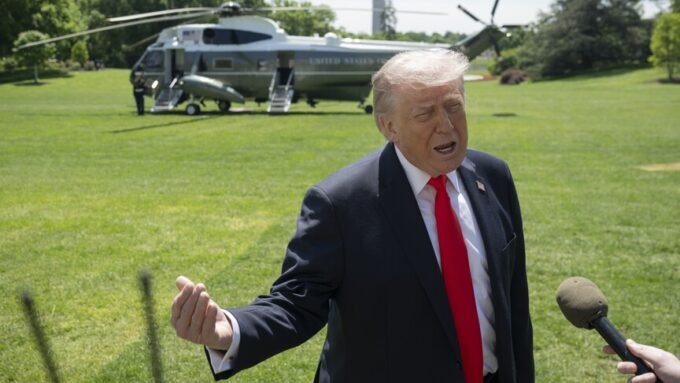
China has issued a pointed warning against foreign interference in Nigeria’s domestic affairs after former U.S. President Donald Trump suggested possible military action over alleged persecution of Christians in the country. In a rare public rebuke tied to religious-freedom accusations, Beijing expressed firm support for President Bola Ahmed Tinubu’s administration and rejected what it called the use of religion and human rights “as political instruments.”
The comment follows Trump’s listing of Nigeria as a “Country of Particular Concern” and his assertion that Washington should consider “any measure necessary” — including force — to protect Christian minorities if the Nigerian government fails to act. His remarks triggered diplomatic ripples across the region, given Nigeria’s strategic position in West Africa and its longstanding security ties with both Washington and Beijing.
China responded by affirming Nigeria’s sovereignty and recognising what it called “significant efforts toward political stability, economic growth, and social development.” Beijing warned that external actors should not exploit religious sentiment or human-rights narratives to justify involvement in African governance.
For Beijing, the dispute touches core diplomatic principles: non-interference, state sovereignty and strategic loyalty. Nigeria is one of China’s most critical African partners, with billions tied to energy, infrastructure and rail investments. Protecting that relationship is also about safeguarding influence in a region where U.S.–China competition continues to sharpen.
For Abuja, the statement provides welcome backing at a sensitive moment. Tinubu’s government has faced criticism from rights groups over security operations in the north and middle belt, where extremist violence, rural banditry and inter-communal conflict have blurred into a complex theatre of religious, ethnic and economic tension. Nigeria rejects characterisations that frame the crisis as a one-sided religious persecution, arguing that victims cut across faith and ethnicity.
The exchange places Nigeria in the crosswinds of global rivalry. Washington has historically framed governance and rights as pillars of its Africa policy. Beijing prefers quiet diplomacy and state-to-state stability. Trump’s threat — dramatic even by U.S. standards — has turned a policy designation into a geopolitical flashpoint.
The question now is whether the rhetoric escalates into formal pressure from Washington or remains campaign-season signalling. For Abuja, the stakes are unmistakable. It needs international security cooperation but not at the cost of sovereignty.
For Beijing, this moment reinforces its posture in Africa: standing with governments, not critics; privileging stability over intervention; and positioning itself as a shield against Western pressure.
Africa has watched this script before in the Sahel, Horn and Great Lakes. Nigeria is now the stage.
© AfricaWorld Reports
About The Author















Leave a comment