

By Ollus Ndomu
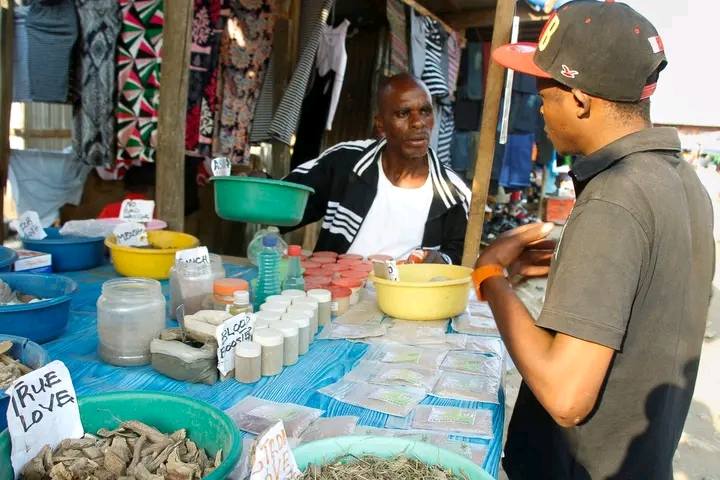
City market in Lusaka tells a story few want to speak about openly. Behind wooden stalls and loud traders selling vegetables, glass bottles and plastic sachets are stacked neatly, their names bold enough to spark curiosity: Panya Chinena, 90 Minutes, Bedroom Bully, Super Sweet Cry, Wounded Buffalo Strong Men and Women. For some, they are symbols of embarrassment. For others, they are lifelines.
Mwape, a vendor who has been selling herbal mixtures for seven years, does not hesitate when asked about demand. “Men of all ages come here,” he said, pulling a small bottle from the shelf. “Some are married, some are not. They want strength, they want confidence. Women also buy. Sometimes they hide the bottles, sometimes they mix the herbs in food. Everyone wants to keep their partner happy.”
Herbal sex boosters are no underground secret; they are displayed openly in markets across Lusaka, Kitwe, Ndola, and smaller towns. Yet the business operates outside any formal regulation, its growth driven by cultural trust in traditional medicine and the stigma men face when admitting sexual difficulties. Imported pharmaceutical products remain costly, leaving many Zambians to reach for local concoctions that cost a fraction of the price.
Doctors warn that the story is not as simple as enhanced performance. Dr. Chileshe Saili, working at a private hospital, has seen patients arrive with liver damage and kidney complications linked to prolonged use of untested remedies. “These products are not controlled,” he explained.
“Natural does not mean safe. Without knowing the dosage, people expose themselves to long-term harm.”
Evidence from research reflects the same tension between promise and risk. A study published in the Medical Journal of Zambia tested extracts of Mutimba vula and Mwana apeluke in male rats. The results showed increases in mounting and erection frequency, suggesting aphrodisiac potential. Yet the study found no significant rise in testosterone, and researchers stressed the need for further investigation before recommending human use.
Still, many consumers remain convinced the bottles deliver what they promise. On Freedom Way, a taxi driver named Kelvin held up a half-finished dose of Bedroom Bully. “This one works,” he said, laughing. “When I take it, I feel young again. My wife is happier, and I don’t have to waste money at the pharmacy.”
Women, too, are part of the story, sometimes in silence. A young woman in her twenties admitted she had once poured 90 Minutes into her partner’s drink. “He was distant and cold,” she said.
“I didn’t want to confront him. I thought maybe this would bring him closer. For a while, it worked.”
The Traditional Health Practitioners’ Association of Zambia has urged government to regulate the industry, warning that too many untrained sellers are cashing in on desperate customers. But regulation has lagged, leaving the trade to thrive on cultural acceptance and unspoken demand. For consumers, the appeal remains both psychological and practical; the idea that a bottle can restore love, save marriages, or protect a man’s pride.
What emerges is an economy of secrecy, desire, and risk. It grows not because Zambians lack awareness, but because sexuality remains locked in silence. Vendors continue to profit, consumers continue to buy, and the health risks remain buried under the need to perform.
As one elderly herbalist in Kamwala summed it up while arranging his stock: “People want respect in their homes. As long as they come to me with that need, I will always sell.”
About The Author



















Leave a comment