

By: Chioma Madonna Ndukwu
Nigeria Holds Its Breath as Supreme Court Verdict Threatens to Reshape Opposition Ahead of 2027
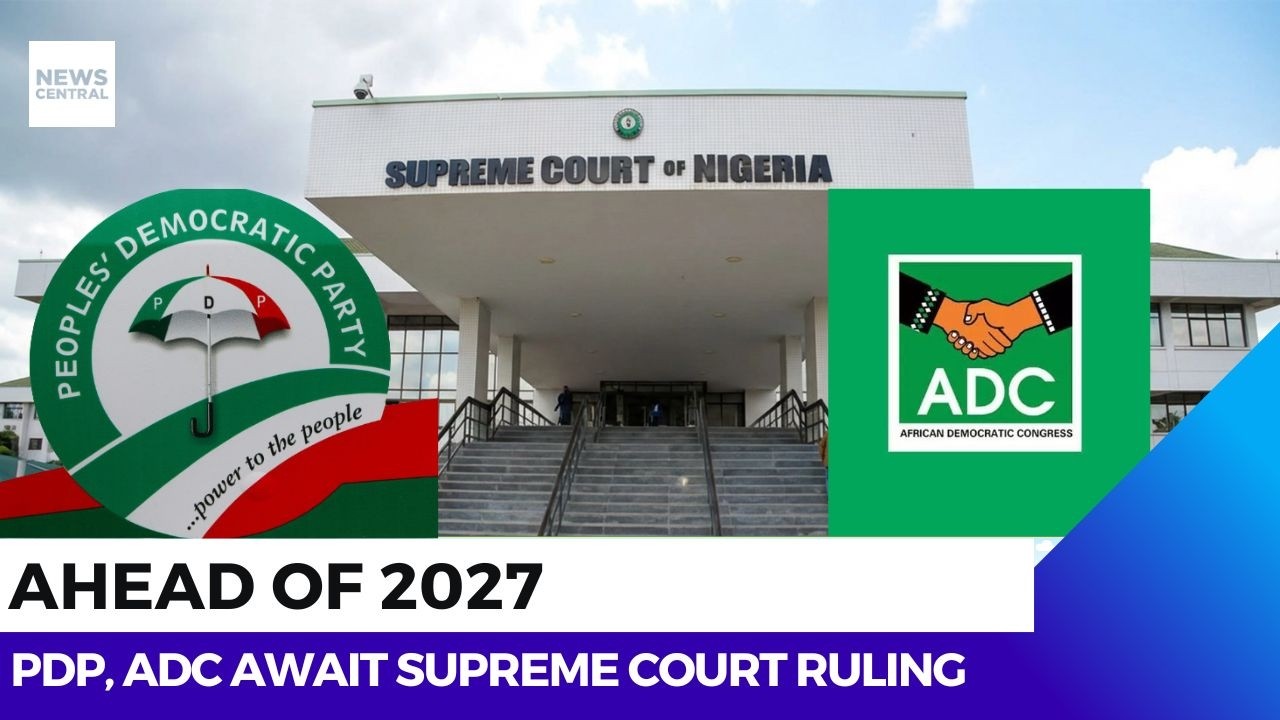
Nigeria’s political landscape is on edge as the Supreme Court of Nigeria prepares to deliver a crucial judgment that could redefine the structure and survival of key opposition parties ahead of the 2027 general elections.
At the centre of the legal battle are leadership disputes rocking the Peoples Democratic Party (PDP), Labour Party (LP), and African Democratic Congress (ADC).
The rulings are expected to determine who holds legitimate authority within these parties—an issue critical to their ability to organise congresses, conduct primaries, and field candidates under the guidelines of the Independent National Electoral Commission (INEC).
The urgency surrounding the verdict is heightened by INEC’s tight electoral timetable.
Presidential and National Assembly elections have been scheduled for January 16, 2027, followed by governorship and state assembly polls on February 6. Political parties are expected to complete their primaries between April 23 and May 30, 2026, leaving little room for prolonged legal uncertainty.
Within the PDP, the crisis centres on a fierce struggle over the national secretary position and broader questions of leadership legitimacy.
The outcome will decide which faction controls party machinery and can legally initiate electoral processes.
The ADC, increasingly viewed as a potential coalition platform for opposition heavyweights, is grappling with its own internal divisions over recognised leadership and decision-making authority.
Similarly, the LP faces structural disputes that could affect its readiness for the coming elections.
Stakeholders warn that the court’s decision could either stabilise or further fracture the opposition.
A clear ruling affirming existing leadership may pave the way for reconciliation and rapid mobilisation. However, unresolved grievances could still trigger defections and weaken internal unity.
On the other hand, a judgment that overturns current leadership structures may force affected parties into emergency reorganisation, including setting up caretaker committees and conducting fresh conventions—all within a narrow timeframe dictated by INEC.
An inconclusive verdict, analysts say, could be the most damaging outcome, potentially leading to parallel leadership claims, disputed primaries, and fresh rounds of litigation—scenarios that have historically undermined opposition efforts.
Beyond the courtroom, political actors are already weighing their options. Talks of alliances and possible defections have intensified, with several prominent figures linked to a broader anti-ruling party coalition.
Names such as Atiku Abubakar, Peter Obi, Rauf Aregbesola, and Rotimi Amaechi have been associated with ongoing efforts to build a united front capable of challenging the ruling party in 2027.
Insiders suggest that contingency plans are already in motion. Some factions are reportedly exploring alternative platforms, including the People’s Redemption Party (PRP), which offers an existing structure free from the internal crises plaguing larger parties.
There are also moves to promote newer platforms like the Nigeria Democratic Congress (NDC) as potential safe havens for politicians displaced by ongoing disputes.
Legal experts caution that time is a critical factor. With the electoral calendar already underway, any delay in the Supreme Court’s decision could render eventual judgments ineffective.
Some analysts argue that adverse rulings could weaken the opposition’s bargaining power, disrupt coalition talks, and deepen internal fractures.
Others maintain that while parties will remain legally recognised, the aftermath of the judgment could trigger significant internal shifts, including defections and leadership realignments.
Despite public assurances of confidence from party leaders, behind the scenes, there is growing recognition that today’s ruling could mark a defining moment—not just for individual parties, but for the entire opposition movement in Nigeria.
As the nation awaits the verdict, the stakes could hardly be higher: the decision may well determine whether the opposition enters the 2027 race united and competitive—or divided and struggling to keep pace.
About The Author










Leave a comment