

Spain Battles Border Crisis as 60,000 Migrants Cross From Morocco Into Ceuta, 34 Dead
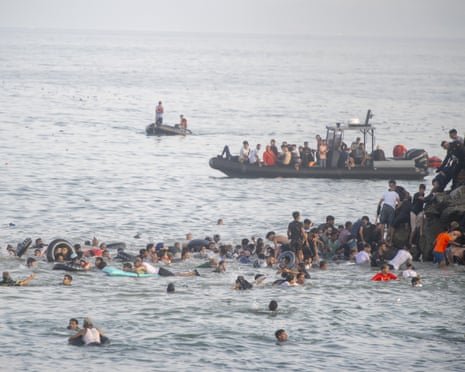
Spain is grappling with one of its biggest border emergencies in recent years after an estimated 60,000 migrants crossed into the Spanish enclave of Ceuta from Morocco within 24 hours, leaving at least 34 people dead.
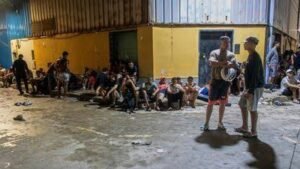
The massive influx has overwhelmed local authorities, with Ceuta’s regional government warning that the autonomous city can no longer cope with the growing number of arrivals.
“The situation that Ceuta is going through is absolutely unsustainable,” Ceuta President Juan Jesús Vivas said on Friday.
The crossings began on Thursday and continued into Friday despite heightened security along the border.
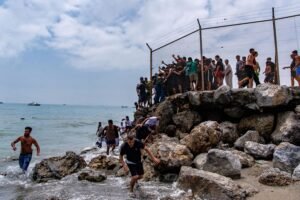
Thousands of migrants attempted to reach the Spanish territory by swimming across the sea, while others gathered near the border fence hoping to enter.
Spanish Prime Minister Pedro Sánchez visited Ceuta on Friday, where he condemned the mass crossing, describing it as a violation of Spain’s territorial integrity.
He accused human trafficking networks of spreading false hopes among migrants and encouraging dangerous journeys that have cost many people their lives.
Authorities said many of the victims drowned during the crossing, while others reportedly died in the chaos near the Tarajal border area as large crowds surged towards the fence.
Videos from the border showed Moroccan security forces using tear gas to disperse groups gathered on nearby hills, even as more migrants continued making their way towards Ceuta through the water.
Rachid Sbihi, who represents members of Spain’s Civil Guard, described the situation as a humanitarian emergency, saying parks and public spaces had become temporary shelters for thousands of migrants, including unaccompanied children.
“People are still entering. The reinforcements, including Spanish military troops, that have arrived are only helping the injured and other humanitarian efforts. It’s chaotic,” he said.
Ahmed Karim, a Moroccan migrant, said unemployment and limited economic opportunities pushed many people to risk the dangerous journey in search of a better future.
Moroccan authorities deployed additional police officers, water cannons and other measures to stop more people from crossing, but rights groups said migrants continued to enter Ceuta through the sea.
Morocco’s ambassador to Spain, Karima Benyaich, said her country remained committed to legal and orderly migration and expressed hope that those who crossed into Ceuta would voluntarily return.
Spanish officials believe the sudden surge may have been fuelled by a recent Supreme Court ruling involving migrants arriving by sea.
According to Sánchez, criminal smuggling networks misrepresented the court’s decision and used it to encourage thousands of people to head for Ceuta.
The crisis has also sparked political debate across Europe.
Critics of Sánchez’s migration policies argue that Spain’s decision earlier this year to regularise hundreds of thousands of undocumented migrants has encouraged more arrivals, a claim the Spanish government strongly rejects.
Neighbouring countries have also reacted. Italy warned it could tighten its border arrangements with Spain, while France announced increased border checks to monitor movements linked to the crisis.
The unrest spread beyond Ceuta as groups of migrants also attempted to enter Melilla, Spain’s second enclave in North Africa.
Reports from the Moroccan border town of Bni Nsar said clashes broke out between migrants and security forces, resulting in injuries and multiple arrests.
With reception centres already operating beyond capacity before the latest arrivals, Spanish authorities now face the enormous challenge of providing humanitarian assistance while restoring order along one of Europe’s busiest migration routes.
About The Author


















Leave a comment