

By: Chioma Madonna Ndukwu
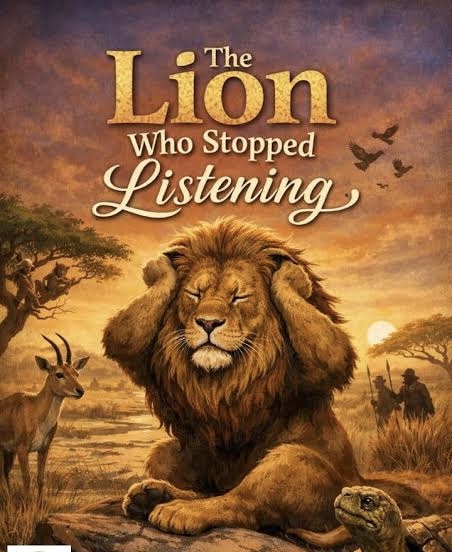
Africa’s Talking Drum: The Lion Who Stopped Listening
In the savannah, the Lion once ruled with the council of animals. Decisions were spoken together, even if the Lion’s voice carried more weight.
But over time, the Lion began to interrupt more than he listened. “I don’t think we need long meetings anymore,” he said one morning.
The Elephant replied, “But every animal must agree before decisions are made.” The Lion shook his mane. “Agreement slows progress.”
After that day, things changed quietly. Water access, hunting routes, movement across the land , everything started passing through the Lion alone. The other animals adjusted, not because they agreed, but because they feared disruption.
The Zebra told his young ones, “Just follow what is decided. Don’t ask too many questions.” One dry season, the rivers shrank. The animals gathered near the last remaining waterhole.
The Elephant stepped forward. “We need equal sharing. Otherwise, some of us will not survive.” The Lion replied, “I will manage it.”
The Hippo frowned. “Manage it? We are all suffering.” The Lion looked at him. “I understand survival better than any of you.”
No one answered after that. Not because they agreed, but because arguing no longer felt useful. Days passed. The Lion controlled access to the waterhole. Some animals were allowed in, others were turned away.
But something changed that the Lion did not notice at first, fewer animals came to him directly. They began gathering elsewhere, making small decisions without him.
One evening, the Lion went alone to the waterhole. It was full, but empty of others. He waited and finally said, almost irritated, “Where is everyone?”
The Tortoise, who had been watching from a distance, replied, “They are no longer waiting for you.” The Lion turned. “What do you mean?”
The Tortoise said, “They still live here. They just don’t depend on your voice anymore.” The Lion went silent.
The next day, the animals gathered again, without calling him. They agreed on a simple rule: no single animal would control the water.
When the Lion arrived later, he was not rejected. He was just no longer central. He stood at the edge and said quietly, “So this is what it feels like.”
The Elephant replied, “It is not punishment. It is what happens when listening stops.” The Lion did not argue this time.
Because for the first time, he understood that authority does not collapse loudly. It slowly becomes unnecessary.
Moral:
Leadership weakens not when people rebel, but when they stop depending on the leader’s voice to solve their lives. Power does not fall suddenly. It fades when it stops being needed.
Engagement Hook:
When leaders stop listening, is it better for people to confront them, or simply move on and build without them?
About The Author

















Leave a comment