

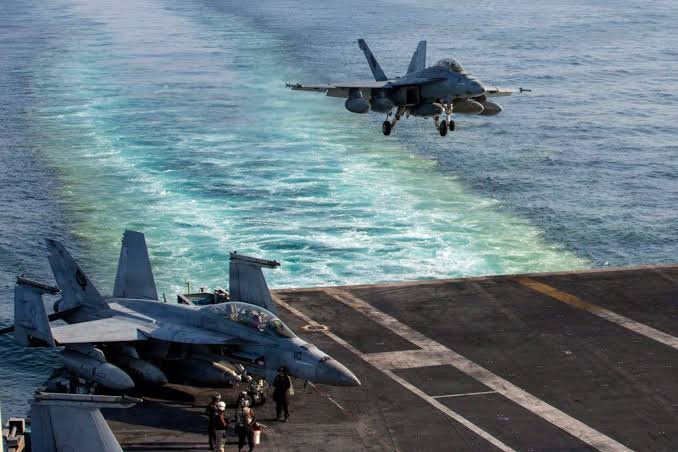
US Launches Second Day of Strikes on Iran as Conflict Intensifies
The United States has carried out a fresh wave of military strikes on Iran, extending its offensive into a second straight day amid rising tensions in the Middle East and growing fears that the conflict could widen.
The latest attacks came shortly after US President Donald Trump announced that the temporary arrangement aimed at ending the fighting had collapsed, blaming Iran for renewed attacks on commercial shipping in the Strait of Hormuz.
According to Iranian state media, explosions were reported in Bandar Abbas, Sirik and Bushehr Province during the overnight operation. Bushehr is home to Iran’s only operational nuclear power plant.
The US Central Command later confirmed that American forces had launched additional strikes, saying the operation was designed to weaken Iran’s ability to disrupt international shipping through the Strait of Hormuz, a vital route for global oil exports.
The renewed military action follows attacks on three cargo vessels in the strategic waterway earlier this week, an incident that triggered a sharp escalation between Washington and Tehran.
The US has also withdrawn a temporary sanctions exemption that had allowed Iran to continue limited oil exports.
The latest exchange of attacks has further weakened hopes that the June interim agreement between both countries could lead to a permanent peace deal.
Iran also continued its operations against US military facilities in the Gulf. Following earlier attacks on bases in Bahrain and Kuwait, fresh missile and drone strikes were reported on Thursday.
Bahraini authorities activated air raid sirens, while Kuwait’s military said it intercepted several aerial threats before they reached their targets.
Iranian media further reported explosions on Abu Musa Island, a strategically important island in the Strait of Hormuz that remains at the centre of a long-running territorial dispute between Iran and the United Arab Emirates.
Officials in Tehran, however, said the Bushehr nuclear facility was not affected by the latest strikes.
The conflict has continued to affect global markets, with oil prices climbing significantly as investors reacted to concerns over possible disruptions to energy supplies. Major US stock indexes also recorded losses amid growing uncertainty.
Within the United States, the renewed military campaign has generated political debate. Senator Bernie Sanders criticised the continued strikes, warning that expanding the conflict would lead to greater human and financial costs.
Before the latest attacks, President Trump had indicated that further military action was likely, insisting that the United States would continue to respond to what it described as Iranian aggression against international shipping.
Iran has rejected those accusations, maintaining that it has the right to regulate maritime activities in the Strait of Hormuz under the terms of the temporary agreement reached last month.
Meanwhile, Iran is preparing to bury its Supreme Leader, Ali Khamenei, in the holy city of Mashhad after his reported death during the early stages of the conflict.
The funeral follows several days of nationwide mourning attended by millions of people across Iran and neighbouring Iraq.
About The Author

















Leave a comment