

US Supreme Court Protects Birthright Citizenship, Backs States on Transgender Sports
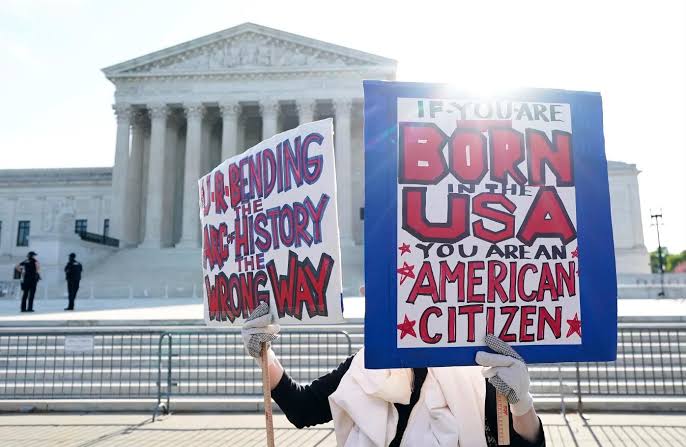
The United States Supreme Court issued a pair of landmark rulings on Tuesday, rejecting former President Donald Trump’s attempt to end birthright citizenship while giving states the authority to bar transgender athletes from competing in female sports.
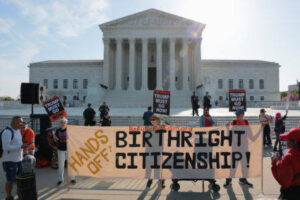
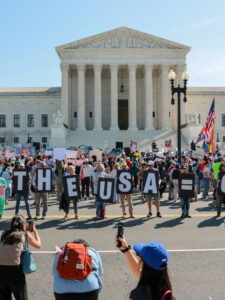
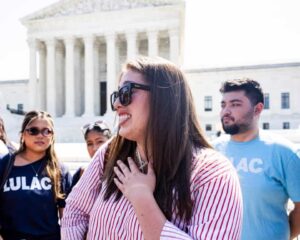
The court’s decision to preserve birthright citizenship was hailed by civil rights groups and Democratic lawmakers, who described it as a victory for constitutional protections guaranteed under the 14th Amendment.
The Center for American Progress said the ruling reaffirmed a principle that has defined American citizenship for more than a century, arguing that any attempt to strip citizenship from children born in the United States would have undermined both the Constitution and the country’s democratic values.
The NAACP also welcomed the judgment, saying the court had dealt a significant setback to efforts aimed at weakening constitutional rights.
Its President, Derrick Johnson, said the decision reaffirmed a fundamental safeguard that remains central to American democracy.
House Democratic Leader Hakeem Jeffries described Trump’s executive order as unconstitutional, while Senator Alex Padilla of California said the ruling carried special significance for him because his parents were once undocumented immigrants before becoming U.S. citizens.
Although he celebrated the outcome, Padilla cautioned that legal and political battles over constitutional rights were likely to continue.
Conservative leaders reacted sharply to the decision. Former White House adviser Stephen Miller condemned the ruling, arguing that birthright citizenship had been wrongly interpreted and insisting that American citizenship should not automatically be granted to everyone born in the country.
Heritage Foundation President Kevin Roberts also criticised the judgment, calling it a betrayal of American sovereignty and urging lawmakers to pursue a constitutional amendment to reverse the long-standing interpretation of the citizenship clause.
At the time of the ruling, Trump had not directly commented on the birthright citizenship decision. He instead praised another Supreme Court ruling that expanded campaign spending rights for political parties, calling it a major victory for Republicans and the First Amendment.
House Speaker Mike Johnson expressed disappointment with the birthright citizenship judgment, arguing that the policy had encouraged so-called birth tourism.
However, legal arguments presented before the court acknowledged that the actual scale of the practice remains unclear, with available estimates indicating it accounts for only a small fraction of births in the United States each year.
In a separate ruling, the Supreme Court upheld state laws allowing participation in women’s and girls’ sports to be determined by biological sex, effectively permitting states to exclude transgender athletes from female teams.
The decision arose from legal challenges filed by college athlete Lindsay Hecox in Idaho and high school student Becky Pepper-Jackson in West Virginia.
The majority concluded that the state laws did not breach Title IX, while the court’s three liberal justices dissented, arguing the restrictions violate constitutional guarantees of equal protection.
About The Author















Leave a comment