

Trump’s Gaza Peace Push Faces New Hurdle as Envoy Heads to Israel
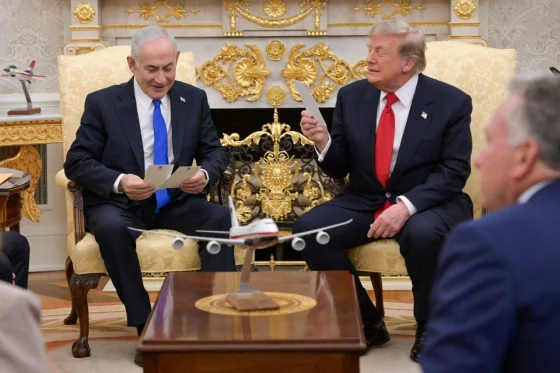
US President Donald Trump’s latest diplomatic effort to end the war in Gaza has entered a critical phase, with his Middle East envoy, Jared Kushner, arriving in Israel as Washington seeks to bridge the growing divide between Israel and Hamas.
Kushner is due to hold talks with Israeli Prime Minister Benjamin Netanyahu after meeting Hamas representatives in Egypt, where discussions centred on how Trump’s proposed framework could be put into effect.
The American initiative contains 15 points, including the disarmament of Hamas and other armed groups, the withdrawal of Israeli forces from Gaza and the creation of a new civilian Palestinian authority to govern the territory.
Israel has rejected the proposal in its current form.
A Palestinian official said Kushner met a Hamas delegation led by the group’s overall leader, Khalil al-Hayya, in Egypt on Sunday.
Officials from Egypt, Qatar and Turkey, which have been involved in mediation efforts, also took part in the talks.
The discussions focused on what would happen to Gaza’s administration if the plan moved forward.
Among the issues considered were transferring authority to the National Committee for the Administration of Gaza, preventing Hamas from returning to government, arranging an Israeli withdrawal and deploying an international force to help stabilise the territory.
Hamas later called on the mediators and Trump’s Board of Peace to increase pressure on Israel to accept the proposal and return to substantive negotiations.
Kushner also met Egyptian President Abdel Fattah el-Sisi during his visit. Nickolay Mladenov, the high representative for Gaza to the US-led Board of Peace, and former British Prime Minister Tony Blair are expected to take part in further discussions with Netanyahu.
But the central disagreement remains unresolved.
Netanyahu has repeatedly said Israel will not withdraw its forces until Hamas has been fully disarmed.
“Israel rejects the Board of Peace’s 15-point document on Gaza,” he said last week. “The IDF will not carry out any withdrawal until Hamas is genuinely disarmed.”
The Israeli prime minister is under pressure from both abroad and within his governing coalition. Far-right National Security Minister Itamar Ben Gvir has opposed any reduction in Israel’s military campaign and has pushed for a tougher response against Hamas.
Israel’s rejection has also drawn criticism from eight Muslim-majority countries — Egypt, the United Arab Emirates, Qatar, Saudi Arabia, Jordan, Turkey, Pakistan and Indonesia.
In a joint statement, the countries warned that opposition to the US-backed proposal could undermine efforts to achieve a lasting settlement in Gaza.
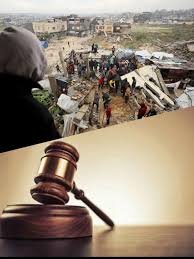
The diplomatic manoeuvring is taking place against a backdrop of continuing violence. Although a ceasefire began on October 10 last year, Israel and Hamas have continued to accuse one another of violating the agreement.
The Israeli military said it had targeted Hamas and Islamic Jihad fighters in Khan Younis and Nuseirat. Medical workers in Gaza reported that several people sheltering in a tent camp in Khan Younis were injured.
Gaza’s Hamas-run health ministry says more than 1,200 people have died since the ceasefire began. UNICEF has said at least 300 children were among those killed during that period.
The wider war began with the Hamas-led attack on southern Israel on October 7, 2023, when about 1,200 people were killed and 251 taken hostage. Israel responded with a large-scale military campaign in Gaza.
More than 73,000 people have since been killed in Gaza, according to the territory’s health ministry, including more than 21,000 children.
The United Nations estimates that around 1.9 million people — approximately 90 per cent of Gaza’s population — have been displaced.
Kushner’s meetings with both Hamas representatives and Israeli leaders have placed him at the centre of Washington’s latest attempt to break the deadlock.
Whether the diplomatic effort can overcome the dispute over Hamas’ disarmament and Israel’s withdrawal could determine the fate of Trump’s Gaza peace framework.
About The Author


















Leave a comment