

A silent struggle: Growing up with undiagnosed learning difficulties (dyslexia) in Nigeria
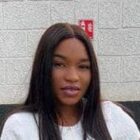
By Chinelo Ngolikaego Ezigbo
I grew up within the walls of academia at the University of Nigeria, Nsukka (UNN), where my father worked as a lecturer. I attended the university staff primary and secondary schools, surrounded by the children of professors, scholars, and senior staff. By many standards, I had a privileged upbringing part of Nigeria’s upper-middle class at the time.School supplies
But behind the surface of that privilege was a quiet struggle that no one could name.
As a child in the late 1970s, I was called lazy, distracted, a daydreamer even “iti, olodo, mumu” as dullards are termed in local/street Nigerian parlance. The truth was much simpler: I was a child living with dyslexia.
At that time, dyslexia was virtually unheard of in Nigeria. I struggled in silence, trying to keep up with reading, writing, and spelling tasks that came so easily to my classmates. Teachers scolded me, convinced I just wasn’t trying hard enough. My parents were worried, but they too didn’t have the words or tools to understand what was happening. I knew I wasn’t stupid, but the constant confusion and frustration made me feel like I was. That shame stayed with me for years.
Decades later, not much has changed for many Nigerian children. They are still being judged, misunderstood, and unsupported not because they lack ability, but because they learn differently.
Dyslexia: A Hidden Challenge in Nigeria
Dyslexia is a learning difference that affects how the brain processes written language. It has nothing to do with intelligence. Children with dyslexia may reverse letters, struggle to sound out words, or need more time to understand what they read.
In many Nigerian classrooms where learning still relies heavily on rote memorisation, copying from the board, and speed these children are quickly left behind.
An estimated one in five Nigerians may have dyslexia. Yet most will never be diagnosed. Instead, they’re often labelled stubborn, lazy, or unserious. In some homes, parents turn to prayer or punishment, thinking the child is simply refusing to learn. I’ve known families where children were beaten not out of cruelty, but fear and frustration. Sadly, this often drives the child deeper into silence, shame, and self-doubt.
The Nigerian Gap: Policy, Awareness, and Resources
Right now, Nigeria has:
• No national dyslexia strategy
• No policy requiring early screening in
public schoolsSchool supplies
• No structured training for teachers on how to support dyslexic learners
• No dedicated funding for assistive technology, assessments, or tailored interventions
This means that even though dyslexia is one of the most common learning differences, it remains largely invisible in our school system. Children are slipping through the cracks just as I once did.
There are encouraging signs of progress. Organisations like Dyslexia Nigeria, Dyslexia Help Africa, and the Dyslexia Foundation Nigeria are working hard to raise awareness. They offer screenings, teacher workshops, parent training, and one-on-one support for children. But their reach is mostly limited to Lagos and Abuja. Many families and teachers in other parts of the country have never heard of them. And even when they do, the cost of screening and intervention can be far beyond what most families can afford especially in rural or low-income communities.School supplies
The Cost of Being Missed
When dyslexia goes unnoticed, it doesn’t just affect academics it cuts deep emotionally. Children begin to see themselves as failures. Some act out. Others become quiet and withdrawn. Many lose confidence before they’ve had the chance to understand their own strengths.
I remember sitting in class, heart pounding, too scared to raise my hand knowing I’d probably get the answer wrong, again. That fear and shame followed me into adulthood. It’s a burden no child should carry.
A Path Forward: What Needs to Happen
We cannot keep letting children fall behind simply because their brains work differently. Change is possible if we take bold, practical steps.
The government must:
• Introduce and fund early screening in primary schools, especially in public and rural schoolsSchool supplies
• Provide structured training for teachers to spot and support dyslexic learners
• Include dyslexia in national education and disability policies
• Fund assistive technologies and assessments for schools across the country
• Support nationwide awareness campaigns to reduce stigma
• Encourage collaboration with NGOs already doing the workSchool supplies
The Role of Religious and Professional Communities
Beyond government, churches and mosques have the power to shift mindsets. These are trusted voices in every Nigerian community. By speaking openly about learning differences through sermons, youth programmes, and women’s groups, faith leaders can help reduce shame and offer much-needed encouragement to families. Sometimes, all a struggling child needs is to hear that they are not cursed, not lazy, they just learn differently.
We also need the support of professional bodies like the Nigerian Medical Association (NMA), the Association of Psychiatrists in Nigeria, and the Nigeria Union of Teachers. Their leadership can drive systemic change through curriculum reform, teacher training, and medical advocacy. If education, health, and faith sectors come together, we can build a culture that supports every child thrive.
Why I’m Speaking Out Now
I wasn’t diagnosed until I was in my 30s after I moved to the UK. That diagnosis changed everything. Suddenly, the years of struggle made sense. With support, I received tools that helped me finally learn in a way that worked for me: extra time during exams, coloured overlays for reading, text-to-speech software, and teaching methods adapted to how my brain processes information.
With those tools in place, I achieved what once felt impossible: a double degree in Mental Health Nursing and Social Work.
Every Nigerian child deserves that same opportunity and much earlier than I had it.
That’s why I’m speaking out now. As a mental health professional and former disability analyst, I’m committed to building a bridge between Nigerian and UK advocacy efforts. My goal is simple: to make sure no child no matter where they live or how they learn ever feels invisible again.
Dyslexia is not a curse. It’s not a sign of laziness. And it’s certainly not a measure of intelligence. It’s a different way of learning and with the right support, children with dyslexia can flourish.
● Ngolikaego Ezigbo is a mental health nurse and social worker with the NHS (UK), and a former disability analyst. She is passionate about neurodiversity, inclusion, and improving support for children with learning differences in Nigeria and beyond.
About The Author










Leave a comment