Home News Africa From Addis to Belém: Is Multilateralism Back on Track?
Africa

From Addis to Belém: Is Multilateralism Back on Track?

Share
Share

From Addis to Belém: Is Multilateralism Back on Track?

Nnaemeka Oruh

The abiding vision of COP30 is the Global Mutirão. This concept, birthed by the Brazilian COP30 Presidency, recognises the need for collective action built brick by brick from the local to the national, the regional, and the global. Mutirão therefore places its feet firmly on the grounds that nothing concrete can be attained in the global drive for climate resilience and sustainable growth without collective and collaborative actions.

This perhaps became extremely urgent as the world battled an attack on multilateralism following the change of government in the United States of America, earlier this year. As some are putting a knife on the things that held us together, it became increasingly important that the world rally and bring back that very important spirit of multilateralism as aptly captured by the Mutirão vision.

Significantly, this year too, the United Nations Framework Convention on Climate Change (UNFCCC) brought back the climate weeks with the first one taking place in Panama. Currently, the second climate week is going on in Ethiopia–the Origin of Life and a significant venue to resurrect the spirit of humanity.

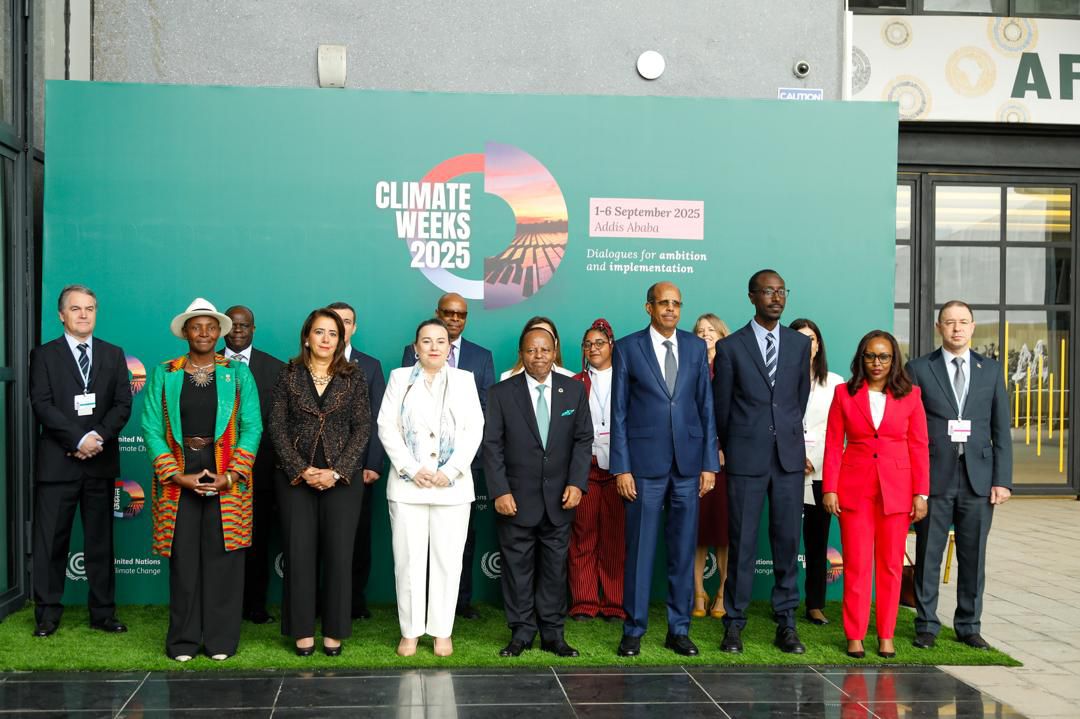
What immediately captures the attention of many participants during the high-level Opening Ceremony today, is the level of importance given to this by the international community with the event graced by Deputy Executive Secretary of the United Nations Framework Convention on Climate Change (UNFCCC), Ms. Noura Hamladji; both High-level Champions for COP29 and COP30, Ms Nigar Arpadarai and Dan Ioschpe respectively; both COP29 and COP30 Youth Champions, Leyla Hasanova and Marcele Oliveira respectively; Chair of the SBI, etc.

Strikingly, the presence of these champions of climate action was underscored by a repetitive call for collaboration.

Accordingly, Ms. Noura Hamladji stressed that there is no solution to climate change at the scale needed without solidarity and enlightened that climate weeks are about harvesting innovation, sharing best practices, and turning pledges into action.

Ms Hamladji’s view was further echoed by the COP29 High-level Champion and Member of Parliament, Ms Nigar Arpadarai, who highlighted the risk of mistrust in the climate change process and why COP29 tried to ensure that the voices of the global south were heard loud and clear. She reiterated that to succeed, the COP process must reinvent itself all the time and be deeply etched in honesty, humanity, and a deepening of trust.

This overwhelming emphasis on trust, solidarity and collaboration, becomes more significant when one takes into consideration the fact that for the UNFCCC, the focus for this second climate week is “Finance for Adaptation”— a focus that resonates with African needs and vision which was highlighted by the Chair of the African Group of negotiators, Dr. Richard Muyungi, when he called for COP30 to make the Global Goal on Adaptation work for Africa. This was further backed by the COP30 Youth Champion.

For Oliveira the youths’ focus is on adaptation finance, with the local communities and people directly impacted part of the decision process.

This unified call for adaptation finance remains a key pillar of Africa’s climate demands. But it must come in the form of grants, and not loans disguised as climate finance.

What one then expects is that this rekindling of the spirit of multilateralism must transcend beyond talks to action. There is an urgent need to mount the right pressures and ensure that the right support is delivered to Africa’s most vulnerable. This is critical as we move from Addis to Baku, to Belém, and beyond.

Thankfully, Ethiopia’s efforts at championing homegrown options and showing conscious leadership on climate action, including through its “Green Legacy Initiative” and the targeted generation of over 5,000 MWs of power through its “Grand Ethiopian Renaissance Dam,” shows Africa’s commitment to champion climate action even as a low-emitting continent. It further sends a message to other African leaders to take up the gauntlet and run with the idea that the continent’s sustainable development is anchored on well-structured climate action.

*Oruh, who is Senior Policy Analyst on Climate Change at the Society for Planet and Prosperity wrote from Addis Ababa.

About The Author

Share

Leave a comment

Leave a Reply

Your email address will not be published. Required fields are marked *

LATEST POST

InternationalSport

“Maybe He’s a Racist” — Trump Takes Aim at NBA Superstar LeBron James

“Maybe He’s a Racist” — Trump Takes Aim at NBA Superstar LeBron James US President Donald Trump has stirred controversy after suggesting that...

Africa

Africa’s Talking Drum: Mama Nkem Left Before Her Daughter Was Ready

By: Chioma Madonna Ndukwu Africa’s Talking Drum: Mama Nkem Left Before Her Daughter Was Ready In Umuoma Village, people said that a mother’s...

Sport

Cash Reportedly Stolen From Super Falcons Players’ Hotel Rooms in Casablanca

Cash Reportedly Stolen From Super Falcons Players’ Hotel Rooms in Casablanca The Super Falcons’ preparations for the 2026 Women’s Africa Cup of Nations...

AfricaMetro

Harvard-Trained Nigerian-American Engineer Raises $7m for Robot Designed to Assist Hair Braiders A Nigerian-American engineer and Harvard graduate, Yinka Ogunbiyi, has secured $7 million in seed funding to develop a robotic device designed to make hair braiding faster and less physically demanding for professional stylists. Ogunbiyi’s company, HaloBraid, is developing what it describes as the world’s first patented braid-assist robot. The device is designed to work with hairstylists by handling some of the repetitive movements involved in knotless braiding. The funding round was led by Seven Seven Six, a venture capital firm founded by Reddit co-founder Alexis Ohanian. AlleyCorp and Bling Capital were also among the investors. The technology has already attracted significant interest, with more than 7,000 salons reportedly waiting to use the system. HaloBraid is designed as a collaborative robot, meaning it works alongside a human stylist instead of attempting to replace one. The hairstylist remains responsible for sectioning the hair, creating the initial knot and completing the final styling. The robot then assists with the repetitive weaving process down the length of the braid before the stylist returns to finish and shape the ends. According to the company, the technology could cut the time spent on some knotless braid appointments by roughly half, allowing salons to serve more clients while reducing the physical pressure on stylists. For Ogunbiyi, the idea was born from personal experience. During the COVID-19 pandemic, she spent four days installing knotless braids on herself, an experience that made her consider how technology could assist with the most repetitive aspects of the process. She subsequently teamed up with co-founder David Afolabi to develop HaloBraid. The company’s technology is also aimed at addressing the physical demands of professional braiding. Stylists who spend years performing repetitive movements can experience problems affecting their wrists, hands, shoulders, back and joints. By assisting with the most repetitive stage of braiding, HaloBraid hopes to reduce the strain on beauty professionals and help them work more efficiently. Ogunbiyi said the technology would not take away from the personal experience of visiting a salon. Rather, she believes it can allow stylists to spend less time on repetitive movements while continuing to handle the creative and personal aspects of hairstyling. Before launching HaloBraid, Ogunbiyi worked on smart kitchen appliances and Internet of Things products. She holds a joint master’s degree in engineering and business administration from Harvard University. With a $7 million investment and thousands of salons already expressing interest, HaloBraid is seeking to introduce robotics into one of the world’s largest and most labour-intensive beauty markets.

Harvard-Trained Nigerian-American Engineer Raises $7m for Robot Designed to Assist Hair Braiders A Nigerian-American engineer and Harvard graduate, Yinka Ogunbiyi, has secured $7...

Entertainment

Days to Their Wedding, VeryDarkMan Sends Peller and Jarvis a Serious Warning

Days to Their Wedding, VeryDarkMan Sends Peller and Jarvis a Serious Warning Social media critic Martins Vincent Otse, popularly known as VeryDarkMan, has...

Sport

IOC Declines to Investigate Infantino Over Alleged Political Neutrality Breach

IOC Declines to Investigate Infantino Over Alleged Political Neutrality Breach The International Olympic Committee has refused to pursue a complaint against FIFA President...

News

IMO APC YOUTH LEAGUE INAUGURATES BOOTH WATCHDOGS, WARD CANVASSERS TO STRENGTHEN GRASSROOTS STRUCTURE AHEAD OF 2027

The Imo State Chapter of the APC Youth League on Thursday, July 23, 2026, successfully hosted its Interactive Session and Banquet at the...

Travel

VIDEO: 68 Passengers Survive Enugu Air Crash-Landing at Benin Airport

VIDEO: 68 Passengers Survive Enugu Air Crash-Landing at Benin Airport Sixty-eight passengers have escaped without reported injuries after an Enugu Air aircraft crash-landed...

News

WASTE EVACUATION DELAYS WILL SOON EASE* *– LAWMA*

*PRESS RELEASE* *WASTE EVACUATION DELAYS WILL SOON EASE* *– LAWMA* *LASG to Acquire 3,000 Compactor Trucks Within Three Years* The Lagos Waste Management...

AfricaMetro

5 Members of Same Family Found Dead Inside Abia Residence

5 Members of Same Family Found Dead Inside Abia Residence A family of five has been found dead inside their residence in Umuimo...

Africa

US Weighs Military Action in Mali as Jihadist Threat Spreads Across the Sahel

US Weighs Military Action in Mali as Jihadist Threat Spreads Across the Sahel The United States is weighing possible military action against Jama’at...

Related Articles

Africa’s Talking Drum: Mama Nkem Left Before Her Daughter Was Ready

By: Chioma Madonna Ndukwu Africa’s Talking Drum: Mama Nkem Left Before Her...

Harvard-Trained Nigerian-American Engineer Raises $7m for Robot Designed to Assist Hair Braiders A Nigerian-American engineer and Harvard graduate, Yinka Ogunbiyi, has secured $7 million in seed funding to develop a robotic device designed to make hair braiding faster and less physically demanding for professional stylists. Ogunbiyi’s company, HaloBraid, is developing what it describes as the world’s first patented braid-assist robot. The device is designed to work with hairstylists by handling some of the repetitive movements involved in knotless braiding. The funding round was led by Seven Seven Six, a venture capital firm founded by Reddit co-founder Alexis Ohanian. AlleyCorp and Bling Capital were also among the investors. The technology has already attracted significant interest, with more than 7,000 salons reportedly waiting to use the system. HaloBraid is designed as a collaborative robot, meaning it works alongside a human stylist instead of attempting to replace one. The hairstylist remains responsible for sectioning the hair, creating the initial knot and completing the final styling. The robot then assists with the repetitive weaving process down the length of the braid before the stylist returns to finish and shape the ends. According to the company, the technology could cut the time spent on some knotless braid appointments by roughly half, allowing salons to serve more clients while reducing the physical pressure on stylists. For Ogunbiyi, the idea was born from personal experience. During the COVID-19 pandemic, she spent four days installing knotless braids on herself, an experience that made her consider how technology could assist with the most repetitive aspects of the process. She subsequently teamed up with co-founder David Afolabi to develop HaloBraid. The company’s technology is also aimed at addressing the physical demands of professional braiding. Stylists who spend years performing repetitive movements can experience problems affecting their wrists, hands, shoulders, back and joints. By assisting with the most repetitive stage of braiding, HaloBraid hopes to reduce the strain on beauty professionals and help them work more efficiently. Ogunbiyi said the technology would not take away from the personal experience of visiting a salon. Rather, she believes it can allow stylists to spend less time on repetitive movements while continuing to handle the creative and personal aspects of hairstyling. Before launching HaloBraid, Ogunbiyi worked on smart kitchen appliances and Internet of Things products. She holds a joint master’s degree in engineering and business administration from Harvard University. With a $7 million investment and thousands of salons already expressing interest, HaloBraid is seeking to introduce robotics into one of the world’s largest and most labour-intensive beauty markets.

Harvard-Trained Nigerian-American Engineer Raises $7m for Robot Designed to Assist Hair Braiders...

5 Members of Same Family Found Dead Inside Abia Residence

5 Members of Same Family Found Dead Inside Abia Residence A family...

US Weighs Military Action in Mali as Jihadist Threat Spreads Across the Sahel

US Weighs Military Action in Mali as Jihadist Threat Spreads Across the...