

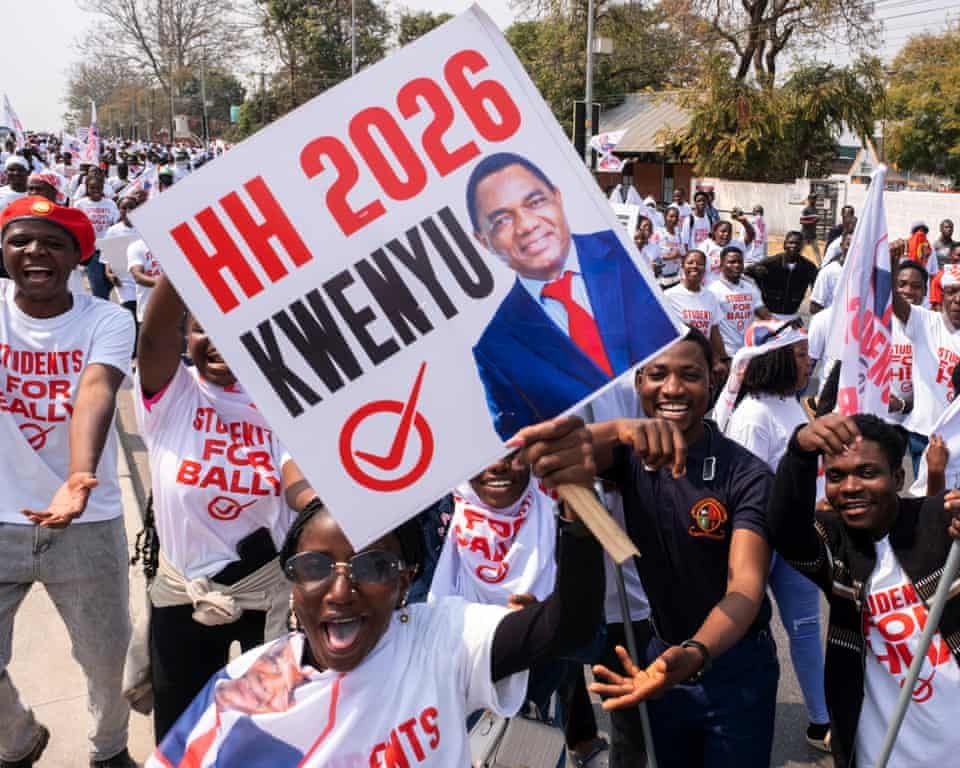
Lungu’s Shadow Looms Over Hichilema as Zambians Vote
Zambians are heading to the polls today in an election shaped by the political rivalry between President Hakainde Hichilema and the late former president Edgar Lungu, whose death in 2025 did little to ease tensions between their supporters.
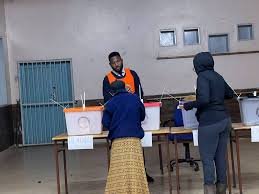
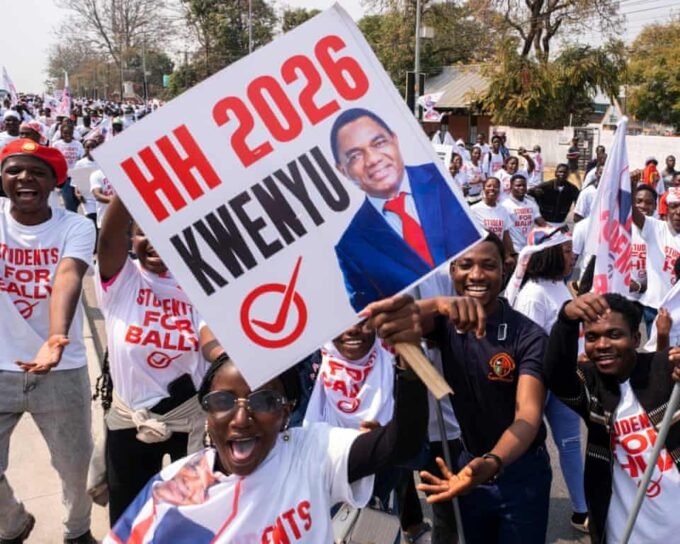
Hichilema, 64, is seeking another term after defeating Lungu decisively in the 2021 presidential election.
Five years later, the rivalry remains a major feature of Zambia’s political landscape, with disagreements between the government and Lungu’s family continuing even after his death.
One of the biggest disputes centred on Lungu’s burial.
His family opposed the government taking control of the funeral arrangements, prompting a legal battle that eventually reached South Africa’s Supreme Court of Appeal. In June, the court ruled in favour of Lungu’s family.
The former president’s legacy has since become an important issue for the opposition Tonse Alliance, led by Brian Mundubile.
previously served as government chief whip under Lungu, while his running mate, Makebi Zulu, represented Lungu’s family during the burial dispute.
The opposition has pledged to return Lungu’s remains to Zambia and ensure what it considers a proper and dignified burial.
Analysts say the controversy could have political consequences because of the importance attached to the treatment of the dead in Zambian society.
Christopher Vandome of Chatham House said the dispute could reinforce perceptions among some voters that Hichilema has handled the matter poorly.
The opposition has also accused the government of restricting its activities ahead of the election. The Tonse Alliance alleges that its offices were raided and that 36 members of Mundubile’s campaign team were detained.
Hichilema’s ruling United Party for National Development has dismissed the accusations, arguing that opposition parties have been allowed to campaign across all 10 provinces.
The government has contrasted the current election environment with the 2021 campaign, when Hichilema was arrested multiple times, Prime TV and The Post newspaper were shut down, and internet access was suspended on election day.
But concerns over political freedoms have not disappeared.
Transparency International Zambia says police have interrupted opposition rallies, with its monitors observing more disruptions involving opposition and independent candidates.
Activists have also accused the government of limiting peaceful protests. Mputa Ngalande of the Fight Inequality Alliance said he was detained for more than 12 hours in 2024 while taking part in a protest over prolonged power cuts.
On the economic front, Hichilema has several achievements to present to voters. Zambia has moved towards stability after the debt crisis that led to its 2020 default under Lungu.
Inflation has fallen substantially, while free primary and secondary education was introduced in 2022.
The country has also benefited from increased investor interest in its copper industry, with the metal becoming increasingly important to global green technology supply chains.
Hichilema has sought to strengthen his appeal among young voters, recently announcing a 50 per cent increase in university accommodation allowances.
Yet economic pressures remain a concern. While average annual income increased between 2021 and 2025, the cost of goods rose sharply, leaving many households struggling to feel the benefits of the country’s improving economic figures.
For voters, the question is increasingly whether economic recovery is translating into meaningful improvements in everyday life.
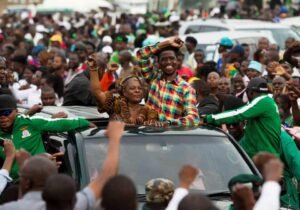
With nearly 8.8 million registered voters also choosing lawmakers and local councillors, the election will test not only Hichilema’s popularity but also whether Zambia is ready to move beyond the political divisions associated with Edgar Lungu.
About The Author






Leave a comment