

Meta Faces Landmark Trial Over Alleged Harm to Children on Facebook and Instagram
Meta Platforms is facing one of its most significant legal battles yet as 29 US states take the company to court over allegations that Facebook and Instagram were designed in ways that could harm children and teenagers.

The federal trial, which began in Oakland, California, centres on claims that Meta deliberately built features aimed at keeping young users engaged for longer periods, while failing to adequately address the risks associated with prolonged use.
The states argue that Meta’s commercial model depended heavily on capturing users’ attention and collecting their personal data. They say children were particularly vulnerable to the design of the platforms.
Opening the case, California Deputy Attorney-General Megan O’Neill told jurors that Meta wanted to “hook the users, hold them for as long as they can, harvest their data, and then hide the truth from the public.”
She said the case was not an attempt to eliminate social media or deny that the platforms can have positive uses.
“This case is not about whether social media has some benefits for some people. It does,” O’Neill said.
The states are instead seeking to establish whether Meta knowingly designed its services in ways that could encourage excessive or compulsive use among young people.
Meta has rejected the allegations. Representing the company, lawyer Paul Schmidt acknowledged that some people experience difficulties while using social media but argued that those problems should not automatically be described as addiction.
He also challenged the claim that research has established a direct and consistent relationship between adolescent social-media use and poor wellbeing.
The defence is expected to present evidence of measures Meta says it has introduced to protect younger users.
Schmidt told the court that the company had flagged about 1.4 million accounts over a four-year period where it appeared users could be under 13.
The states, however, are expected to place significant emphasis on internal Meta documents and communications.
During her opening statement, O’Neill referred to company discussions about increasing the amount of time teenagers spent on Instagram. She also cited an internal communication in which an employee compared Instagram to a drug and Meta employees to “pushers”.
Meta’s lawyers are expected to argue that such comments were informal remarks by individual employees rather than evidence of an official company policy.
The states further accuse Meta of researching how children’s brains respond to online stimuli and tracking their activities on the platforms while failing to provide adequate safeguards.
The allegations include claims that the platforms contributed to anxiety, depression and suicidal behaviour among young users.
Meta has maintained that the states have not demonstrated that its products caused the specific harms being alleged.
Another major part of the case concerns children’s personal information. The states accuse Meta of improperly collecting and using data belonging to young users, potentially violating federal law governing children’s online privacy.
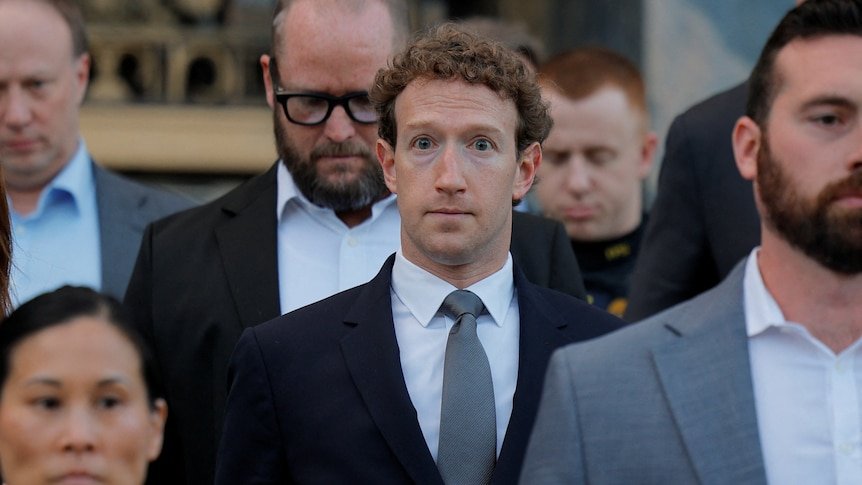
Meta chief executive Mark Zuckerberg and Instagram head Adam Mosseri are expected to testify during the trial, which is scheduled to run for about six weeks.
The jury is expected to issue an advisory verdict, while US District Judge Yvonne Gonzalez Rogers will make the final determination on whether Meta is legally responsible.
The possible consequences could be enormous. The states have indicated that penalties could reach about $200 billion, while Meta has previously warned that its potential financial exposure could be much higher.
Beyond financial penalties, the states are seeking changes to the platforms, including stronger age restrictions and alterations to features such as infinite scrolling.
The legal battle began in 2023 following a wider investigation into the effect of Facebook and Instagram on young users.
It gained further momentum after former Meta employee Frances Haugen told the US Senate in 2021 that the company had internal knowledge suggesting some of its products could harm young people and that changes could be made to improve their safety.
The case comes at a time when technology companies around the world are facing growing pressure over children’s use of social media.
Meta is facing thousands of other lawsuits alongside companies including Snap, TikTok’s parent company ByteDance and Google’s parent company Alphabet.
In March, a Los Angeles jury ordered Meta and Google to pay $6 million to a young woman who said she became addicted to Instagram and YouTube after using the platforms as a child.
Earlier this month, a New Mexico judge also ordered Meta to pay $567 million into a fund for teenage mental health following a case brought by the state’s attorney-general.
The California proceedings could therefore have implications far beyond Meta.
At stake is a question that governments, parents and technology companies are increasingly being forced to confront: where should the responsibility lie when platforms designed to capture attention are used by children?

The answer from this trial could influence how some of the world’s biggest social-media companies design, regulate and market their platforms to young users.
About The Author






















Leave a comment