

By Chinasaokwu Helen Okoro
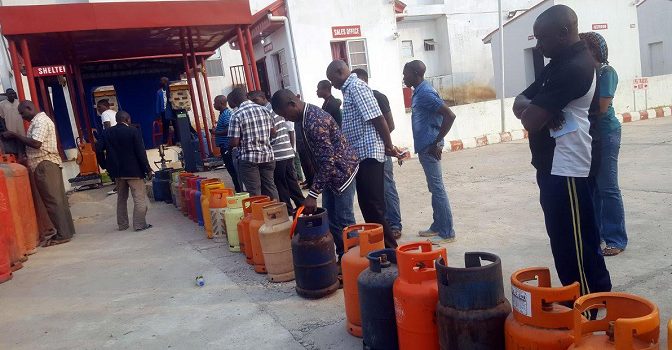
As Nigerians struggle with the high cost of petrol, the price of Liquefied Petroleum Gas, also known as cooking gas, has also increased to N1,500/kg.
But the Managing Director/Chief Executive Officer of NIPCO Plc, Suresh Kumar, said the Dangote refinery and other domestic refineries would bring down the price of cooking gas, expressing concerns that over 60 per cent of cooking gas consumed in Nigeria is being imported.
Checks by our correspondent confirmed that the prices of cooking gas peaked at N1,500/kg in some retail outlets in Ogun and Lagos States as of Sunday.
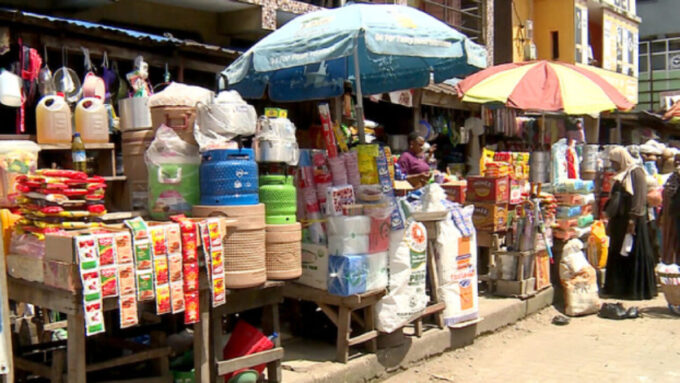
In Abuja, the average price for refilling a 12.5kg cylinder of cooking gas has increased by 41.6 per cent to N17,000 in different areas.
Our online correspondent reports that the same commodity sold for N12,000 in July and N11,735 in January 2024.
This sharp price rise reflects ongoing trends in the market and may have implications for consumers, many of whom rely on LPG for their daily cooking needs.
In August, the Minister of State for Petroleum Resources (Gas), Ekperikpe Ekpo, promised to ensure a reduction in the rising cost of a kilogram of cooking gas.
It was reported that the same commodity sold for N12,000 in July and N11,735 in January 2024.This sharp price rise reflects ongoing trends in the market and may have implications for consumers, many of whom rely on LPG for their daily cooking needs.
In August, the Minister of State for Petroleum Resources (Gas), Ekperikpe Ekpo, promised to ensure a reduction in the rising cost of a kilogram of cooking gas.
Ekpo noted that he would invite the regulators and the gas producers to find ways to bring down the cost.
However, a new market survey conducted by our correspondent on Sunday revealed that the price has not decreased; instead, it has risen even further.
An analysis showed that the product currently sells for N17,000 in Lokogoma area of the FCT, an increase of 41.6 per cent from N12,000 vendors sold to customers three months ago.
This means one kilogram of gas was sold for N1,400.In Kubwa, the product was sold between N16,200 and N16,500 from N12,000 previously charged. But in the outskirt area of Bwari, Kurudu and Jikwoyi, the product sold for N1,300.
Some major distributors still sell the product between N1,300 and N1,400 depending on the location.
The Commissioner for Environment in Ogun State, Ola Oresanya, once told one of our correspondents that many might resort to charcoal for cooking if the price of LPG continues to rise.
However, speaking at the just-concluded National Conference of the Nigerian Association of Liquefied Petroleum Gas Marketers 2024, held in Lagos, Kumar, revealed that local production of LPG remains inadequate, urging the Federal Government to encourage Chevron to convert more of its propane output into propane.
“Currently, less than 40 per cent of the 1.5 million metric tonnes consumed domestically is produced locally.
This is why the government must encourage companies like Chevron to convert more of their propane output into butane, which is more suitable for domestic use,” he explained.
Responding to questions about the rising cost of LPG amid a blend of local and imported supply, the managing director expressed optimism that prices would decline as domestic production improves, especially as the local refineries source crude oil locally.
“With the Dangote refinery and other refineries now sourcing crude oil in local currency, the volume of LPG produced locally is expected to increase, which will, in turn, drive down the price of the commodity,” the MD explained.
He added, “There is hope that the reliance on imported LPG will decrease, which will positively influence the prices at which the product is sold domestically.
Greater local production will make LPG more affordable since it reduces exposure to foreign exchange fluctuations and international pricing dynamics.
”According to him, boosting local production would attract further investments in pipelines, storage, and bottling facilities, as well as expand retail outlets and LPG depots across Nigeria.
Our latest assessments show that the existing downstream infrastructure is capable of handling up to 5 million MT annually.
This means we are ready to accommodate increased production from both associated and non-associated gas fields within the country,” the MD said.
He urged the government to introduce incentives to encourage investments in gas processing.
According to him, NIPCO, which has been operational since 2004, initially entered the industry as a marketer of white products (petroleum fuels).
He, however, emphasised that the company’s long-term vision has always been to become a leader in the marketing and distribution of LPG.
Kumar said, “Our strategy was driven by the fact that Nigeria has over 200 trillion cubic feet of gas reserves. We believe that the country’s gas consumption must be optimised through the promotion of both LPG for domestic use and CNG for the industrial and transportation sector.”
He further emphasised the company’s investments in infrastructure, noting that NIPCO has expanded its LPG operations significantly over the years.“
In 2008, we invested in an LPG facility in Apapa with a capacity of 5,000 metric tonnes.
Today, that same facility has grown to over 20,000 metric tonnes, thanks to strategic partnerships with our subsidiaries.“
We have also deployed LPG tankers and established multiple stations across Nigeria to ensure easy access to cooking gas for households nationwide,” Kumar revealed.
He further explained that while LPG is essential for homes, CNG will play a key role in powering industries and transforming the transportation sector.
The managing director added, “At the time NIPCO entered the market, Nigeria’s domestic LPG consumption was around 50,000 metric tonnes annually,” he stated.“
However, the past 16 to 17 years have been a remarkable journey. Today, the market has grown from 50,000 MT to approximately 1.5 million MT per year.”Despite the growth, Kumar pointed out that significant potential remains untapped, saying less than 60 per cent of Nigeria’s 200 million population has embraced the use of LPG.“
Our vision is to harness these opportunities and grow the country’s LPG consumption from 1.5 million MT to levels more appropriate for a population of over 200 million people.“
We must work with the Nigerian Midstream and Downstream Petroleum Regulatory Authority and other stakeholders to end gas flaring in the country
. Substantial investments are needed to capture and process flared gas to increase domestic supply beyond the current 1.5 million MT to at least 5 million MT annually,” he stressed.The NIPCO boss acknowledged that demand for LPG in Nigeria has been relatively stagnant due to the high cost of the product.“
The current high prices have limited consumption growth, but this situation is only temporary. With more players entering the gas processing sector, we anticipate a market correction soon,” he stated, believing that the market would stabilise in the long run.
He urged the Federal Government to support local refineries, including the Dangote Refinery, to boost domestic gas production.“
It is crucial for the government to back these refineries in their efforts to significantly increase LPG output. This will drive down retail prices and make the product more accessible to Nigerians,” he posited.
About The Author


















Leave a comment