

By: Chioma Madonna Ndukwu
Taiwan Steps Up Security Build-Up Amid Growing China Threat
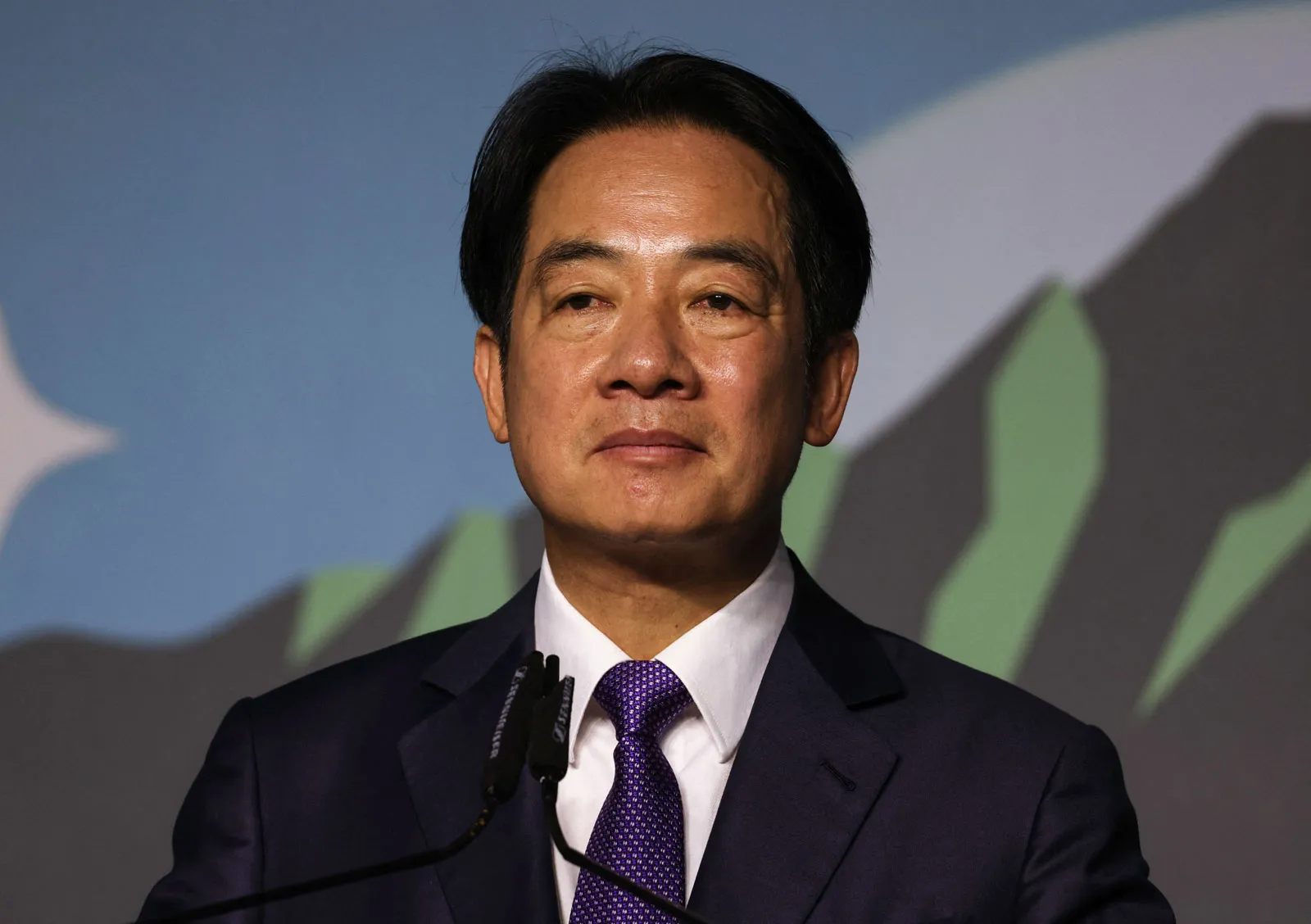
Taiwan’s President Lai Ching-te has announced plans to fast-track the country’s defence and security systems, with a special focus on building a multi-layered air defence network capable of detecting and intercepting enemy threats.
The move comes amid renewed tensions with China, which continues to claim sovereignty over the self-governed island.
Speaking during Taiwan’s National Day celebration on Friday, Lai said his government is determined to protect the island’s people and preserve its democracy through technological advancement and stronger military preparedness.
“We will accelerate our building of the T-Dome and create a powerful, multi-layered air defence system with top-level detection and effective interception,” Lai said. “Our goal is to maintain peace through strength.”
The T-Dome Project, which Lai referenced, is part of Taiwan’s broader plan to strengthen its national security architecture in the face of China’s military expansion around the Taiwan Strait.
The system will integrate artificial intelligence, high-level radar technology, and rapid-response mechanisms to track and neutralize threats from the air.
Lai’s comments reflect increasing U.S. pressure on Taiwan to improve its defensive capabilities and lessen its reliance on American military support.
The United States remains Taiwan’s main security ally under the Taiwan Relations Act of 1979, which allows Washington to provide arms and military assistance even without formal diplomatic ties.
The Taiwanese leader also reiterated his plan to raise defence spending to over 3% of GDP in 2026, with projections to reach 5% by 2030, signalling a strong commitment to bolstering the nation’s self-defence.
“We will advance the integration of high-tech and AI technologies to build a smart defence combat system that maximises effective deterrence,” Lai added.
Lai’s administration has had a politically turbulent year. His Democratic Progressive Party (DPP) lost its majority in parliament following an unsuccessful bid to unseat opposition lawmakers, weakening his domestic influence. Additionally, new U.S. tariffs on
Taiwanese exports and uncertainty over Donald Trump’s future foreign policy stance have increased anxiety about Taiwan’s economic and diplomatic stability.
Despite these challenges, Lai said his government remains focused on strengthening local arms production and securing domestic supply chains to ensure Taiwan’s defence industry can operate independently in case of conflict.
Friday’s event marked the 114th anniversary of the fall of China’s Qing dynasty and the founding of the Republic of China, which was later relocated to Taiwan after the Chinese civil war in 1949 between Chiang Kai-shek’s Nationalists and Mao Zedong’s Communists.
Last year, China responded to Lai’s National Day speech with large-scale military drills, encircling the island with warships and fighter jets. However, experts say Beijing might adopt a less aggressive approach this time, given Taiwan’s current domestic and diplomatic struggles.
“China may not see the need for another military show of force this month,” said Hung Chin-fu, a political scientist at National Cheng Kung University. “Lai’s government is already under pressure both at home and abroad.”
Still, analysts warn that Taiwan remains significantly outgunned by China’s growing military power and continues to rely heavily on U.S. deterrence to maintain peace in the region.
Tensions between China and Taiwan have been escalating for decades. China views Taiwan as a breakaway province that must eventually be reunited with the mainland, by force if necessary.
Taiwan, however, operates as a self-governing democracy with its own military, elections, and constitution, though only a few countries formally recognize it as a sovereign state.
The Taiwan Strait, which separates the island from mainland China, has become one of the world’s most sensitive flashpoints. In recent years, China has increased its military exercises and air incursions near Taiwan’s borders, prompting global concern about the potential for conflict.
The United States, while officially recognizing Beijing under the “One China Policy,” continues to support Taiwan’s security through arms sales and defence cooperation.
This delicate balance remains central to the power struggle between Washington and Beijing, with Taiwan often caught in the middle.
About The Author











Leave a comment