

By: Chioma Madonna Ndukwu
Trump Unveils Bold New Visa Offer for the World’s Wealthiest
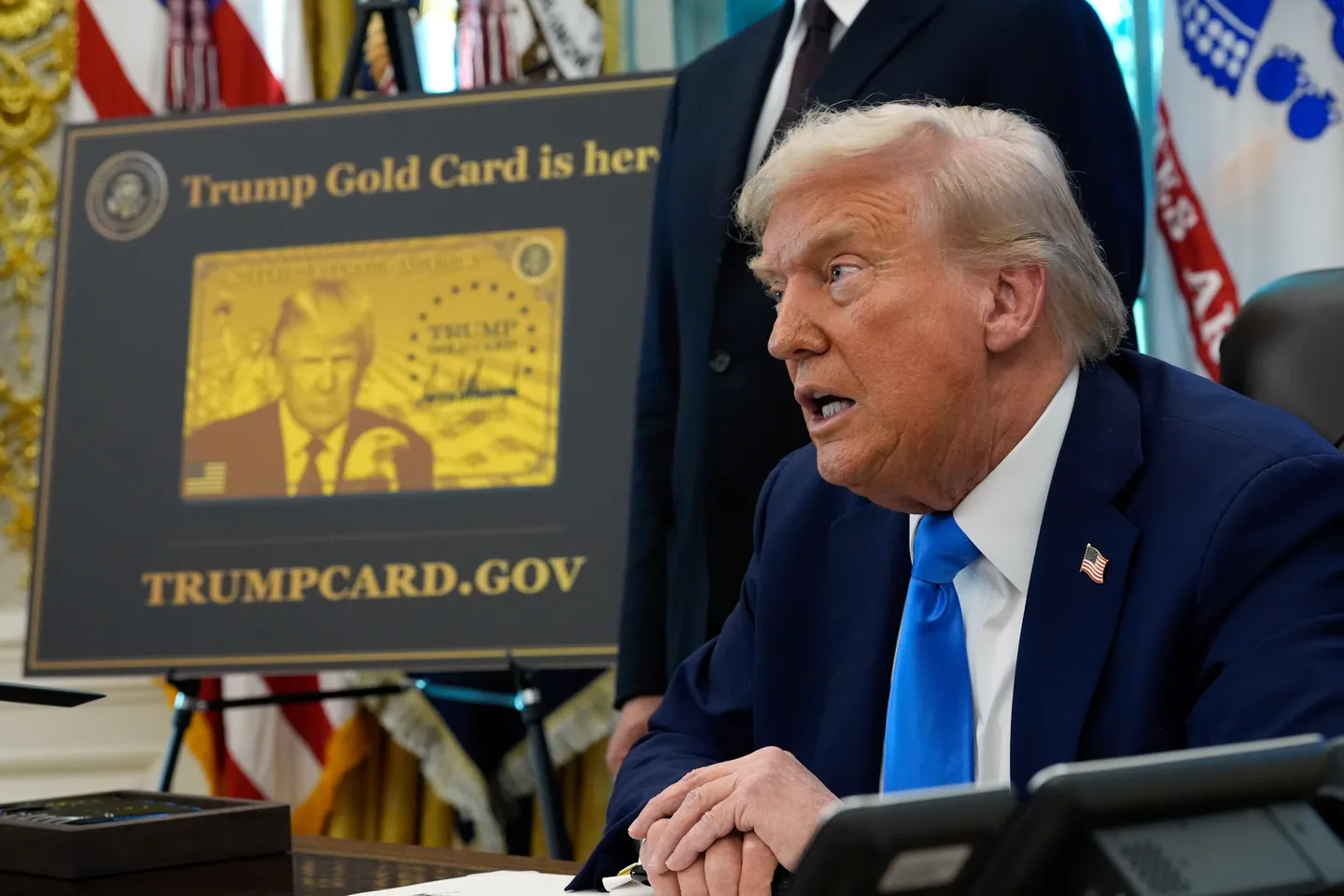
US President Donald Trump has formally introduced a new “gold card” visa programme that offers residency, and eventually citizenship, to wealthy foreign nationals willing to pay $1 million.
Corporations seeking to sponsor foreign employees will be required to pay $2 million per worker under the scheme, which was launched at the White House alongside business leaders.
A dedicated application portal went live shortly before the announcement, marking the administration’s most sweeping overhaul of investor-based immigration since the creation of the EB-5 visa in 1990.
The EB-5 programme had allowed residency for applicants investing around $1 million in ventures that created at least 10 jobs. Trump’s plan discards those job-creation rules and caps, replacing them with a straightforward pay-to-enter model.
Trump framed the initiative as both a revenue generator and a tool to retain “top global talent,” arguing that US companies routinely lose high-performing graduates from American universities due to visa uncertainty. He originally proposed a $5 million price tag before settling on the current fees.
“Everything collected goes directly to the US government,” he said, describing the new permit as “a stronger, more powerful version of the green card.”
Commerce Secretary Howard Lutnick said each application would also carry a $15,000 vetting fee, adding that the screening process would be strict. Companies may purchase multiple cards but may only name one beneficiary per card.
The move reflects a broader shift in Trump’s immigration approach, which increasingly favours wealthy and highly skilled entrants despite his long-standing hard-line rhetoric.
Lutnick noted that the administration wants to prioritise migrants who “earn more than the average American,” positioning the programme as a way to reshape the profile of future US residents.
Investor-residency schemes, commonly referred to as “golden visas,” are widely used in Europe, Canada and Australia.
Trump said the United States is now aligning itself with those models, pointing to elite graduates from countries such as China, India and France as likely beneficiaries.
“The companies are going to be very happy,” he said.
The administration has yet to clarify whether future regulations will introduce limits or additional requirements, leaving unanswered questions about how the programme will be managed and monitored.
About The Author


















Leave a comment