

By : Chinasaokwu Helen Okoro
Tensions Rise as M23 Claims Capture of Burundian Soldiers in Uvira, Shaking Fragile Peace in Eastern DR Congo
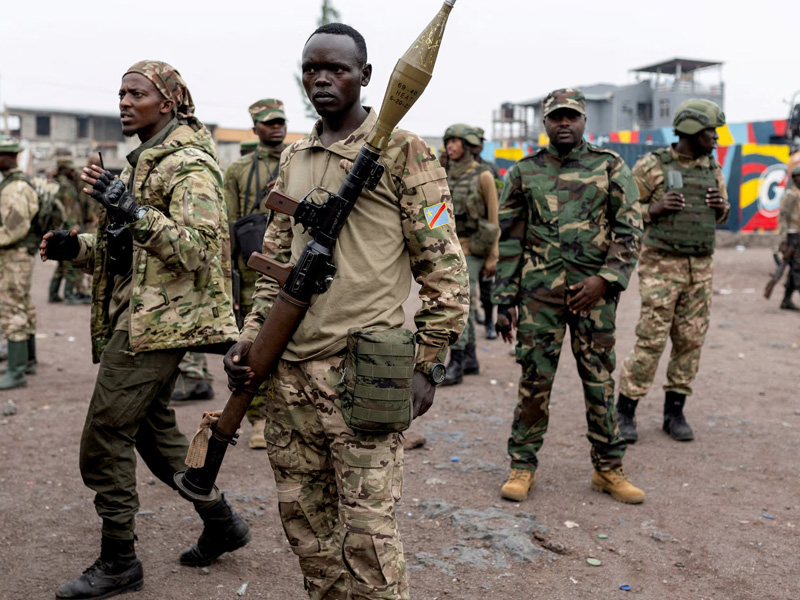
The already volatile conflict in eastern Democratic Republic of Congo (DRC) took a troubling new turn after the March 23 Movement (M23) claimed it had captured Burundian soldiers during clashes in Uvira, a strategic town in South Kivu province. The claim, if confirmed, signals a dangerous widening of a conflict that has long destabilized the Great Lakes region and threatens to undermine delicate regional peace efforts.
Uvira, located on the northern shores of Lake Tanganyika near the border with Burundi, has in recent months become a flashpoint as armed groups jostle for control of territory, trade routes, and influence. According to statements attributed to M23 fighters, the captured soldiers were allegedly operating alongside Congolese government forces during intense fighting in and around the town. The group said the incident demonstrates what it calls “foreign military involvement” in the conflict, a long-standing accusation it has used to justify its renewed insurgency.
Burundi has not officially confirmed the capture of its soldiers, while Congolese authorities have remained cautious, neither fully endorsing nor dismissing the claims. However, the mere suggestion of Burundian troops being seized by a rebel group has raised alarm across the region, where memories of past cross-border wars remain fresh.
Eastern DR Congo has endured decades of violence involving dozens of armed groups, local militias, and foreign actors. The resurgence of M23 since late 2021 has been particularly destabilizing, leading to mass displacement, civilian casualties, and repeated diplomatic crises between Kinshasa and its neighbors. Rwanda has frequently been accused of backing M23, allegations it denies, while Burundi and Uganda have deployed troops in eastern Congo under various bilateral and regional security arrangements aimed at combating other rebel factions.
The reported incident in Uvira comes at a sensitive moment. Regional bodies, including the East African Community (EAC) and the African Union, have been pushing for dialogue and ceasefire agreements to reduce hostilities. Several peace initiatives, including the Nairobi and Luanda processes, have sought to bring armed groups and regional governments to the negotiating table. Yet progress has been uneven, and ceasefires have often collapsed amid fresh fighting.
Analysts warn that the alleged capture of Burundian soldiers could complicate these efforts. “If foreign troops are drawn directly into clashes with M23, it risks transforming a domestic insurgency into a broader regional confrontation,” said a regional security expert based in Nairobi. “That would make mediation far more difficult and raise the stakes for all parties involved.”
For civilians in Uvira and surrounding areas, the consequences are immediate and devastating. Local sources report waves of displacement as families flee fighting, with many seeking refuge near the lakeshore or crossing into Burundi for safety. Humanitarian organizations have warned of growing needs, including food, shelter, and medical care, as access to affected areas becomes increasingly constrained by insecurity.
M23, which says it is fighting to protect the rights of Congolese Tutsis and address what it describes as political exclusion, has used recent battlefield gains to strengthen its negotiating position. The group’s claim of capturing foreign soldiers appears designed to project strength and legitimacy, while also drawing international attention to the conflict.
Whether the claim is verified or not, its impact is already being felt. Diplomatic tensions are likely to intensify, and calls for renewed dialogue are expected to grow louder. For eastern DR Congo, a region long trapped in cycles of violence and fragile peace, the incident underscores how quickly hopes for stability can unravel — and how urgently sustained, credible regional cooperation is needed to prevent the conflict from spiraling further out of control.
About The Author













Leave a comment