Home News Africa Africa’s Talking Drum: The Man Who Borrowed Big Shoes
Africa

Africa’s Talking Drum: The Man Who Borrowed Big Shoes

Share
Share

By: Chioma Madonna Ndukwu

Africa’s Talking Drum: The Man Who Borrowed Big Shoes

In the dusty town of Obunike lived a man called Uncle Bode. He was not poor enough to beg and not rich enough to boast.

But one thing everybody knew about him, Uncle Bode loved appearances the way fire loves dry wood. If a wealthy trader bought new clothes, Bode suddenly wanted better ones.

If someone roofed their house with shiny zinc, he spent sleepless nights touching his old roof like it had personally offended him. “Respect follows packaging,” he liked saying.

And because his mouth was sweet, many people laughed and nodded.

One market season, a rich businessman from the city returned home for a festival. He arrived in polished cars. Fine clothes. Expensive shoes that shone like fresh rainwater.

The whole town talked. Even children abandoned games just to stare. Uncle Bode watched quietly, envy sitting on his shoulder like an old friend.

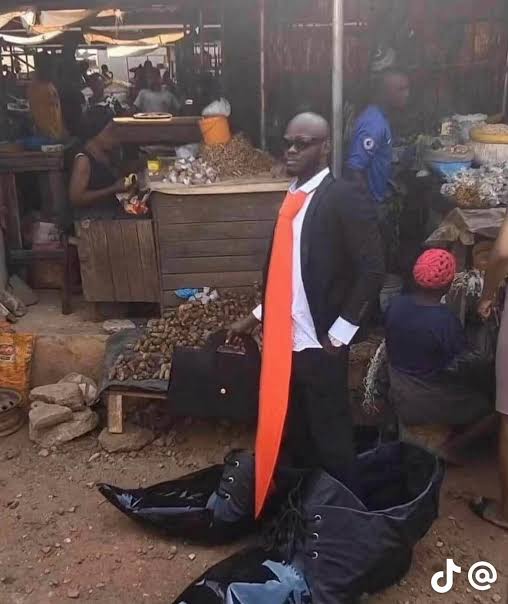
The next week, people nearly fainted. There he was, Uncle Bode, suddenly dressed in expensive suits too warm for village weather, dark glasses bigger than common sense, and shoes so polished they looked borrowed from another life.

“Ha!” neighbours whispered. “Bode has blown!” He walked differently too. Chest high. Chin proud. Even greetings changed. No more warm laughter at roadside gatherings.

He now spoke in half-English and behaved as if ordinary benches no longer understood his importance. But there was a small problem.

The life was expensive, too expensive. The clothes came from debt. The shoes came from borrowed money. The loud spending came from promises he had no plan to keep.

At home, soup pots became shy. His wife began stretching meals until hunger itself looked confused.

One evening, after heavy rain turned the village road muddy, Uncle Bode slipped near the market square. One borrowed shoe flew into dirty water. The crowd gasped. Then silence. Then somebody laughed.

An old woman selling roasted corn shook her head slowly. “My son,” she said, “big shoes do not teach small legs how to walk.”

The market erupted into soft laughter. Not cruel laughter. The kind that carries truth inside embarrassment. Bode stood there, wet and humbled.

For the first time, he looked at himself properly. All this suffering just to impress people who forgot yesterday’s gossip before sunrise.

That evening, he removed the heavy clothes and sat outside quietly. An old friend passed and sat beside him.

After some silence, the man sighed. “Brother,” he said gently, “a goat wearing a lion’s skin still trembles at thunder.”

Bode laughed, a tired laugh. But a truthful one. Little by little, he changed. No more noisy spending. No more chasing respect through borrowed shine.

And whenever young men began competing loudly over who looked richer, Uncle Bode would smile and say: “The stomach knows when pride has eaten the money.”

Because in Obunike, people slowly remembered something easy to forget: Looking rich and living well are not always brothers.

Moral: A life built around impressing others often becomes heavier than the person carrying it.

Comment Hook:

Why do people sometimes pressure themselves to look successful even when it quietly hurts their peace?

About The Author

Share

Leave a comment

Leave a Reply

Your email address will not be published. Required fields are marked *

LATEST POST

News

Lagos police arrest woman over alleged N450m land fraud involving 30 buyers

Lagos police arrest woman over alleged N450m land fraud involving 30 buyers The Police Command in Lagos State has arrested a 41-year-old woman,...

InternationalSport

“Maybe He’s a Racist” — Trump Takes Aim at NBA Superstar LeBron James

“Maybe He’s a Racist” — Trump Takes Aim at NBA Superstar LeBron James US President Donald Trump has stirred controversy after suggesting that...

Africa

Africa’s Talking Drum: Mama Nkem Left Before Her Daughter Was Ready

By: Chioma Madonna Ndukwu Africa’s Talking Drum: Mama Nkem Left Before Her Daughter Was Ready In Umuoma Village, people said that a mother’s...

Sport

Cash Reportedly Stolen From Super Falcons Players’ Hotel Rooms in Casablanca

Cash Reportedly Stolen From Super Falcons Players’ Hotel Rooms in Casablanca The Super Falcons’ preparations for the 2026 Women’s Africa Cup of Nations...

AfricaMetro

Harvard-Trained Nigerian-American Engineer Raises $7m for Robot Designed to Assist Hair Braiders A Nigerian-American engineer and Harvard graduate, Yinka Ogunbiyi, has secured $7 million in seed funding to develop a robotic device designed to make hair braiding faster and less physically demanding for professional stylists. Ogunbiyi’s company, HaloBraid, is developing what it describes as the world’s first patented braid-assist robot. The device is designed to work with hairstylists by handling some of the repetitive movements involved in knotless braiding. The funding round was led by Seven Seven Six, a venture capital firm founded by Reddit co-founder Alexis Ohanian. AlleyCorp and Bling Capital were also among the investors. The technology has already attracted significant interest, with more than 7,000 salons reportedly waiting to use the system. HaloBraid is designed as a collaborative robot, meaning it works alongside a human stylist instead of attempting to replace one. The hairstylist remains responsible for sectioning the hair, creating the initial knot and completing the final styling. The robot then assists with the repetitive weaving process down the length of the braid before the stylist returns to finish and shape the ends. According to the company, the technology could cut the time spent on some knotless braid appointments by roughly half, allowing salons to serve more clients while reducing the physical pressure on stylists. For Ogunbiyi, the idea was born from personal experience. During the COVID-19 pandemic, she spent four days installing knotless braids on herself, an experience that made her consider how technology could assist with the most repetitive aspects of the process. She subsequently teamed up with co-founder David Afolabi to develop HaloBraid. The company’s technology is also aimed at addressing the physical demands of professional braiding. Stylists who spend years performing repetitive movements can experience problems affecting their wrists, hands, shoulders, back and joints. By assisting with the most repetitive stage of braiding, HaloBraid hopes to reduce the strain on beauty professionals and help them work more efficiently. Ogunbiyi said the technology would not take away from the personal experience of visiting a salon. Rather, she believes it can allow stylists to spend less time on repetitive movements while continuing to handle the creative and personal aspects of hairstyling. Before launching HaloBraid, Ogunbiyi worked on smart kitchen appliances and Internet of Things products. She holds a joint master’s degree in engineering and business administration from Harvard University. With a $7 million investment and thousands of salons already expressing interest, HaloBraid is seeking to introduce robotics into one of the world’s largest and most labour-intensive beauty markets.

Harvard-Trained Nigerian-American Engineer Raises $7m for Robot Designed to Assist Hair Braiders A Nigerian-American engineer and Harvard graduate, Yinka Ogunbiyi, has secured $7...

Entertainment

Days to Their Wedding, VeryDarkMan Sends Peller and Jarvis a Serious Warning

Days to Their Wedding, VeryDarkMan Sends Peller and Jarvis a Serious Warning Social media critic Martins Vincent Otse, popularly known as VeryDarkMan, has...

Sport

IOC Declines to Investigate Infantino Over Alleged Political Neutrality Breach

IOC Declines to Investigate Infantino Over Alleged Political Neutrality Breach The International Olympic Committee has refused to pursue a complaint against FIFA President...

News

IMO APC YOUTH LEAGUE INAUGURATES BOOTH WATCHDOGS, WARD CANVASSERS TO STRENGTHEN GRASSROOTS STRUCTURE AHEAD OF 2027

The Imo State Chapter of the APC Youth League on Thursday, July 23, 2026, successfully hosted its Interactive Session and Banquet at the...

Travel

VIDEO: 68 Passengers Survive Enugu Air Crash-Landing at Benin Airport

VIDEO: 68 Passengers Survive Enugu Air Crash-Landing at Benin Airport Sixty-eight passengers have escaped without reported injuries after an Enugu Air aircraft crash-landed...

News

WASTE EVACUATION DELAYS WILL SOON EASE* *– LAWMA*

*PRESS RELEASE* *WASTE EVACUATION DELAYS WILL SOON EASE* *– LAWMA* *LASG to Acquire 3,000 Compactor Trucks Within Three Years* The Lagos Waste Management...

AfricaMetro

5 Members of Same Family Found Dead Inside Abia Residence

5 Members of Same Family Found Dead Inside Abia Residence A family of five has been found dead inside their residence in Umuimo...

Related Articles

Africa’s Talking Drum: Mama Nkem Left Before Her Daughter Was Ready

By: Chioma Madonna Ndukwu Africa’s Talking Drum: Mama Nkem Left Before Her...

Harvard-Trained Nigerian-American Engineer Raises $7m for Robot Designed to Assist Hair Braiders A Nigerian-American engineer and Harvard graduate, Yinka Ogunbiyi, has secured $7 million in seed funding to develop a robotic device designed to make hair braiding faster and less physically demanding for professional stylists. Ogunbiyi’s company, HaloBraid, is developing what it describes as the world’s first patented braid-assist robot. The device is designed to work with hairstylists by handling some of the repetitive movements involved in knotless braiding. The funding round was led by Seven Seven Six, a venture capital firm founded by Reddit co-founder Alexis Ohanian. AlleyCorp and Bling Capital were also among the investors. The technology has already attracted significant interest, with more than 7,000 salons reportedly waiting to use the system. HaloBraid is designed as a collaborative robot, meaning it works alongside a human stylist instead of attempting to replace one. The hairstylist remains responsible for sectioning the hair, creating the initial knot and completing the final styling. The robot then assists with the repetitive weaving process down the length of the braid before the stylist returns to finish and shape the ends. According to the company, the technology could cut the time spent on some knotless braid appointments by roughly half, allowing salons to serve more clients while reducing the physical pressure on stylists. For Ogunbiyi, the idea was born from personal experience. During the COVID-19 pandemic, she spent four days installing knotless braids on herself, an experience that made her consider how technology could assist with the most repetitive aspects of the process. She subsequently teamed up with co-founder David Afolabi to develop HaloBraid. The company’s technology is also aimed at addressing the physical demands of professional braiding. Stylists who spend years performing repetitive movements can experience problems affecting their wrists, hands, shoulders, back and joints. By assisting with the most repetitive stage of braiding, HaloBraid hopes to reduce the strain on beauty professionals and help them work more efficiently. Ogunbiyi said the technology would not take away from the personal experience of visiting a salon. Rather, she believes it can allow stylists to spend less time on repetitive movements while continuing to handle the creative and personal aspects of hairstyling. Before launching HaloBraid, Ogunbiyi worked on smart kitchen appliances and Internet of Things products. She holds a joint master’s degree in engineering and business administration from Harvard University. With a $7 million investment and thousands of salons already expressing interest, HaloBraid is seeking to introduce robotics into one of the world’s largest and most labour-intensive beauty markets.

Harvard-Trained Nigerian-American Engineer Raises $7m for Robot Designed to Assist Hair Braiders...

5 Members of Same Family Found Dead Inside Abia Residence

5 Members of Same Family Found Dead Inside Abia Residence A family...

US Weighs Military Action in Mali as Jihadist Threat Spreads Across the Sahel

US Weighs Military Action in Mali as Jihadist Threat Spreads Across the...