

By: Chioma Madonna Ndukwu
Africa’s Talking Drum: Goat’s Laughter Did Not Reach the Harvest

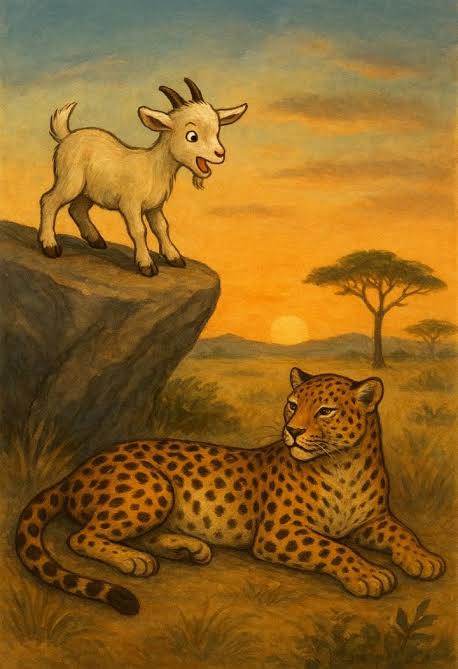
Long ago, in the village of Umu-Ọcha, there lived a goat whose greatest talent was not finding food or escaping danger. It was laughing at other animals.
If a chicken stumbled into a puddle, the goat laughed.
If a tortoise dropped a basket, the goat laughed.
If a young ram made a mistake while ploughing a field, the goat laughed so loudly that people from neighbouring compounds came to see what had happened.
The goat enjoyed mockery the way others enjoyed good food.
One planting season, the animals gathered to prepare their farms.
The rains had arrived early, and everyone hurried to put seeds into the ground.
The tortoise worked from sunrise until evening. The ram carried heavy loads without complaint. Even the old hen scratched the soil with determination.
But the goat spent most of his days wandering from farm to farm, laughing at how others worked.
“Look at the tortoise,” he would say. “By the time he reaches the end of his farm, the harvest season will be over.”
The younger animals laughed.
When he saw the ram sweating beneath a sack of yam seedlings, he shook his head.
“Why struggle so much? The earth will still be here tomorrow.”
Again, some animals laughed. The praise encouraged him. Soon, he spent more time watching others than tending his own land.
When his neighbour warned him, the goat waved away the advice.
“I am clever enough to survive.”
The neighbour said nothing more. Months passed.
The rains came and went.
Green shoots covered the valley.
As harvest season approached, the farms began revealing the truth about the work that had been planted inside them.
The tortoise’s field was heavy with yams. The ram’s farm bent beneath healthy maize stalks.Even the old hen harvested baskets of vegetables.

Then people visited the goat’s farm.Silence followed them. The land was mostly empty.Weeds stood where crops should have grown.
The few plants that survived looked as neglected as abandoned children. For the first time in many months, nobody laughed.
The goat tried to joke about it.
“Perhaps the harvest is hiding underground.”
No one responded.
That evening, hunger entered his compound. A few days later, he began visiting the same neighbours he once mocked.
He approached the tortoise first.The tortoise handed him a small basket of yams. Then he visited the ram. The ram shared some maize. Even the old hen gave him vegetables.
Their kindness embarrassed him more than insults would have. Finally, the goat lowered his head.
“I spent so much time laughing at your work that I forgot to do my own.”
The tortoise nodded.
“And while you were counting our mistakes,” he said, “your own farm was waiting for you.”
The goat never forgot those words. The following season, something changed. He still laughed, but less, and he worked more.
And whenever younger animals gathered to mock someone struggling, he would quietly send them back to their own farms.
For he had learned that a person who spends all day watching another’s field may discover too late that weeds have taken over their own.
Moral:
Mockery may entertain for a moment, but it often distracts people from the work that secures their future.
Comment Hook:
Many failures do not begin with inability; they begin with paying more attention to another person’s mistakes than to one’s own responsibilities.
About The Author




















Leave a comment