

By : Chinasaokwu Helen Okoro
China Executes Justice: Five Myanmar Scam Mafia Leaders Sentenced to Death in Sweeping Crackdown
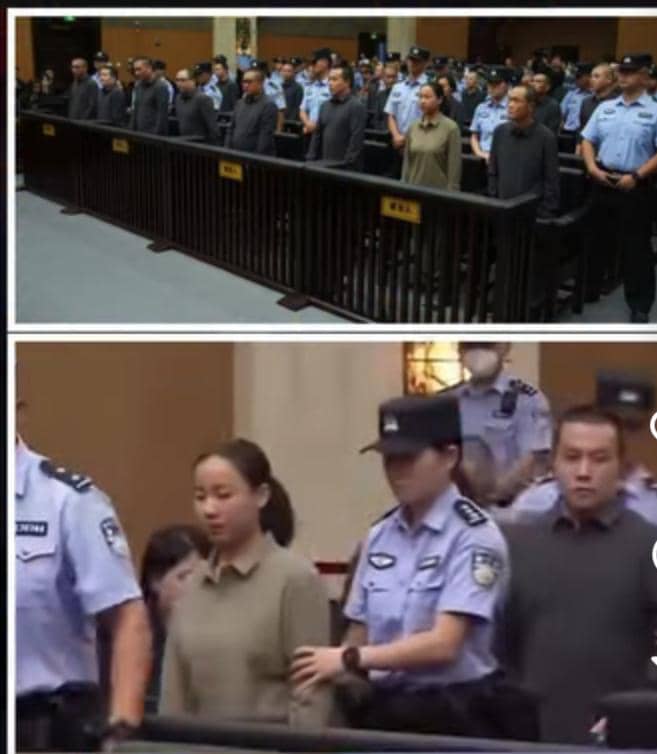
China’s campaign against cross-border scam empires reached a dramatic high this week when the Shenzhen Intermediate People’s Court handed death sentences to five senior members of the notorious Bai family mafia, a syndicate long blamed for running sprawling scam compounds in northern Myanmar.
Court documents and state media reports named former Kokang leader Bai Suocheng and his son Bai Yingcang among the five condemned, alongside three close associates — Yang Liqiang, Hu Xiaojiang and Chen Guangyi. In total, 21 members and associates of the Bai network were convicted on charges ranging from fraud, homicide and bodily injury to human trafficking and drug manufacturing, according to court statements. Two family members received suspended death sentences, five were given life terms and nine others were jailed for periods between three and 20 years.
The fall of the Bais marks the end of a decades-long arc: once regional powerbrokers in Laukkaing, the clan helped turn the impoverished border town into a hub of casinos, red-light districts and, later, what prosecutors called industrial-scale telecom fraud. The court said the syndicate operated 41 compounds that housed the scam centres and their victims — thousands of trafficked workers, many of them Chinese — and that the group’s crimes generated more than 29 billion yuan (about $4.1 billion). The operations, the judgment added, were enforced by a private militia that the family commanded.
For many of the victims, the Bais’ operation was a nightmare. Testimony broadcast on state media recounted beatings, torture and routine deprivations. One former detainee described fingernails extracted with pliers and fingers severed to enforce compliance — brutality prosecutors cited as evidence of the group’s cruelty and a rationale for the court’s harsh penalties. The trial also linked Bai Yingcang to a separate narcotics conspiracy involving the manufacture and trafficking of methamphetamine on an industrial scale.
Beijing has framed the sentences as part of a broader effort to dismantle transnational organized crime that preys on its citizens and undermines regional stability. The verdict follows a string of publicised prosecutions this year, including another high-profile death penalty handed down in September to members of the Ming family — one of several clans that once dominated Laukkaing and nearby Kokang. China’s authorities have repeatedly said they pressured Myanmar’s junta to clamp down on the scam compounds, and in early 2024 several senior suspects were extradited to China after being detained in Myanmar.
Observers say the legal campaign reflects both law-enforcement priorities and political messaging. The juggernaut of online fraud that emerged across Southeast Asia in the 2010s became an acute domestic grievance for Beijing as victims’ families and media attention mounted. At the same time, ties between some clan leaders and Myanmar’s military — cultivated during earlier years of regional patronage — complicated efforts to uproot the networks and required diplomatic negotiation to effect arrests and transfers.
The Shenzhen court’s ruling is likely to be read as a stern warning to other syndicates: impunity has limits. Analysts caution, however, that execution-level sentences alone will not eradicate the cyber-fraud industry, which has shown adaptive capacity — relocating, rebranding and exploiting technological loopholes. Humanitarian groups also stress that prosecution must be paired with victim rescue, cross-border cooperation and efforts to stem trafficking pipelines that funnel vulnerable people into the scam compounds.
For families of those lost or enslaved by the Bai network, the verdict will bring some measure of closure; for regional security planners, it signals an escalated — and public — Chinese determination to punish criminal enterprises that reach beyond their borders. Whether the harsh sentences will choke off the scam economy or only scatter it into new forms remains the difficult question left in the wake of the court’s dramatic judgment.

About The Author

 Aid Crisis Deepens as UN Warns 35 Million Nigerians Could Face Hunger in 2026
  Breaking: Wong Box Nigeria Speaks to Irodili on Leaving PDP, His Shocking Reasons for Rejecting APC, ADC, and Waiting for ‘Instruction From Above.
  Ibeh Ugochukwu Bonaventure on Troco Technology: Building Trust Where Nigerians Once Took Risks
  Funnyfreakc Opens Up To Irodili: 5 Secrets Behind His Comedy Rise
  Zambia’s Hichilema’s Makes His Case: Stabilisation, Reform and the Road to 2026
  Onitsha Market Closure: Soludo Explains Rationale, Vows to End Sit-at-Home
  FIFA Rules Out World Cup Ban as Senegal Face CAF Sanctions Over AFCON Final Walk-Off
  Nollywood Actress, Angela Okorie Reportedly Detained Over Alleged Cyberbullying Linked to Mercy Johnson Case