

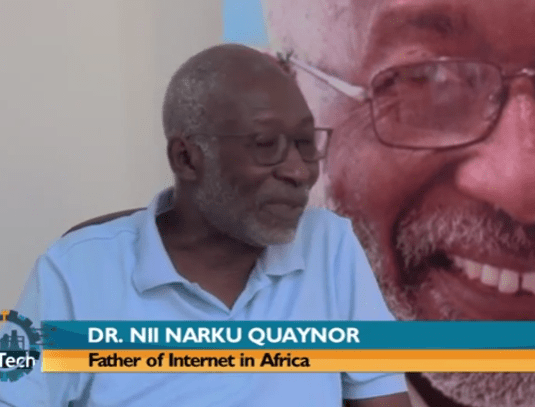
Dr. Nii Narku Quaynor, born on 27 July 1950 in Accra, Ghana, is celebrated as the Father of the Internet in Africa. His groundbreaking work in the 1990s laid the foundation for the continent’s first internet infrastructure, transforming how Africans learn, work, trade, and communicate.
From his school days, Quaynor showed a passion for mathematics and technology. He pursued higher education abroad, studying engineering and computer science, and later returned to Africa determined to apply his knowledge to solving the continent’s communication challenges.
At a time when Africa had almost no digital connectivity, Quaynor led the establishment of the first internet service providers in West Africa. His efforts included setting up satellite connections, introducing fiber-optic networks, and creating local systems that allowed both cities and rural communities to come online.
The challenges were immense—poor infrastructure, high costs, and limited technical expertise—but Quaynor’s vision and persistence made it possible to connect Africa to the global internet.
His work reshaped key areas of African life:
Education: Schools and universities gained access to international research and online learning.
Business: African companies could now enter global markets and improve competitiveness.
Healthcare: Hospitals began using telemedicine and online tools to provide better services.
Communication: Families and communities bridged long distances with instant connectivity.
Quaynor’s achievements earned recognition from international organizations, governments, and universities. He also played a vital role in internet governance, ensuring Africa’s interests were represented in global discussions. Despite these honors, he remains more focused on impact than on personal fame.
Today, as Africa grows its digital economy—through fintech, e-commerce, remote education, and telemedicine—Quaynor’s contributions remain the bedrock of this progress. His story continues to inspire the next generation of African innovators to pursue bold ideas and create solutions for the continent’s future.
About The Author
















Leave a comment