

By : Chinasaokwu Helen Okoro
Illegal Mining in Ghana: Five Questions to Understand a National Emergency
Ghana’s battle against illegal gold mining is intensifying, as the destructive practice known locally as galamsey continues to ravage rivers, farmlands, and forests while testing the resolve of President John Mahama’s new administration. The problem, which has escalated into a full-blown environmental and political crisis, now threatens the nation’s economic foundations and international reputation.
Here are five key questions to help explain Ghana’s unfolding galamsey emergency.
—
1. What is galamsey and why is it spreading?
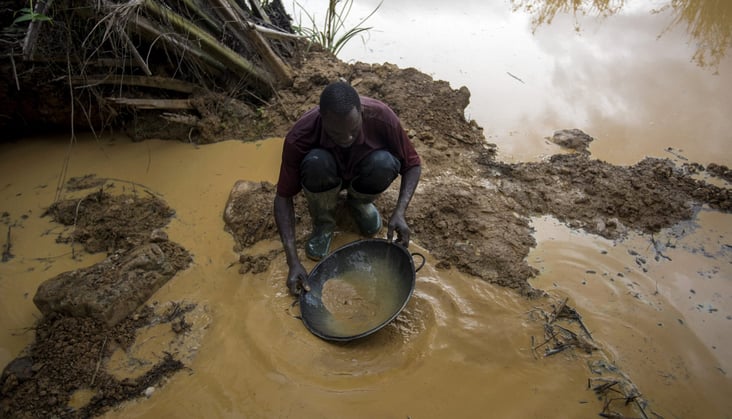
The term galamsey—derived from “gather them and sell”—refers to small-scale, unlicensed gold mining. While the practice has existed for decades, it has exploded in recent years, driven by unemployment, poverty, and soaring global gold prices.
Many rural youths, unable to find stable work, have turned to illegal mining as a means of survival. The lure of quick profits has also attracted foreign nationals, particularly from China and other parts of West Africa, who operate with heavy machinery and sophisticated equipment. What began as simple panning in riverbeds has evolved into large-scale, unregulated mining that leaves deep scars on the landscape.
—
2. How is galamsey affecting Ghana’s environment?
The environmental toll of galamsey is catastrophic. Major rivers, including the Pra, Offin, Ankobra and Birim, have turned murky and toxic from chemicals used in mining, especially mercury. These rivers once supplied drinking water, supported farming, and sustained aquatic life. Today, they are heavily polluted and unfit for consumption.
Large areas of fertile land and cocoa farms have been destroyed as illegal miners dig for gold, uprooting crops and stripping topsoil. Ghana, the world’s second-largest cocoa producer, now faces declining yields in some regions because of land degradation. Experts warn that rehabilitating the damaged environment will require billions of cedis and decades of effort.
—
3. Why has the issue become a political flashpoint?
Illegal mining has evolved into one of Ghana’s most politically charged issues. Critics accuse successive governments of failing to tackle the problem due to political interests and corruption within enforcement agencies. Some local politicians are alleged to have links to galamsey operations or to have turned a blind eye in exchange for electoral support.
For President John Mahama, who took office pledging to promote transparency and protect the environment, the galamsey crisis has become a major test of leadership. His administration’s credibility now depends on its ability to curb the menace without provoking social unrest or alienating mining communities.
—
4. What are the economic implications?
Although Ghana’s gold industry remains a key source of national revenue, illegal mining undermines the formal sector by draining state resources and encouraging smuggling. Gold extracted through galamsey is often sold on the black market, depriving the government of tax income and royalties.
The cocoa industry, another critical pillar of the economy, is also under threat. With many farmers abandoning agriculture for mining, and farmlands contaminated by mercury, the long-term economic cost could be devastating. The World Bank and local economists have warned that continued environmental degradation could jeopardize both food security and export earnings.
—
5. What is being done to stop it?
In response, the government has launched several anti-galamsey campaigns, including joint military and police operations, suspension of small-scale mining licenses, and the creation of “community mining” programs designed to formalize and regulate artisanal mining.
Despite these efforts, progress remains limited. Weak law enforcement, corruption, and a lack of alternative livelihoods continue to hamper success. Many civil society organizations have called for a comprehensive approach that combines strict regulation with sustainable development initiatives, such as job creation in agriculture, reforestation, and eco-tourism.
Environmental activists are also urging the government to intensify public education on the dangers of illegal mining, arguing that awareness is key to changing public attitudes and preserving the nation’s natural heritage.
—
A National Test of Leadership
Ghana’s galamsey crisis has become more than an environmental issue—it is a moral and political challenge that strikes at the heart of national identity. As rivers darken and farmlands disappear, the country faces a stark choice: act decisively now or risk losing the natural wealth that once defined its prosperity.
For President Mahama’s government, the fight against illegal mining may well determine not only the fate of Ghana’s environment but also the legacy of his leadership.
About The Author












Leave a comment