
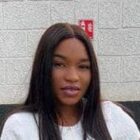

By: Chinelo Ngolikaego Ezigbo
Mind the Gap: Why Nigeria Must Confront Its Dyslexia Crisis
In A Silent Struggle, my first article, I opened up about growing up in Nigeria with undiagnosed dyslexia. I described the shame, confusion, and punishment I endured in classrooms that did not understand why I struggled to read and write. For years, I believed I was less than others, when in truth I was a bright child living with a learning difference no one around me had the language or tools to understand.
The response to that piece reminded me I am not alone. Many Nigerians reached out to share similar experiences as parents worried about their children, as adults who carried the same hidden scars, and as teachers who admitted they had never been trained to recognise dyslexia.
That conversation made one thing clear: my story is not just personal, it is systemic. The painful silence I lived through is still happening in classrooms across Nigeria today. But unlike when I was a child, we now have evidence, policies, and examples from Africa and the wider world that show us a better way.
This article takes the conversation further. It looks at the policy gaps that leave dyslexic learners invisible, the cultural stigma that deepens their shame, and the weak implementation of inclusive education in Nigeria. It also highlights lessons from other African countries that are beginning to act, and it asks why ignoring dyslexia is not only unjust but costly for our nation. Most importantly, it explains why I cannot stay silent and why none of us should.
A Silent Policy Gap
Nigeria has never had a clear plan for dyslexia.
In the 1970s, when the Federal Government first assumed responsibility for special education, focus was on physical and sensory disabilities. blindness, deafness and mobility impairments. Dyslexia was invisible.
The National Policy on Education (1977, revised 2013) acknowledged “special needs education” but failed to define or include dyslexia.
The National Policy on Special Needs Education (2015) was the first to mention “learning disabilities,” but it offered no framework for screening or intervention.
The National Policy on Inclusive Education (2023) aligns with the Disability Act (2019) and global frameworks like UNESCO’s SDG4 (2015), but again, dyslexia is not
named.
This silence is not neutral. It leaves dyslexic learners in a dangerous grey zone: not officially recognised, not supported, and often misjudged.
“Dyslexia is a specific learning disability that is neurobiological in origin. It is not related to intelligence or motivation.” International Dyslexia Association (2018)
Without a national dyslexia strategy, Nigeria’s schools have no direction, teachers have no tools, and children continue to fall through the cracks.
Other African Countries Show Us What Is Possible
Nigeria is not alone in facing the challenge of dyslexia. Across Africa, governments and NGOs are beginning to act, proving that progress is possible even in resource-limited contexts.
South Africa: Through Education White Paper 6 (2001) and the SIAS Policy (2014), teachers must screen pupils, document learning difficulties, and provide Individual Support Plans. Children can access accommodations such as extra exam time and alternative formats.
Ghana: The Inclusive Education Policy (2016) explicitly includes learning disabilities such as dyslexia. In partnership with UNESCO and NGOs like Dyslexia Ghana Foundation, the country has expanded teacher awareness campaigns and community training.
Kenya: Dyslexia Kenya works with schools in Nairobi to run “dyslexia clubs” where children, parents, and teachers practise strategies together. The Kenya Institute of Special Education also includes learning difficulties in teacher training programmes.
Uganda: While policy remains broad under “special needs education,” NGOs like Dyslexia Uganda have begun grassroots training for teachers. The Ministry of Education is now reviewing its Inclusive Education framework with pressure from advocacy groups.
Tanzania: The Education and Training Policy (2014) promotes inclusive education, and research projects (University of Dar es Salaam, 2020) have tested phonics-based interventions for dyslexic learners.
Zimbabwe: Teacher colleges have started including learning disabilities in training modules, supported by NGOs like the Zimbabwe Dyslexia Association, which runs awareness campaigns and provides parent support.
Regional Lesson:
Across the continent, the trend is clear: NGOs lead the way, governments are slowly catching up, and teacher training plus community awareness are the most common entry points.
“Education is the most powerful weapon which you can use to change the world.” — Nelson Mandela (1994)
Nigeria can learn from these models. We have the human resources, NGOs, and international commitments. What is missing is political will and coordinated action.
Cultural Stigma and Silence
In Nigeria, the child who struggles with reading is often called “olodo” (dunce), “mumu” (fool), or “iti.” These words cut deep. They stick. They shape identity.
Parents and teachers may interpret dyslexia as laziness, stubbornness, or even a curse. Some children are taken to prayer houses instead of classrooms.
As The Guardian Nigeria (2018) reported, children who fail academically are sometimes labelled as witches.
I lived that silence. The shame. The punishment. The whispers that I was not trying hard enough.
Changing this cultural narrative is as important as changing policy. Trusted community voices churches, mosques, teachers, and parents must speak out.
“Dyslexic people can do anything. They just learn in a different way. Once we stop labelling them as failures, we unlock their creativity and potential.” — Sir Richard Branson (2017)
When society recognises dyslexia as difference rather than failure, children can flourish instead of shrinking under stigma.
Weak Policy Implementation
On paper, Nigeria has inclusive education policies. In practice, they remain disconnected from classrooms.
The Inclusive Education Policy (2023) promises access for all but does not mention dyslexia or provide enforcement mechanisms.
Even Lagos State, often praised for its Special People’s Law (2011) and Inclusive Education Policy (2015), struggles with implementation. Funding is limited, teacher training is inconsistent, and monitoring is weak.
The Disability Act (2019) prohibits discrimination in education but has no dedicated funding streams for dyslexia or learning disabilities.
This pattern, policies without teeth means children remain unsupported.
“Education is the great equaliser. Every child must be given the chance to learn in the way they can succeed.” — Kofi Annan (2003)
Why This Matters for Nigeria
Ignoring dyslexia carries a heavy national cost.
High dropout rates: UNESCO (2018) shows children with learning difficulties are up to three times more likely to drop out. In Nigeria, 10.5 million children are already out of school (UNICEF, 2021), many struggling with undiagnosed learning needs.
Unemployment and poverty: The UK’s Department for Work and Pensions (2019) found dyslexic adults more likely to face unemployment without support. In the US, the National Institute of Literacy reports that 43% of adults with low literacy live in poverty. In Nigeria, the World Bank (2020) links low literacy directly with higher poverty rates.
School-to-prison pipeline: The UK Ministry of Justice (2005) found 50% of prisoners have dyslexia. In the US, studies show 48–60% of inmates struggle with reading difficulties. Nigeria’s National Human Rights Commission (2018) confirms illiteracy is widespread among prisoners.
This is not just about fairness. It is about wasted potential. Untreated dyslexia fuels dropout, unemployment, poverty, and crime. Supporting dyslexic learners is not charity. It is nation-building.
“Dyslexia is an unexpected difficulty in reading in a person who has the intelligence to be a much better reader. It is also a strength, dyslexic individuals often excel in problem-solving and creativity.” — Dr. Sally Shaywitz, Yale Center for Dyslexia & Creativity
Why I Won’t Stay Silent
I was not diagnosed with dyslexia until my 30s. By then, I had carried decades of self-doubt and shame. Diagnosis gave me language, tools, and freedom.
That is why I cannot stay silent. I speak not just for myself but for the millions of Nigerian children still mislabelled, punished, or forgotten.
“Dyslexia is not a curse. It is not laziness. It is not lack of intelligence. It is simply a different way of learning. With support, dyslexic individuals don’t just survive. They thrive.” — Chinelo Ezigbo, Dyslexia Advocate
We owe it to every child to build a Nigeria where difference is not punished but embraced. Where support is not a privilege but a right.
Let this be the generation that chooses to see every child clearly, for who they are, how they learn, and what they can become.
About the Author
Chinelo Ngolikaego Ezigbo is a mental health nurse and social worker with the NHS (UK), a former disability analyst, and an advocate for children with learning differences. She is passionate about bridging gaps between Nigerian and UK advocacy efforts and championing inclusive education for all.
About The Author









Leave a comment