

By : Chinasaokwu Helen Okoro
Nigeria :Rising Opposition Shadows Tinubu’s Tax Plan as January 1 Implementation Nears
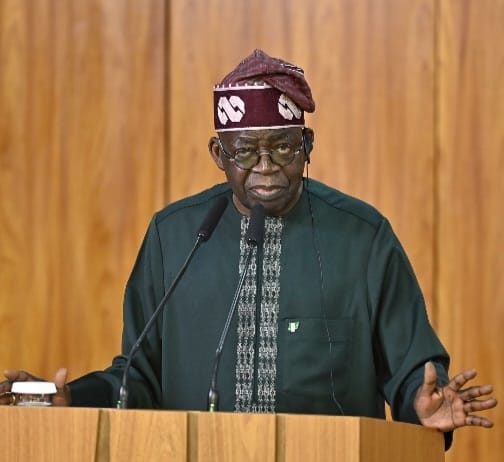
As the clock ticks toward 1 January, President Bola Ahmed Tinubu’s ambitious tax reform agenda is encountering renewed resistance, exposing deep fault lines over trust, transparency and timing in Africa’s largest economy.
While the administration insists the new tax laws are critical to stabilising public finances and funding development, opposition voices—particularly from northern stakeholders and within the National Assembly—are growing louder, reflecting widespread public unease.
Tinubu, a former Lagos State governor, is no stranger to aggressive revenue mobilisation. His tenure in Lagos is often cited as a case study in expanding internally generated revenue through broadening the tax base and tightening enforcement. That reputation followed him to the presidency, where his government has framed tax reform as unavoidable in the face of dwindling oil revenues, rising debt servicing costs and mounting social demands.
Yet the planned rollout of new tax measures at the start of the year has reignited old fears.
Critics argue that the reforms, coming amid persistent inflation, a fragile naira and high unemployment, risk placing additional strain on already burdened households and small businesses.
For many Nigerians, the question is not whether taxes should be paid, but whether the state can be trusted to use them responsibly.
From the north, political leaders and socio-economic groups have voiced concerns that the reforms could deepen regional inequalities. Some argue that states with weaker industrial bases and higher poverty rates may bear disproportionate pain, while wealthier, more urbanised regions are better positioned to absorb the changes. These concerns have fed into a broader narrative of imbalance, sharpening regional sensitivities at a delicate moment.
Inside the legislature, the pushback has taken a more procedural tone. Lawmakers from across party lines have questioned the speed of implementation, arguing that the public has not been sufficiently consulted and that key details remain unclear.
Committees have called for more time to scrutinise the laws, warning that rushed execution could undermine compliance and legitimacy. For a reform agenda that depends heavily on voluntary cooperation from taxpayers, legitimacy is everything.
The government, however, remains defiant. Officials maintain that the tax reforms are designed to be progressive, with protections for low-income earners and incentives for productive sectors. They argue that delaying implementation would send the wrong signal to investors and worsen fiscal pressures.
According to the administration, improved revenue collection is essential to funding infrastructure, healthcare, education and social safety nets—areas where Nigerians have long demanded better outcomes.
Still, public anxiety persists.
Many citizens recall past tax drives that promised transformation but delivered little visible improvement in public services.
In markets and offices, conversations revolve around a familiar refrain: why pay more when roads remain broken, power supply unreliable and basic services inadequate? Without clear evidence of transparency and accountability, skepticism thrives.
Civil society groups have seized on this moment to demand greater openness. They are calling for detailed breakdowns of how additional revenue will be spent, independent monitoring mechanisms and clearer communication from the government. Some have suggested a phased rollout or pilot programmes to test the impact before full implementation—a compromise that could ease tensions while preserving reform momentum.
Analysts note that Tinubu’s challenge is as much political as it is economic. Tax reform is rarely popular, even in stable economies. In Nigeria’s current context, marked by economic hardship and low institutional trust, it becomes even more combustible.
Success will depend not only on the technical soundness of the laws, but on the administration’s ability to carry the public along.
As 1 January approaches, the standoff underscores a broader dilemma facing Nigeria: how to reform a strained fiscal system without alienating a weary population. Whether Tinubu’s tax agenda proceeds as planned, is delayed, or reshaped through negotiation will send a powerful signal about the government’s responsiveness—and its capacity to balance urgency with inclusion in a divided nation.
About The Author















Leave a comment