

By Chinasaokwu Helen Okoro
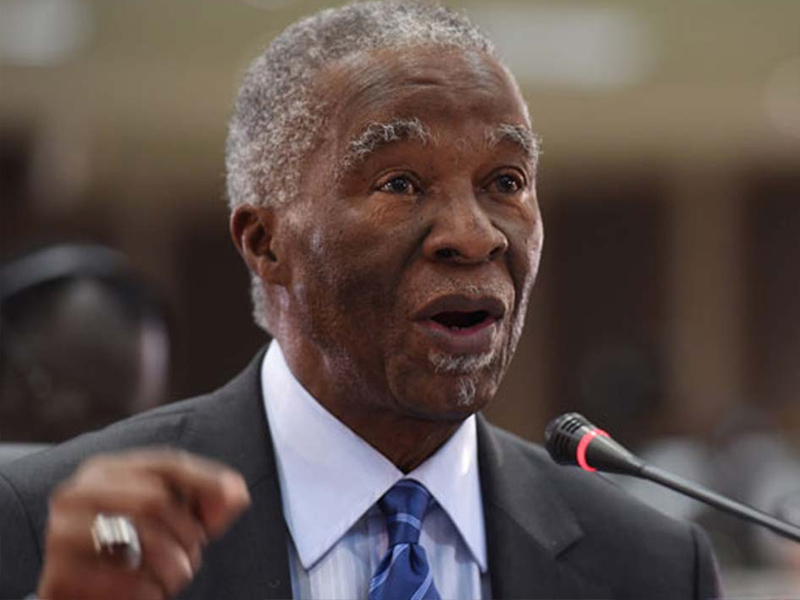
Former South African President Mbeki has urged African leaders to make deliberate political choices to foster unity across diverse populations.
Former South African President, Thabo Mbeki, on Thursday, said achieving unity in diversity in many African countries was possible, but it must be a conscious political decision.
He also linked the unending challenge of non-seamless borders on the continent to the decline in commitment to Pan-africanism and a larger political problem.
Mbeki, the second democratic president of South Africa, stated this position at the Thabo Mbeki Foundation in Johannesburg, in a meeting with the third cohort of the MTN-sponsored Media Innovation Programme (MIP) during their ongoing study tour to South Africa.
The MIP, a six month-long intensive training, was birthed three years ago to foster innovation and development, as well as transform and empower media practitioners to take advantage of technology and innovation in doing their jobs better and telling stories that needed to be told.
However, discussing how he managed the identity differences and diversity of South Africa, when he was president and his advice for leaders of today, he cited cogent examples, including that of Tanzania that eliminated the language divide and brought its citizens under one identity.
He said, “It’s a very political thing – management of diversity. It’s because it’s central to the survival of all of the African states, because there’s no African state which is not characterised by the diversity of its population now.
So, if you want to keep this country together, this is one country, one nation, as it were, so it’s got to be a conscious political decision, if you take, for instance, the one outstanding example in this regard is Tanzania.”
He said when Tanzania was Tanganyika, they took very important decisions under Julius Nyerere that everybody must speak Kiswahili with their mother tongue as second language, adding that they also abolished the institution of chieftainship, thus eliminating loyalty to tribal chiefs.
Mbeki also cited the instance of the formation of the African National Congress in 1912, in which one of its principal slogans was to bury the demon of tribalism.
“How do we make sure that we have unity in diversity becomes important, that’s a political decision and that’s a challenge. We all have to make sure that at least that kind of understanding on the continent persists. If it doesn’t, then you are faced all the time with weak states that are in conflict, inevitably.”
He also responded to a THISDAY question on the difficulty in ensuring movement of persons through a seamless border on the African continent, despite the offerings of the African Continental Free Trade Agreement, which has 43 parties and another 11 signatories in 2018, when it was established.
Mbeki said, “Part of the problem is a decline in commitment to Pan-Africanism in the continent. That sense of a strong Pan-Africanism among the political leadership has receded.
“So when you raise the matter about the movement of Africans amongst themselves, you are talking to people who no longer have that sense of Pan-Africanism or common belonging. It’s a problem.
“We discussed this question in this country about the rules and regulations this country has as regards to other people, Africans in the first instance.
“It’s a battle to convince people who actually practically handle this everyday to say you need a system which encourages in-direction among the Africans, not to exclude people, but to include.
“Politically, what happened on the continent is a regression from the kind of pan-Africanist commitment that we had with other earlier leaders on the continent, and the weakening of that resolve has negative consequences like this one of people tightening visa regulations so that it becomes very difficult to cross borders. It’s a larger political problem.
“And how you address it, I think, is to address the larger political problems. The point that was being made earlier about the relationship among the artists, Nigerian, South African artists (an earlier conversation of how Nigerian and South African artists have been collaborating), and what they are able to do, was correct.
“In a sense, we need to look at that to say, I know the Nigerian business people for many years have been very keen to have established a similar relationship with South African business, and have not been terribly successful in exciting sufficiency in South Africa.
“Apart from MTN and these others, sufficient of the South African view among the business community to respond to the kind of enthusiasm that was on the Nigerian side about this.
“I think if you move from sector to sector, it would be the same. And maybe that’s what we need to do, if these various communities in both countries engage each other in the way that artists are saying artists have engaged one another.“Maybe that might help to make it easier for people to communicate, because to move, because they’ve established a particular kind of relationship.
“It’s really difficult about getting people to understand that the matter about movement- that the freer the movement among the Africans, the better for everybody.
It’s easier to market these ideas not that these ones are coming to take our jobs, so keep them out.
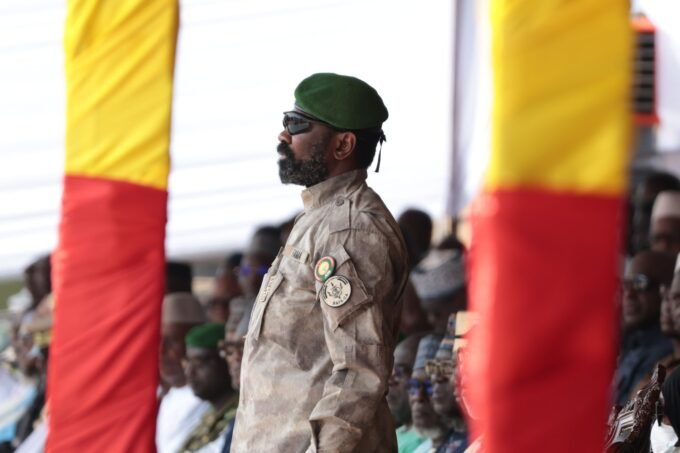
”Decrying the insecurity in West Africa and the coups that have taken place, he said the soldiers in rebelling against France Neo-colonialism, would also rebel against the political representative of French colonialism in their country as it’s a political rebellion against an old France-African relationship.
He said given that the coups were against foreign interference in West Africa, it could be avoided, adding that those soldiers are instinctively anti-democratic, but are addressing a different problem.
On the role of the African Media in changing any negative narrative about the continent, he said, “I would imagine that before we become media people, we are Africans first.”
About The Author







Leave a comment