

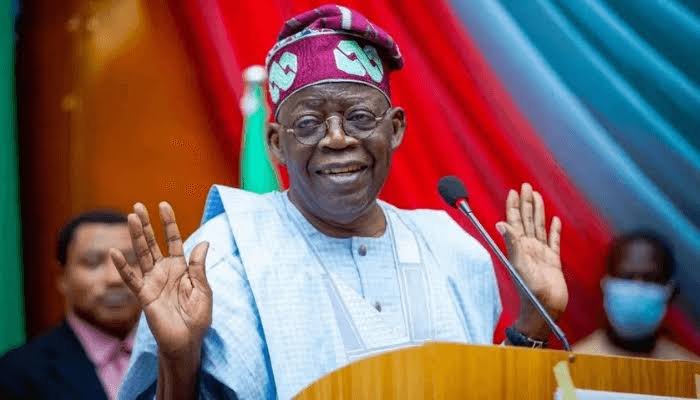
INEC’s 2027 Publication Rekindles Debate Over Tinubu’s Academic Records
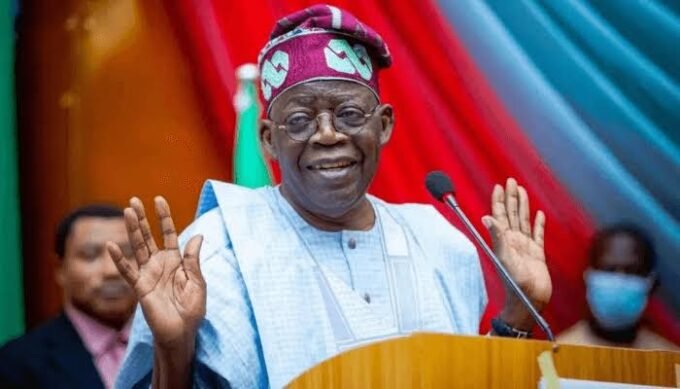
The Independent National Electoral Commission (INEC) has rekindled public debate over President Bola Tinubu’s academic records after publishing his nomination documents for the 2027 presidential election.
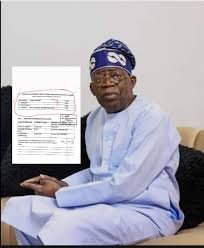
The documents, released in line with the commission’s election timetable, show that the President listed only his Bachelor of Science degree in Business Administration from Chicago State University under the educational qualifications section of his EC9 form, leaving the spaces for his primary and secondary school qualifications blank.
Copies of his university degree certificate and National Youth Service Corps (NYSC) certificate were, however, attached.
The publication has revived a controversy that dominated legal disputes after the 2023 presidential election, with opposition figures questioning the omission and calling for explanations, while others maintain that the issue has already been resolved by the courts and should no longer define political discourse.
According to the nomination papers, Tinubu stated that he was born on March 29, 1952, in Lagos and identified his occupation as a politician.
The documents further show that he worked at Mobil Nigeria Limited between 1983 and 1992 before serving as Governor of Lagos State from 1999 to 2007.
He listed the Federal Government as his current employer from 2023 to date and declared that he had never been dismissed from public service.
Reacting to the development, National Publicity Secretary of the National Democratic Coalition (NADECO), Osa Director, said the questions raised by the omission should be answered by the President and his aides.
He argued that Nigerians deserve an explanation for why the earlier educational qualifications were not reflected in the nomination papers, adding that INEC should also clarify why it accepted the documents despite the blank sections.
The spokesman for the Kwankwasiyya Movement, Habibu Muhammed, described the concerns as legitimate, saying the minimum educational qualification required for anyone seeking the presidency should not remain a subject of speculation.
He maintained that although the matter surfaced during the 2023 election cycle, Nigerians are entitled to a clear legal position capable of putting the recurring controversy to rest.
Labour Party National Publicity Secretary, Ken Asogwa, however, said the issue should be viewed strictly from the standpoint of the law.
According to him, the President’s university degree satisfies the legal requirement as interpreted by the courts, noting that the matter had already been litigated up to the Supreme Court following the 2023 presidential election.
While acknowledging that a university degree ordinarily presupposes earlier educational qualifications, he argued that the controversy has become more of a moral issue than one affecting Tinubu’s constitutional eligibility.
He urged political actors to focus instead on ensuring a credible electoral process ahead of the 2027 polls.
Similarly, National Chairman of the New Nigeria Peoples Party (NNPP), Major Agbo, said anyone dissatisfied with the President’s declaration should seek judicial interpretation rather than prosecute the matter in the court of public opinion.
He maintained that the law prescribes the minimum educational qualification for elective office and that anyone who believes the declaration falls short should challenge it through the courts.
On the other hand, National Coordinator of the Obidient Movement Worldwide, Yunusa Tanko, insisted that the controversy remains unresolved, arguing that questions surrounding the President’s academic records would continue until there is what he described as satisfactory proof addressing the concerns.
The debate gathered fresh momentum after African Democratic Congress (ADC) chieftain Dino Melaye alleged on his X page that Tinubu did not submit his primary and secondary school certificates to INEC, questioning how he gained admission into a foreign university without those qualifications.
President Tinubu, the candidate of the All Progressives Congress (APC), is seeking re-election in the 2027 presidential election.
Questions surrounding the President’s academic records formed part of the legal challenges that followed the 2023 presidential election.
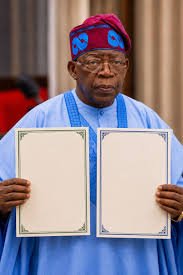
Although those disputes were ultimately resolved by the courts, INEC’s latest publication of his nomination documents has once again returned the issue to the centre of national political conversation, with stakeholders divided over whether it raises legal concerns or merely moral and political questions.
About The Author






Leave a comment