Home Economic ANALYSIS: Trump’s Global Tariff War; Chaos or Calculated Strategy?
Economic

ANALYSIS: Trump’s Global Tariff War; Chaos or Calculated Strategy?

Share
Share

By Ollus Ndomu

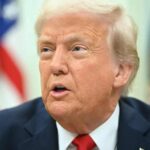
Donald Trump has once again disrupted the global economic landscape, this time with a sweeping wave of tariffs that have sent shockwaves through markets and unsettled world leaders. While critics argue that the U.S. president is reckless and erratic, others suggest he may be executing a high-stakes strategy that is forcing a global reset in trade relations.

New Tariff Offensive

At the center of the storm is a new U.S. tariff regime: a 10% blanket tariff on all imports, with additional punitive rates including 34% on Chinese goods and 20% on European Union products. The immediate fallout has been intense. Markets plunged. Allies expressed outrage. The global consensus appeared to fracture overnight.

Yet amidst the uproar, a pattern began to emerge, one that might explain Trump’s thinking.

Global Leaders React—Then Recalculate

Canada retaliated swiftly. The European Commission called it “a major blow.” Australia labeled it “not the act of a friend.” But in the background, something unexpected was unfolding: governments that had long protected their own markets with high tariffs began approaching Washington with offers to negotiate. According to U.S. officials, two-thirds of the world’s economies have initiated talks seeking exemptions or compromises.

Trump’s tactics, while disruptive, have made an impact.

The Trump Method: Disruption as Leverage

Rather than rely on years of trade talks, Trump imposed tariffs without warning. The approach was noisy, unconventional, and widely criticized. But the immediate outcome is hard to ignore. Countries such as Japan, India, Israel, and South Africa, nations historically protective of their markets, are now exploring avenues to open up and ease restrictions on U.S. goods.

For many American manufacturers and exporters, this shift is welcome news. Trump has shifted the balance of power, replacing diplomacy with economic muscle.

Understanding Tariffs and the Global Trade Shakeup

Tariffs are taxes on imported goods. They are often used to shield local industries from foreign competition. However, when applied excessively, they can trigger inflation, provoke retaliation, and lead to full-blown trade wars.

Trump’s policy flips the traditional model. Instead of negotiating from a position of shared benefit, he has opted for unilateral enforcement: drop your tariffs or face America’s.

This approach has put institutions like the World Trade Organization in a difficult position. Long seen as the regulator of fair play in global trade, the WTO is now watching the United States, a founding member, break the rules it helped create. And yet, some argue that Trump’s actions are challenging long-standing inequalities embedded in the global trade system.

Africa’s Response: Hesitant or Calculated?

In Africa, reactions have been mixed and largely muted. Zambia has voiced concern, warning that its fragile economy could suffer under rising costs and reduced access to American markets. Zimbabwe has surprised observers by suspending tariffs on U.S. imports, signaling a pragmatic turn in its economic diplomacy despite a long history of strained relations with Washington.

For much of the continent, however, the response has been silence. Many African governments appear unsure whether to push back, align, or wait for clearer signals.

This may be a critical moment. As Trump reshapes the global order with bold, if controversial, tactics, Africa is faced with a choice: remain reactive or take proactive steps toward economic self-determination. Trump’s example, though divisive, underscores a truth often overlooked—economic power is rarely given, it is taken.

Conclusion: A New Global Equation

Whatever one’s view of Trump’s methods, he is undeniably changing the rules. By disrupting long-standing agreements and pressuring governments to revise trade barriers, he is redrawing the global economic map.

The old world order is no longer guaranteed. Nations are adjusting. Trump is not retreating. And Africa must now decide, watch from the sidelines or step onto the field with a strategy of its own.

About The Author

Share

Leave a comment

Leave a Reply

Your email address will not be published. Required fields are marked *

LATEST POST

Africa

Africa’s Talking Drum: Mama Nkem Left Before Her Daughter Was Ready

By: Chioma Madonna Ndukwu Africa’s Talking Drum: Mama Nkem Left Before Her Daughter Was Ready In Umuoma Village, people said that a mother’s...

Sport

Cash Reportedly Stolen From Super Falcons Players’ Hotel Rooms in Casablanca

Cash Reportedly Stolen From Super Falcons Players’ Hotel Rooms in Casablanca The Super Falcons’ preparations for the 2026 Women’s Africa Cup of Nations...

AfricaMetro

Harvard-Trained Nigerian-American Engineer Raises $7m for Robot Designed to Assist Hair Braiders A Nigerian-American engineer and Harvard graduate, Yinka Ogunbiyi, has secured $7 million in seed funding to develop a robotic device designed to make hair braiding faster and less physically demanding for professional stylists. Ogunbiyi’s company, HaloBraid, is developing what it describes as the world’s first patented braid-assist robot. The device is designed to work with hairstylists by handling some of the repetitive movements involved in knotless braiding. The funding round was led by Seven Seven Six, a venture capital firm founded by Reddit co-founder Alexis Ohanian. AlleyCorp and Bling Capital were also among the investors. The technology has already attracted significant interest, with more than 7,000 salons reportedly waiting to use the system. HaloBraid is designed as a collaborative robot, meaning it works alongside a human stylist instead of attempting to replace one. The hairstylist remains responsible for sectioning the hair, creating the initial knot and completing the final styling. The robot then assists with the repetitive weaving process down the length of the braid before the stylist returns to finish and shape the ends. According to the company, the technology could cut the time spent on some knotless braid appointments by roughly half, allowing salons to serve more clients while reducing the physical pressure on stylists. For Ogunbiyi, the idea was born from personal experience. During the COVID-19 pandemic, she spent four days installing knotless braids on herself, an experience that made her consider how technology could assist with the most repetitive aspects of the process. She subsequently teamed up with co-founder David Afolabi to develop HaloBraid. The company’s technology is also aimed at addressing the physical demands of professional braiding. Stylists who spend years performing repetitive movements can experience problems affecting their wrists, hands, shoulders, back and joints. By assisting with the most repetitive stage of braiding, HaloBraid hopes to reduce the strain on beauty professionals and help them work more efficiently. Ogunbiyi said the technology would not take away from the personal experience of visiting a salon. Rather, she believes it can allow stylists to spend less time on repetitive movements while continuing to handle the creative and personal aspects of hairstyling. Before launching HaloBraid, Ogunbiyi worked on smart kitchen appliances and Internet of Things products. She holds a joint master’s degree in engineering and business administration from Harvard University. With a $7 million investment and thousands of salons already expressing interest, HaloBraid is seeking to introduce robotics into one of the world’s largest and most labour-intensive beauty markets.

Harvard-Trained Nigerian-American Engineer Raises $7m for Robot Designed to Assist Hair Braiders A Nigerian-American engineer and Harvard graduate, Yinka Ogunbiyi, has secured $7...

Entertainment

Days to Their Wedding, VeryDarkMan Sends Peller and Jarvis a Serious Warning

Days to Their Wedding, VeryDarkMan Sends Peller and Jarvis a Serious Warning Social media critic Martins Vincent Otse, popularly known as VeryDarkMan, has...

Sport

IOC Declines to Investigate Infantino Over Alleged Political Neutrality Breach

IOC Declines to Investigate Infantino Over Alleged Political Neutrality Breach The International Olympic Committee has refused to pursue a complaint against FIFA President...

News

IMO APC YOUTH LEAGUE INAUGURATES BOOTH WATCHDOGS, WARD CANVASSERS TO STRENGTHEN GRASSROOTS STRUCTURE AHEAD OF 2027

The Imo State Chapter of the APC Youth League on Thursday, July 23, 2026, successfully hosted its Interactive Session and Banquet at the...

Travel

VIDEO: 68 Passengers Survive Enugu Air Crash-Landing at Benin Airport

VIDEO: 68 Passengers Survive Enugu Air Crash-Landing at Benin Airport Sixty-eight passengers have escaped without reported injuries after an Enugu Air aircraft crash-landed...

News

WASTE EVACUATION DELAYS WILL SOON EASE* *– LAWMA*

*PRESS RELEASE* *WASTE EVACUATION DELAYS WILL SOON EASE* *– LAWMA* *LASG to Acquire 3,000 Compactor Trucks Within Three Years* The Lagos Waste Management...

AfricaMetro

5 Members of Same Family Found Dead Inside Abia Residence

5 Members of Same Family Found Dead Inside Abia Residence A family of five has been found dead inside their residence in Umuimo...

Africa

US Weighs Military Action in Mali as Jihadist Threat Spreads Across the Sahel

US Weighs Military Action in Mali as Jihadist Threat Spreads Across the Sahel The United States is weighing possible military action against Jama’at...

Africa

African Talking Drum: Tortoise Lost More Than His Name

By: Chioma Madonna Ndukwu African Talking Drum: Tortoise Lost More Than His Name In the old days, before the animals began keeping count...

Related Articles

Rising Prices Push Nigeria to Lowest Rank in Global Living Standards Index

Rising Prices Push Nigeria to Lowest Rank in Global Living Standards Index...

Stakeholders seek inclusive pathways for sustainable ocean economy

Stakeholders seek inclusive pathways for sustainable ocean economy The International Ocean Institute...

Zambia’s Hichilema’s Makes His Case: Stabilisation, Reform and the Road to 2026

By Ollus R. Ndomu LUSAKA — Speaking on Friday, February 20, Zambia’s...

Nigeria: Soludo Shuts Onitsha Main Market for One Week in Fresh Push Against Monday Sit-at-Home

By: Chioma Madonna Ndukwu   Nigeria: Soludo Shuts Onitsha Main Market for...