

By: Chioma Madonna Ndukwu
Iran Puts Military on Alert Over Possible U.S.–Israel Strike
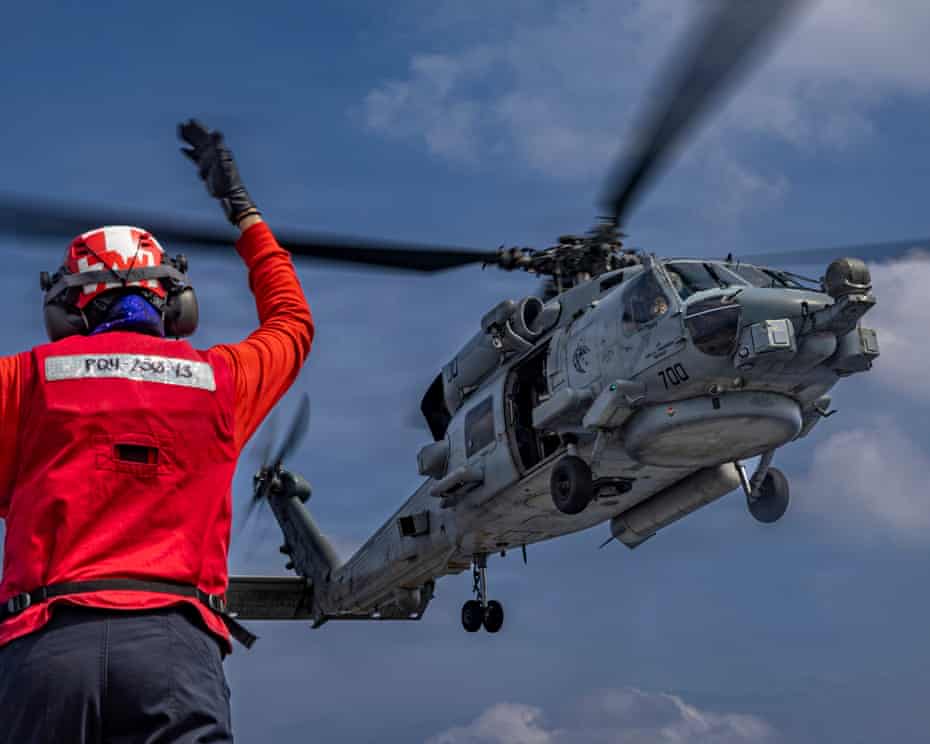
Iran has moved into a heightened state of military readiness following the arrival of major United States naval assets in nearby waters, fuelling fears of a new confrontation that could further destabilise the Middle East.
The deployment of the USS Abraham Lincoln aircraft carrier strike group, alongside guided-missile destroyers, has been widely interpreted by analysts as a show of force aimed at pressuring Tehran amid deepening political unrest and stalled diplomacy.
Although the U.S. fleet is not yet fully positioned, American and Israeli forces are believed to already have the capability to launch coordinated strikes.
Unlike previous clashes that focused on Iran’s nuclear facilities, observers say any fresh assault would likely target the country’s political leadership, a move that could push an already strained society closer to collapse.
Iran has been grappling with sustained nationwide protests triggered by economic hardship and political repression. Official data released this month shows inflation soaring to about 60 percent, intensifying public frustration over living costs and unemployment.
Despite the unrest, there is uncertainty over whether foreign military action would strengthen or weaken the protest movement.
While many Iranians oppose the clerical establishment that has ruled since 1979, there is also strong resistance to externally driven regime change, especially one led by Washington and its allies.
Markets reacted swiftly to the rising tensions. Tehran’s stock exchange recorded its sharpest single-day decline on Monday, reflecting growing fears of conflict and economic isolation.
Several Gulf states, including the United Arab Emirates, have publicly stated they will not allow their airspace or territorial waters to be used for any attack on Iran.
However, military experts note that operations launched from international waters or the Mediterranean would not require regional approval.
Over the weekend, the U.S. military confirmed it was conducting exercises in the area to demonstrate its ability to rapidly deploy and sustain air power, a move seen by Tehran as a direct threat.
Iranian officials have responded with strong warnings. Ali Larijani, secretary of the country’s Supreme National Security Council, accused the U.S. of attempting to weaken Iran internally before striking. He claimed that portraying Iran as a state in crisis is part of a broader strategy to fracture public unity and provoke chaos.
The foreign ministry echoed that stance, insisting Iran’s armed forces are closely monitoring U.S. movements and warning that any violation of international norms would draw what it described as a “regrettable and comprehensive response.”
Prospects for dialogue appear dim. Iranian authorities have denied claims that back-channel talks are underway with Washington, dismissing reports of renewed negotiations as false.
Meanwhile, U.S. demands have reportedly expanded to include the return of UN weapons inspectors, the removal of highly enriched uranium, and new limits on Iran’s missile programme, conditions Tehran has consistently rejected.
Human rights groups continue to report rising casualties from the ongoing protests, with estimates running into thousands, though figures remain disputed.
Allegations of ransom demands for the release of bodies and widespread internet restrictions have further drawn international condemnation.
In Europe, pressure is mounting for tougher action against Tehran. Italy’s foreign minister has signalled plans to push for the designation of Iran’s Revolutionary Guards as a terrorist organisation within the European Union.
Despite the military build-up, the U.S. administration remains split on the path forward. While some officials favour escalating pressure to force political change, others warn that destabilising a country of nearly 90 million people could unleash consequences far beyond Iran’s borders.
For now, the region waits, caught between the threat of war, a faltering diplomatic track, and a population already pushed to the brink.

About The Author

 DR Congo Offers Major Mineral Assets to US Investors in Strategic Partnership
  Shock Decision as US-Linked Vaccine Trial in Africa Is Abruptly Cancelled
  Strengthening Nigeria-EU Cooperation: CCCD, IDDRI, FMITI Set to Host Ukama Platform Workshop in Nigeria
  Maduro’s Removal Sparks Power Shift as Interim Leader Addresses US
  TODAY IN HISTORY – 23rd Dec, 2025 – Africa World News
  TODAY IN HISTORY – 17th Dec, 2025 – Africa World News
  Sweden Considers Lowering Age of Criminal Responsibility to 13 Amid Rising Gang Recruitment of Children
  Unions, Industry Stakeholders Push Back as NAFDAC’s Sachet Alcohol Ban Sparks National Uproar
  Tanzania Poised for Historic Energy Breakthrough as $42bn Mega LNG Deal Nears Final Signature
  Iran Puts Military on Alert Over Possible U.S.–Israel Strike