

By : Chinasaokwu Helen Okoro
It’s No Longer Just a Bet — It’s a Disease”: Pamela Udoka Sounds Alarm as Gambling Addiction Gains Recognition as Mental Disorder in Nigeria
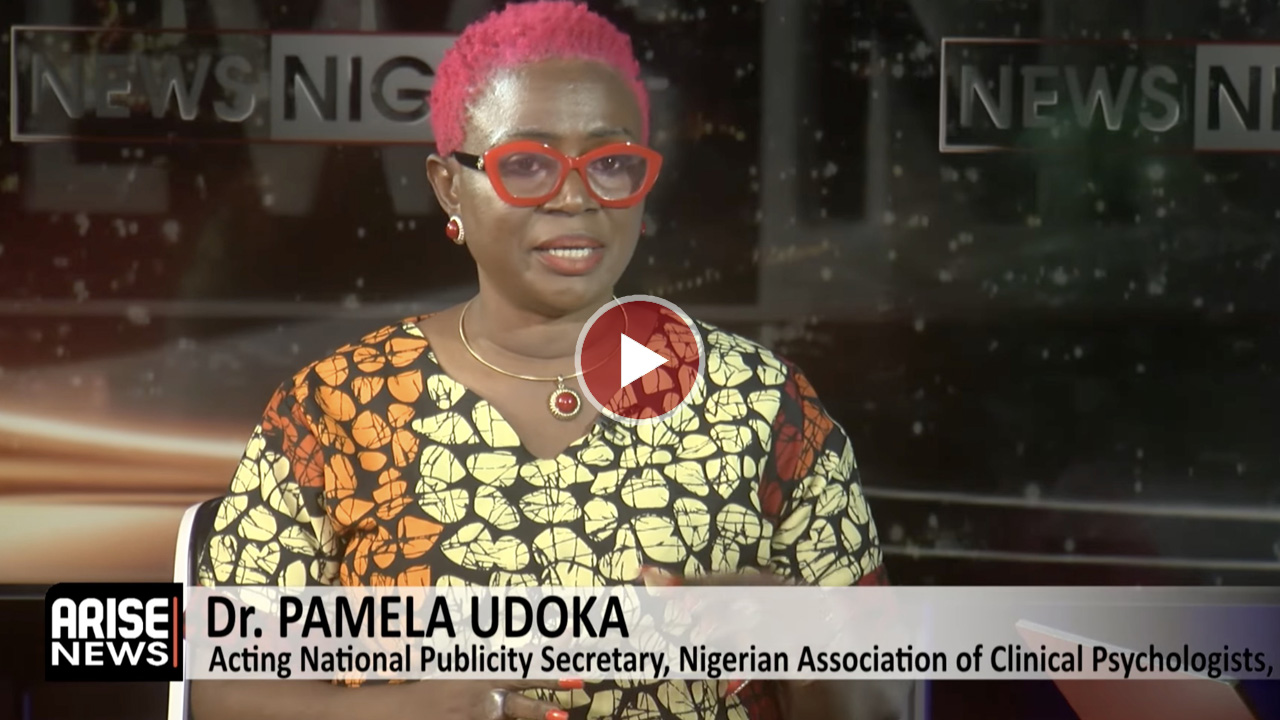
Clinical psychologist and Acting National Publicity Secretary of the Nigerian Association of Clinical Psychologists, Dr. Pamela Udoka has raised the alarm over Nigeria’s growing gambling crisis, warning that the habit has now crossed from mere entertainment into the territory of a clinically recognised mental disorder.
Speaking during an interview on ARISE News on Tuesday, Dr. Udoka disclosed that gambling addiction is now officially categorised as a mental health disorder under the Diagnostic and Statistical Manual of Mental Disorders (DSM) — the global reference book used by psychologists and psychiatrists to diagnose mental illnesses.
> “Gambling is not just a bad habit,” she said. “It’s classified under substance-related and addictive disorders. People who gamble compulsively experience the same kind of craving and loss of control that you find with drug addiction.”
According to her, gambling addiction is a neurochemical condition linked to the brain’s reward system. Each time a person places a bet, dopamine — a “feel-good” neurotransmitter — floods the brain, creating a temporary high. Over time, the brain becomes conditioned to crave that excitement, driving compulsive gambling even when it leads to financial ruin or emotional breakdown.
> “When you gamble, your body releases dopamine, which gives you that temporary thrill,” Udoka explained. “People get addicted to that feeling and keep chasing the next win. That’s why they continue gambling even when it’s destructive.”
Beyond brain chemistry, she identified social and economic pressures as major triggers of gambling addiction in Nigeria. The pervasive culture of “instant success” and the glamorisation of wealth on social media, she said, have pushed many young people toward betting as a perceived shortcut to financial breakthrough.
> “Many Nigerians gamble because they want to live beyond their means,” she noted. “They see others flaunting luxury online and believe gambling is a quick path to join them. It’s about wanting quick results — click here, bet there, and become a millionaire overnight.”
Dr. Udoka highlighted the warning signs of gambling addiction, including constant preoccupation with betting, lying to family members, borrowing money to fund bets, and strained relationships caused by financial instability
> “When someone meets four or more of nine diagnostic criteria within a year, we classify it as gambling disorder,” she said. “It’s not about how often you bet — it’s about how much control you’ve lost.”
Contrary to the popular belief that gambling is a pastime for the rich, Dr. Udoka revealed that those with lower income levels are often the most vulnerable.
> “It’s not the wealthy who gamble the most,” she said. “It’s those with limited means who stake their last ₦200 hoping to make ₦2 million. That desperation makes them easy targets for addiction.”
Drawing parallels between gambling and social media dependency, Udoka said both operate on the same psychological principle of instant gratification.
> “It’s like scrolling on social media — you tell yourself you’ll check one post, then an hour later you’re still there. That compulsion is the same mechanism at play in gambling,” she explained.
On treatment, she emphasised self-awareness, counselling, and professional intervention as key steps to recovery.
> “The first step is admitting you have a problem,” she said. “If you’ve tried to stop but can’t, or your loved ones say you’ve changed, seek help from a licensed psychologist who can design a personalised treatment plan.”
Dr. Udoka called for stronger mental health education, early intervention programmes, and government-backed youth empowerment schemes to tackle the root causes of gambling addiction.
> “When young people are financially stable and productively engaged, they’re less likely to fall into gambling,” she concluded. “Gambling addiction can be prevented if we address stress, financial pressure, and lack of opportunity. It’s time to treat it as a national mental health priority — not a moral failing.”
About The Author





















Leave a comment