

By Ollus R. Ndomu
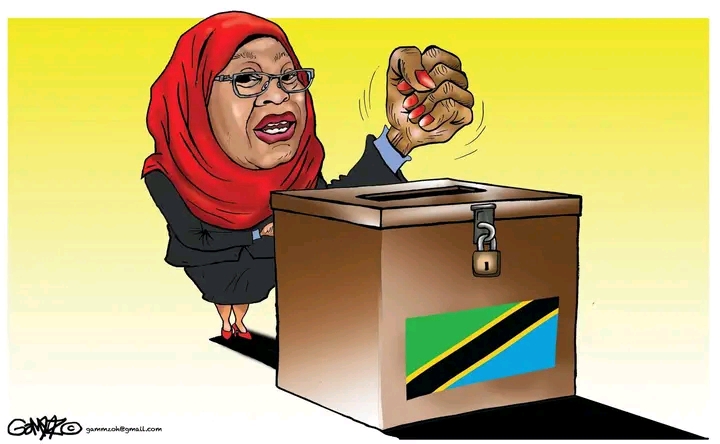
Tanzania is voting today in a climate defined by fear, silence, and control. More than 37 million registered voters are casting ballots in a general election that many observers say is already decided. President Samia Suluhu Hassan, 65, stands virtually unchallenged after her main opponents were jailed, disqualified, or driven underground. The polls mark her first electoral test since inheriting power in 2021 following the death of John Magufuli.
At first, Hassan was hailed as a reformer. She released political prisoners, reopened banned media houses, and promised dialogue with the opposition. But in four years, her administration has hardened. Amnesty International describes a “wave of terror,” documenting disappearances, torture, and extrajudicial killings of activists. The Tanganyika Law Society reports over 80 abductions since Hassan took office. Human Rights Watch says institutions that should guarantee democracy, such as the electoral commission, have been captured by state control.
Her main challenger, Tundu Lissu of CHADEMA, is on trial for treason and faces a possible death sentence. His party, the largest opposition force, has been barred from contesting. The other major contender, ACT-Wazalendo’s Luhaga Mpina, was struck from the ballot on procedural grounds. The pattern is deliberate: legal mechanisms are being used to neutralize political competition.
The ruling party, Chama Cha Mapinduzi (CCM), has been in power for 64 years. It remains Africa’s longest-ruling political machine, blending the legacy of liberation politics with a modern security apparatus. Within its own ranks, dissent is not tolerated. Former CCM spokesman Humphrey Polepole went missing after resigning and criticizing the president. Blood stains were found in his home. His disappearance sent a message that even party insiders are not safe from internal purges.
Despite 17 presidential candidates appearing on the ballot, none represent genuine opposition. Independent analysts predict a landslide victory for Hassan, consolidating her authority both within CCM and across the state. But legitimacy is the harder prize. The muted campaign, the absence of credible rivals, and the climate of intimidation have stripped the election of competitive meaning.
Tanzania’s current political posture mirrors a regional trend. Across parts of East and Central Africa, ruling elites are using the language of reform to mask renewed authoritarianism. What distinguishes Hassan is her dual image: internationally, she projects moderation and diplomacy; domestically, she governs through control.
If the official results confirm what many expect, Hassan will begin her new mandate not as a unifier, but as a leader presiding over a frightened democracy. The ballot has become a ritual, not a choice.
About The Author



















Leave a comment