


By: Chioma Madonna Ndukwu
Skin Bleaching and the Beauty We Never Question
“You’re naturally beautiful,” the young woman said, turning the small jar over in her hands.

The trader smiled, as though she had heard the objection too many times before.
“Beauty is one thing,” she replied. “This one will make you glow. People will notice the difference.”
A few seconds later, money changed hands.
Scenes like this unfold every day in markets, cosmetic shops and beauty stores across the world. The exchange is rarely just about a cream. What is really being sold is a quiet promise, that a lighter complexion might attract admiration, open doors or silence years of insecurity.

It is a promise that has travelled across generations and continents, surviving medical warnings, changing fashions and public campaigns.
Yet doctors say the real bargain is not being made at the cash counter. It is being made beneath the skin.
From Nigeria and Ghana to India, Pakistan, Jamaica and parts of the Middle East, skin bleaching has become one of the world’s most persistent beauty practices.
While some people use lightening products to treat medical conditions such as hyperpigmentation under professional care, millions of others use them simply to become fairer, often without knowing what those products contain or what they may eventually do to the body.

The growing concern has prompted health experts to speak with unusual urgency. In Nigeria, the Nigerian Association of Dermatologists (NAD) has intensified campaigns against skin bleaching, reminding the public during this year’s World Skin Health Day that “Healthy skin is more important than skin colour.”
The message has been reinforced by popular health educator Dr. Chinonso Egemba, widely known as Aproko Doctor, who continues to caution Nigerians against sacrificing healthy skin for a lighter complexion.
The concern reaches far beyond Nigeria. The International League of Dermatological Societies (ILDS) has described harmful skin bleaching as a global public health challenge, calling for stronger regulation of dangerous products and greater public education.
The question is, why do so many people still bleach their skin? The answer is rarely found inside the jar.
For decades, lighter skin has been wrapped in stories of beauty, success and acceptance. Films celebrated it.
Advertisements rewarded it. Social media polished it until it looked like an unquestionable standard. Over time, what began as an opinion settled into something that felt like truth. That is how colour becomes commerce.
The global skin-lightening industry is now worth billions of dollars, feeding a demand built as much on perception as on cosmetics. Every cream sold carries the suggestion that confidence can be improved with complexion. It is a persuasive message, but not an honest one.
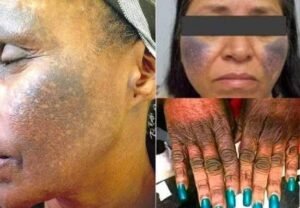
Doctors warn that many bleaching products contain mercury, potent corticosteroids or high concentrations of hydroquinone. These ingredients may lighten the skin within weeks, but the damage often arrives quietly.
The skin can become thinner and more fragile. Severe acne, stretch marks, stubborn infections and uneven pigmentation may follow. Prolonged exposure to mercury has also been linked to kidney damage and disorders affecting the nervous system.
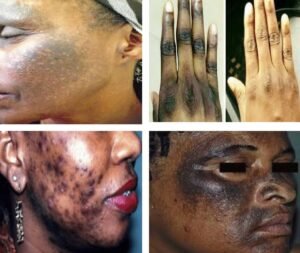
What makes the problem even more troubling is that many users never realise the danger until it has settled in. Some products are labelled as “brightening,” “glow” or “tone-enhancing” creams, giving buyers little reason to suspect they contain harmful substances.
Like borrowing money without seeing the interest hidden in the fine print, the cost only becomes clear when the debt has grown too large to ignore.
Dermatologists often remind us that the skin is more than a canvas for beauty. It is the body’s largest organ, standing guard against infection, harmful sunlight and countless environmental threats every single day.
Weakening that natural defence in pursuit of another shade is rather like pulling bricks from the walls of your own house to make the windows look bigger. The change may appear attractive at first, but the structure becomes weaker with every brick removed.
The campaign against skin bleaching is therefore not a campaign against beauty. It is a campaign against the idea that beauty must wear only one colour. Confidence cannot be bottled, and self-worth has never depended on complexion.
Perhaps the most important question is not why people bleach their skin. It is why the world still rewards the belief that they should.
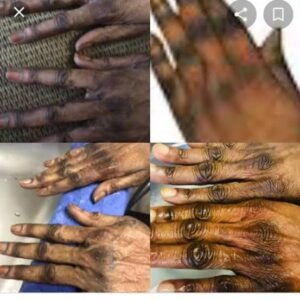
Until that belief begins to fade, another cream will be sold, another promise will be believed and another person may discover that the brightest glow sometimes casts the darkest shadow.
About The Author





















Leave a comment