

By : Chinasaokwu Helen Okoro
Trump Warns ‘Total Destruction’ if Iran Strikes: Vows to ‘Wipe Them Off the Face of the Earth’ Amid Assassination Tensions
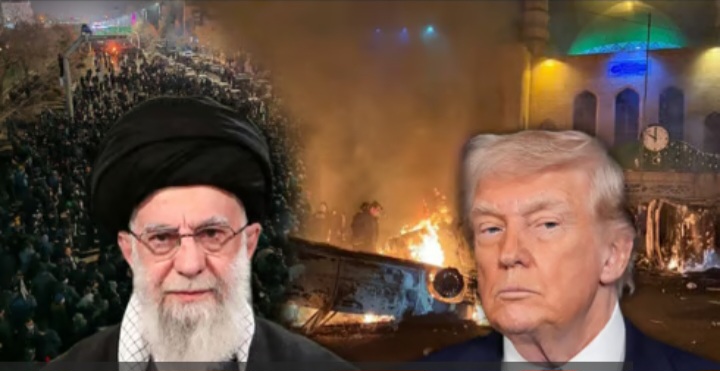
In a stark escalation of U.S.–Iran tensions, President Donald Trump issued an unprecedented warning on Tuesday that the United States would respond with overwhelming force — potentially annihilating the Islamic Republic — if Tehran ever succeeded in an assassination attempt against him.
Trump’s remarks, delivered in a high-profile interview as geopolitical anxieties mount, signal a dramatic intensification of rhetoric between Washington and Tehran.
Speaking to NewsNation, President Trump said he has issued “very firm instructions” to military commanders that any successful Iranian plot against his life would trigger a massive retaliatory strike. “Anything ever happens, we’re going to blow the whole — the whole country is going to get blown up,” Trump said, adding that Iran would be “wiped off the face of this Earth” in retaliation.
The threat comes amid a broader context of strained relations, including allegations from U.S. intelligence of “real and specific” Iranian threats to assassinate Trump — claims Tehran has consistently denied. Trump criticized his political opponents for failing to adopt a strong posture on Iran and said that demonstrating weakness in the face of such threats would embolden adversaries.
Trump’s declaration — which went far beyond typical diplomatic warnings — has reverberated across global capitals. It revives fears of direct military conflict between the United States and Iran, a prospect that could have profound implications for regional stability, global oil markets, and U.S. alliances.
Roots of the Provocation
Tensions between the two nations have escalated over years of mutual hostility. Iran’s links to regional proxy groups, its controversial nuclear program, and its repeated denunciations of U.S. policy have long been points of conflict. Trump’s own history with Iran dates back to his first term in office — notably the January 2020 U.S. drone strike that killed Iranian Revolutionary Guard Corps Quds Force commander Qasem Soleimani, an action Tehran vowed to avenge. While Tehran has denied involvement in assassination plots, U.S. officials have repeatedly underscored threats to Trump’s life, particularly during his presidential campaign.
Beyond direct threats, Iran is also grappling with significant internal unrest. Widespread protests, triggered by economic turmoil and political repression, have seen thousands killed and tens of thousands detained since late December 2025 — events that have drawn international attention and condemnation. The brutal crackdown has exacerbated Iran’s diplomatic isolation and given hardliners additional ammunition in justify external confrontations with the U.S. and its allies.
Tehran Fires Back
Iran has not remained silent in the face of Trump’s warnings. Hardline elements within its political and military establishment have issued their own threats, vowing harsh retaliation if any attack is launched against Supreme Leader Ayatollah Ali Khamenei or other senior figures. Iranian state media and officials have portrayed Trump’s comments as provocative and dangerous, framing them as part of a broader pattern of U.S. aggression.
Iranian leaders have emphasized that any attack on their leadership would be considered a declaration of war, with the potential to mobilize not just the Iranian military but allied groups across the Middle East. Such rhetoric fuels fears that a U.S.–Iran confrontation could quickly spin beyond bilateral boundaries.
Global Reaction and Risks
International reaction to Trump’s statement has been swift and mixed. Some U.S. allies have expressed alarm at the prospect of full-scale conflict, urging restraint and diplomatic engagement. Others reaffirm U.S. commitments to defend its leadership and citizens. Meanwhile, global markets and security analysts are closely watching developments, acutely aware that any miscalculation between Washington and Tehran could spark a broader military confrontation.
Experts warn that rhetoric advocating total destruction of a sovereign state carries significant risks under international law and could undermine efforts to de-escalate the situation. The potential humanitarian consequences of a full-scale U.S. assault on Iran would be staggering, with long-term impacts for civilians and regional stability alike.
As this high-stakes diplomatic standoff unfolds, global attention remains fixed on Washington and Tehran — each side acutely aware that any misstep could have far-reaching consequences far beyond the Middle East.

About The Author

 Irodili in a One-on-One Conversation with Rock Yusuf: Speaking Truth to Power on Activism, Accountability, and Nigeria’s Future (Part One)
  Tanzania Turns Away From Ceremony: Independence Day Cancelled as Nation Grapples With Election Turmoil
  Family Feud and Foreign Frontlines: Zuma Sisters Clash Over Alleged Russia Recruitment Plot
  We’ll Protect Our Men on Lawful Duty” — Defence Minister Backs Naval Officer in Clash with FCT Minister Wike
  Trump’s War Crime on Nigeria is a Dangerous Mirage- Omoyele Sowore
  Citizens Pay The Price : Rhodes-Vivour Condemns Lagos Over “Lawless” House Demolitions
  Somali Troops Kill Over 130 Militants, Crush Al Shabaab Attack on Kudhaa
  Adeleke Family Fires Back as Adedeji Adeleke Slams Kemi Olunloyo, Threatens Legal Action
  Disability, GBV myths must be demystified through knowledge, support – Experts
  Christian safety in Nigeria draws U.S. attention as policy options emerge