

By : Chinasaokwu Helen Okoro
Unpacking South Africa–Nigeria Tensions and the Path Forward
Tensions between South Africans and Nigerians living in South Africa have surfaced periodically over the years, often reflecting deeper social, economic, and political challenges rather than a simple conflict between two nationalities.
While it is important not to generalize or portray entire populations negatively, understanding the roots of these tensions can help promote dialogue, coexistence, and long-term solutions.
One of the main drivers of friction is economic pressure. South Africa, despite being one of Africa’s most developed economies, faces high unemployment rates, especially among young people. In such an environment, foreign nationals—including Nigerians—are sometimes perceived as competitors for scarce jobs and business opportunities.
Nigerian entrepreneurs are known for their strong presence in sectors such as retail, telecommunications, and entertainment, which can create a perception among some locals that outsiders are “taking over” economic spaces.
This perception is often fueled by misinformation and stereotypes.
Nigerians in South Africa have frequently been associated—sometimes unfairly—with criminal activities such as drug trafficking or fraud. While crime exists in every community, attributing it to an entire nationality creates stigma and fuels resentment.
In reality, many Nigerians in South Africa are law-abiding citizens, professionals, students, and business owners contributing positively to the economy and cultural diversity.
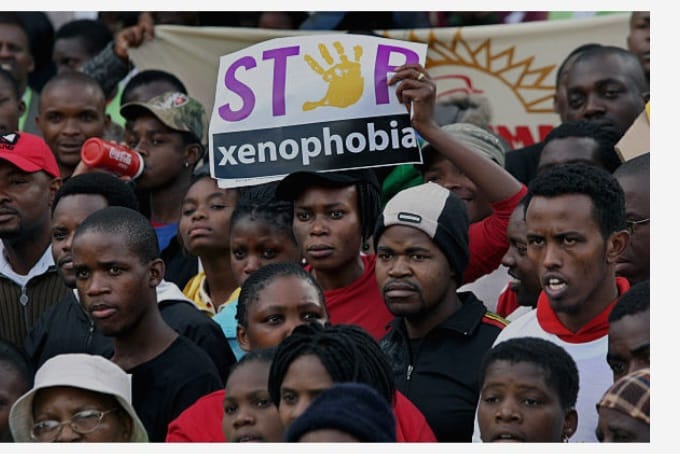
Another major factor is xenophobia, a broader issue in South Africa that affects immigrants from various African countries, not just Nigeria. Periodic outbreaks of violence against foreigners have been reported, with shops looted and individuals attacked. These incidents are often sparked by local grievances such as poverty, inequality, and lack of service delivery, but they end up targeting foreign nationals as scapegoats. Nigerians, being one of the more visible and organized immigrant communities, sometimes bear the brunt of these attacks.
Cultural differences can also play a role. Nigerians are often perceived as outspoken, confident, and entrepreneurial, traits that may be misunderstood or misinterpreted in a different cultural context. At the same time, South Africans may feel protective of their social space and identity, especially given the country’s complex history of apartheid and its lingering economic inequalities. When cultural misunderstandings are not addressed, they can easily escalate into tension.
Media representation has also contributed to the divide. Both traditional and social media sometimes amplify negative stories while ignoring positive interactions between South Africans and Nigerians. Sensational headlines and viral posts can deepen mistrust and create a distorted image of reality. This makes it harder for ordinary citizens from both sides to see each other beyond stereotypes.
However, it is crucial to highlight that peaceful coexistence is far more common than conflict. Many South Africans and Nigerians live, work, and build friendships together every day. Nigerian music, movies, and food have gained popularity in South Africa, while South African culture continues to influence Nigerians as well. This cultural exchange shows that unity is not only possible but already happening in many spaces.
Addressing the issue requires a multi-layered approach. Governments on both sides must strengthen diplomatic relations and ensure the protection of their citizens abroad.
Law enforcement agencies need to act decisively against crime—regardless of who commits it—without profiling specific nationalities.
Public education campaigns can also help combat stereotypes and promote tolerance.
Community-level engagement is equally important. Dialogue between local South African communities and Nigerian residents can help build understanding and reduce suspicion.
Religious organizations, youth groups, and civil society can play a key role in fostering unity and addressing grievances before they escalate.
Ultimately, the tension between some South Africans and Nigerians is not just about nationality—it reflects broader challenges of inequality, identity, and economic survival.
Focusing on shared humanity, mutual respect, and collaboration offers a more sustainable path forward than division.
About The Author
















Leave a comment