

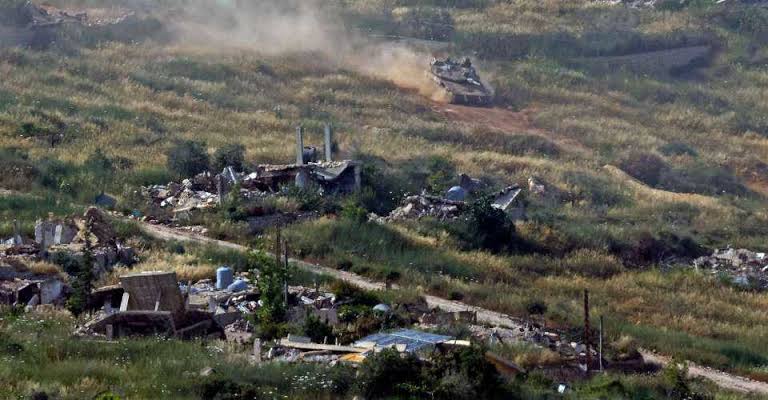
US–Iran Conflict Escalates With Fresh Strikes as Ceasefire Push Falters
The United States and Iran have exchanged a new wave of missile and drone strikes, deepening tensions and casting fresh doubt on already fragile efforts to revive ceasefire negotiations between both sides.
The latest escalation unfolded across the Strait of Hormuz region and surrounding Gulf territories, where both militaries reported attacks and counterattacks targeting strategic assets.
US Central Command (Centcom) said it carried out a precision strike using a Hellfire missile to disable the engine of a tanker identified as the Botswana-flagged M/T Lexie.
The vessel was allegedly attempting to move through restricted waters toward Iranian-linked ports despite repeated warnings.
Centcom further stated that US forces conducted additional strikes on facilities located on Iran’s Qeshm Island, including a military ground control site.
It also confirmed intercepting incoming Iranian missiles and drones aimed at US positions in Kuwait and Bahrain.
According to US officials, regional air defence systems successfully neutralised several threats, with missiles either intercepted or failing mid-flight. No casualties were reported among US personnel.
Iran’s Islamic Revolutionary Guards Corps (IRGC), however, claimed it had responded by launching missiles and drones at the US Fifth Fleet headquarters in Bahrain.
The claim was rejected by US military authorities, who said no such impact occurred on the base.
Air defence alerts were activated in Kuwait and Bahrain during the exchanges, with authorities urging residents to remain cautious due to falling debris from intercepted aerial threats.
The confrontation has further strained diplomatic efforts aimed at de-escalation, with both sides maintaining conflicting narratives over recent developments.
US Secretary of State Marco Rubio insisted that discussions with Tehran on nuclear-related issues were still progressing, suggesting a potential diplomatic pathway remains open despite rising military activity.
Iranian Foreign Minister Abbas Araghchi, however, warned that continued strikes were undermining any possibility of a stable agreement, arguing that violations across the region would directly affect ceasefire prospects.
The renewed hostilities come amid wider instability across the Middle East, where parallel conflicts and cross-border strikes have intensified pressure on already strained international relations.
Analysts say the latest exchange signals a deepening strategic deadlock, with diplomacy struggling to keep pace with rapidly escalating military actions.
About The Author
















Leave a comment