

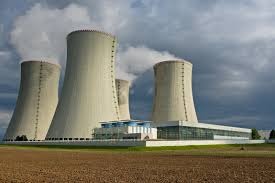
Ahead of the Bonn Climate Conference SB62 which commences 16 June in Germany, twelve civil society organisations from across the African continent as well as Europe and Russia have released a disturbing report on the growing number of African nations considering nuclear energy as part of their overall energy mix.
The countries include Angola, Burkina Faso, Egypt, Ethiopia, Ghana, Kenya, Morocco, Namibia, Nigeria, Senegal, Tanzania, Rwanda and Uganda. They have all made announcements concerning new nuclear power plants. South Africa has the continent’s only operating nuclear power plant, commissioned in 1984 during the apartheid era.
‘The alarming rise of false climate solutions in Africa ― the nuclear energy misadventure’ was prepared by campaigners as a collective advocacy report with a number of strong
recommendations that reflect the breadth of their shared concerns about the development of nuclear energy across the continent. The groups are unanimous in their demand for a nuclear free Africa, safe from the dangers of nuclear energy and instead building a future powered by clean, affordable solutions.
‘The demand for a Just Transition to a post-carbon economy means it must be green, sustainable and socially inclusive. This comprehensive report lays out the case for why the nuclear energy option is not compatible with these demands. It shows how the nuclear energy lobby undermines and obstructs the need for net zero to be achieved by 100% clean sustainable renewable energy’ writes Makoma Lekalakala, Goldman Prize recipient for Africa 2018, in her foreword.
‘The alarming rise of false climate solutions in Africa: the nuclear energy misadventure’ gives details on the extent of plans and announcements to roll out nuclear power plants across the African continent. It explores the numerous reasons why this is not the answer to the continent’s effort to reduce emissions – the urgency of the climate crisis means nuclear energy is too slow to deliver; it is harmful to human health and the environment; and unlike renewables not suited to solving the present problems of energy poverty.
‘The alarming rise of false climate solutions in Africa: the nuclear energy misadventure’ makes the case that the continent is becoming both a potential testing ground and, in particular, a battleground for conflicting geopolitical influences that are also playing out in the field of nuclear technology exports, or rather the prospect of such exports. At the same time, the nuclear energy lobby’s extensive, well-funded and global PR effort, including at UNFCCC climate meetings is also documented in the report.
Instead, the report authors call for an end to plans and announcements to spend billions on building new nuclear power plants. Three quarters of Africa’s climate finance needs are not met and more than half of existing climate finance is in debt instruments. The focus on nuclear energy will severely crowd out already precious and inadequate climate finance for climate mitigation, adaption and renewable energy generation projects.
The climate emergency has thrown a lifeline to the nuclear power industry. This report makes clear that Africa’s energy needs do not require nuclear power. The way forward clearly lies in funding clean, safe renewable energy sources, of which the continent has an abundance.
Philip Jakpor Executive Director Renevyln Development Initiative (RDI) said:
Nuclear plans are a “misadventure”. Nigeria is not ready to host nuclear plants because we don’t have the capacity to manage it. We’ve had longstanding difficulties with oil and gas infrastructure where pipelines are frequently the target of sabotage, theft or terrorism, causing enormous environmental damage in the Niger Delta. A nuclear power station would inevitably become a “target of terrorists”. Security at a nuclear power station would need to be akin to a “military base” probably protected by another country such as Russia.
Alberta Kpeleku Executive Director 360 Human Rights said:
From environmental disasters to health risks and economic concerns, it’s time for Ghana to reject nuclear power plans. There are far too many risks. Nuclear accidents, radioactive waste, health risks, security threats, nuclear proliferation, terrorism. The devastating effects of nuclear accidents do not affect the present generation alone but also generations yet unborn. Alternatives and solutions for nuclear energy include renewable energy sources—solar, wind, hydro, and geothermal—which should be prioritised.
Phyllis Omido, Kenya, Laureate of the Alternative Nobel Prize, Goldman Prize recipient for Africa 2015, Centre for Justice, Governance and Environmental Action said:
“As part of Kenya’s anti-nuclear movement, we stand in solidarity with the newly born Ghana AntiNuclear Movement led by 360 and SYND. We believe in African solutions to African problems. Nuclear energy translates to energy slavery for African people for generations to come. Renewable energy is freedom for our people and freedom for our planet.”
Sam Mucunguzi Executive Director Uganda Environment Action Now said:
Uganda’s energy needs are certainly valid, with half the population not accessing power, the
inaccessibility is not caused by lack of generated power as the country has excess power of more than 1000 MW. The government has set a goal of achieving an electricity access rate of more than 99% by 2030 and aims to attain it through nuclear power generation by 2031.
This is a very ambitious goal and not attainable with a timeframe set for generating nuclear energy estimated to be more than ten years. Besides, the finances for only 1000MW is a quarter of Uganda’s national budget. The highly indebted Uganda must review its plans for Nuclear energy before mortgaging the country to western world and Chinese money financiers. Uganda is currently mining oil and gas amidst many environmental, social and economic disruptions, adding on Nuclear development will be disastrous. We can attain our energy needs via cleaner options like solar, wind and Hydro.
Francesca de Gasparis Executive Director The Southern African Faith Communities’ Environment Institute said:
Nuclear energy is not needed or wanted as an energy source in Africa. When we compare nuclear to other energy choices on the table in the 21st century, in terms of all meaningful factors—cost, safety, construction time, and waste—there is no rationale for nuclear.”
Vladimir Slivyak Co-Chair, Russian Environmental Group Ecodefense, Laureate of the Alternative Nobel Prize said:
“Nuclear power is expensive, slow, and dangerous. It is vulnerable to both climate change and war. The growing effects of climate change, such as floods, hurricanes, droughts, heatwaves, or storms, pose great risks to nuclear safety. Wars increase the risk of military attacks, as seen at the Zaporozhye nuclear power plant in Ukraine. Nuclear power in today’s unstable world creates additional risks of radiation disasters. It also creates the risk of nuclear proliferation, as every civilian nuclear plant produces materials that can be used to make a nuclear explosive device or dirty bomb. Renewable energy is safe and cheap and must be the first choice in Africa, where its potential is enormous.”
THE ALARMING RISE OF FALSE CLIMATE SOLUTIONS IN AFRICA ― THE NUCLEAR ENERGY
MISADVENTURE was prepared by the following organisations:-
360 Human Rights (Ghana), Africed (Burkino Faso), Center for Justice Governance and Environmental Action (Kenya), CESOPE (Tanzania), Earthlife Africa (South Africa),
Ecodefense (Russia), International Physicians for the Prevention of Nuclear War (Germany Affiliate), Renevlyn Development Initiative (Nigeria), Resilient 40 (African Climate Network), The Southern African Faith Communities’ Environment Institute (South Africa), Tipping Point North South (UK), Uganda Environment Action Now (Uganda).
- The report is intended for civil society organisations, governments and media. It is designed specifically to challenge the prevalent and misleading pro-nuclear energy narrative being played out across the African continent. It pays special attention to those climate change meetings where this narrative is highly co-ordinated (Bonn Climate Change Conferences, COPs).
- In light of the multiple risks, wasted funds and implementation urgency detailed above, the report authors call for:
-An end to countries across the African continent becoming both a potential testing ground for business and technology as well as a battleground for conflicting geopolitical influences in the field of nuclear technology exports.
-An end to plans and announcements that commit wasted billions to new nuclear power plants. African countries with international debts that are already burdening governments and citizens must reject yet more foreign debt accrued as a result of any potential nuclear energy project.
-Continent-wide nuclear energy plans to be replaced with a wholehearted commitment to fund clean, safe renewable energy sources, of which the African continent has an abundance. Annual investments of over US$200bn will be required through the end of this decade to meet the climate-related goal and the growing energy needs of the whole continent.
-Rejection of nuclear power plants (NPPs) on the grounds of their catastrophic
vulnerability in conflict scenarios noting the Russia-Ukraine war where a NPP sits inside a war-zone becoming a strategic target for attack.
-The IAEA to respect the many concerns expressed by civil society and implement a
moratorium – a temporary halt – to all current plans for nuclear power plant developments across the continent, in order for a full debate and consultation to take place.
-States, civil society, the concerned international organizations and intergovernmental bodies should undertake a fundamental and independent reassessment of the role of nuclear energy in averting the climate crisis. This should take into account
o the incompatibility of nuclear power plants with renewable energy sources;
o the increased risk of nuclear accidents due to the effects of global warming;
o the increased risk of nuclear proliferation;
o the documented environmental and health effects of the entire nuclear chain.
-The World Bank should not implement a new policy of funding for nuclear power plants as part of the World Bank’s “Mission 300” initiative, which aims to provide reliable electricity to 300 million Africans by the end of the decade. Nuclear energy projects do not comply with the bank’s environmental and social safeguards and are wholly unsuitable to meet Africa’s urgent energy demands.
About The Author
















Leave a comment